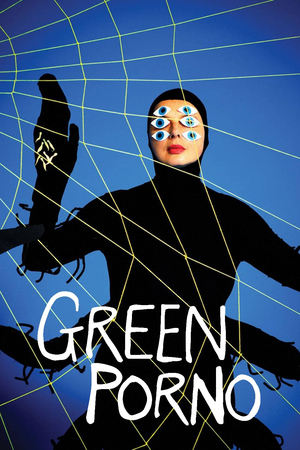
A series of very short films inspired by the amazing and often bizarre sexual practices of insects and other creatures.
On 23 August 1939, the world was shocked to discover that Hitler and Stalin, the most intractable of their enemies at the time, had signed a pact that allowed them to divide Poland between them and gave the Nazi leader complete freedom to concentrate his forces in the West, against France and the United Kingdom. Through this agreement, Europe was to be thrown into war. For a long time, the relationship between Hitler and Stalin was ignored: their mutual fascination, their moves to get closer, the marks of confidence they exchanged and all the benefits they derived from the German-Soviet pact, before resuming their war to the death in June 41 with the "Barbarossa" operation.
Hervé Tullet, an artist of playful and uninhibited creations, invites young and old to unleash their creativity. He offers a series of creation, recreation and inspiration workshops, so that anyone can put together their own Ideal Exhibition.
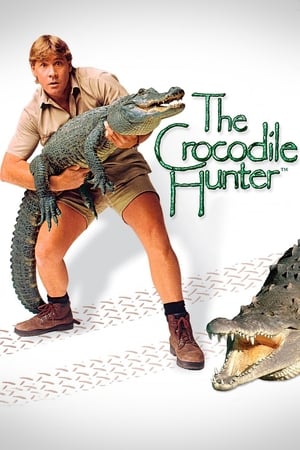
Australian host Steve Irwin and his wife Terri run a wildlife refuge. Their shared passion is educating the world about wildlife, including the much feared crocodile and numerous venomous snakes. Steve's specialty is the capture and relocation of crocodiles. No animal appears too threatening to Steve, his true respect for animals is the foundation for everything he does.
Otcové průmyslu
During the turbulent 19th century, a number of brilliant French artists developed the Romantic movement in Paris: writers Victor Hugo, Alexandre Dumas, George Sand, Honoré de Balzac and Charles Baudelaire, painter Eugène Delacroix and composer Hector Berlioz, among others, changed the way of looking at art and created enduring works that have inspired the world to this day.
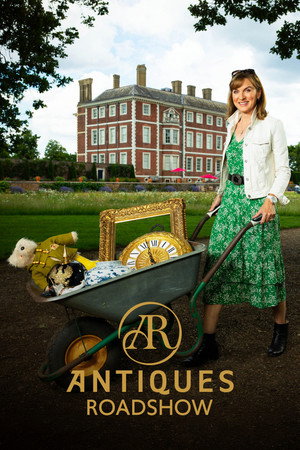
Antiques Roadshow is a British television show in which antiques appraisers travel to various regions of the United Kingdom to appraise antiques brought in by local people. It has been running since 1979. There are also international versions of the programme.
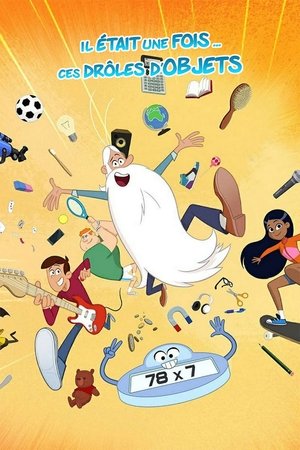
Did you know that behind a soccer ball, glasses or a spoon lie treasures of inventiveness and thousands of years of history? Each episode of this new series looks at an object. Through its creation and its developments, through the ages and civilizations, we approach all sciences, from physics to philosophy, including history. Each object of our daily life is the result of a long process and conceals a rich history of knowledge and human adventures. Never again will you look at your stairs, your pants or a computer the same way...
Rageh Omaar visits Spain, Sicily and France to discover the history of Islam in Europe
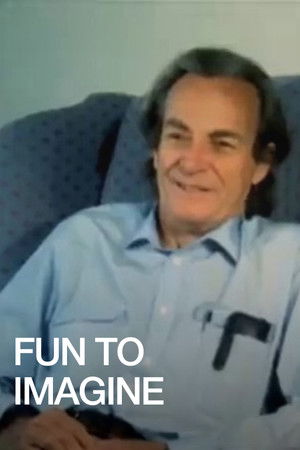
Richard Feynman, theoretical physicist, enjoys thinking aloud about the adventures science can offer. Here he uses physics to explain how the everyday world works, such as why rubber bands are stretchy, why tennis balls can't bounce forever, and what you're really seeing when you look in the mirror.
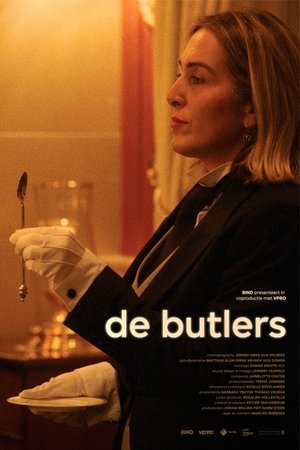
At The International Butler Academy in Simpelveld, The Netherlands, students from all over the world and of all ages are taught the tricks of the butler trade. The film follows six students during their training. What motivates them to choose this servile profession?
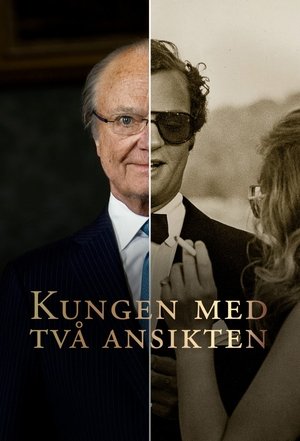
A story about Sweden's monarchy, the role of the royal family in society and what happens when the person behind the monarch is reminded.
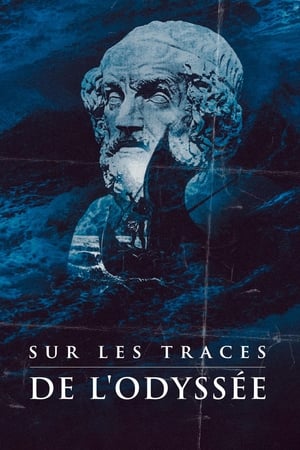
Who was Homer, and what is the meaning of The Odyssey? In this documentary we follow the footsteps of Ulysses, also known by his Greek name Odysseus—a hero as relevant today as he was nearly three thousand years ago, on a journey across some of the most fascinating landscapes and seascapes of the Mediterranean region. With the help of prominent international scholars, we seek to resolve the questions that still surround one of humanity’s greatest literary works and its enigmatic author.
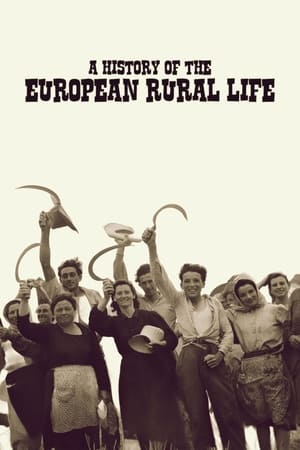
The history of the European peasantry, which has undergone many upheavals over the centuries: from its rise in the Middle Ages after the fall of the Roman Empire, through the oppression of the nobility and the Church, to the struggles for freedom and modernization in the present era.
Courageous couples journey toward more pleasurable sex and deeper intimacy with help from Gwyneth Paltrow and a team of experts in this reality series.
睡前消息合集
A nine part television series, produced by J.C. Crimmins for PBS. Music composed, arranged and performed by Pat Metheny and Lyle Mays. The stated purpose of “The Search for Solutions” is to stimulate interest in science and technology, primarily among the young. The film comprises nine 18-minute sections touching on various aspects of scientific inquiry that its makers say can be shown as a whole, as it is in this engagement, or in any combination of its parts.
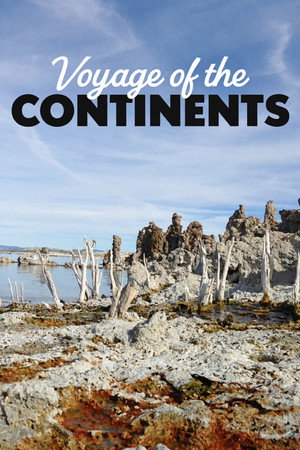
This extraordinary series is a sweeping account of the rise of Earth’s continents. They are the product of a grand waltz of plate tectonics and the continual evolution of Earth’s crust. As landmasses assemble and separate, they fuel volcanoes and spark earthquakes, building mountains and tearing valleys. We see the Earth, eons in the making, through the eyes of geologists and other scientists.
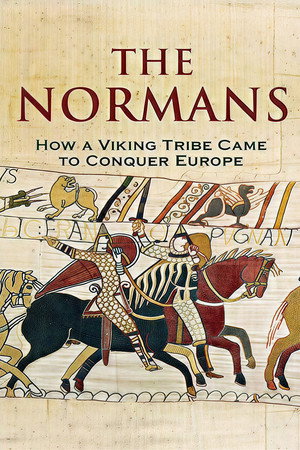
The Normans is a British television documentary series first aired on BBC Two in 2010. Over three episodes, it sees Professor Robert Bartlett's journey from Great Britain via Jerusalem to the Kingdom of Sicily to examine the expansion and ambition of the Normans between the 10th and 13th centuries.
The Johns Hopkins Science Review is a US television series about science that was produced at Johns Hopkins University from 1948-1955. Starting in 1950, the series aired on the DuMont Television Network until the network's demise in 1955. The series' creator was Lynn Poole, who wrote or co-wrote most of its episodes and acted as the on-camera host. In 2002, Patrick Lucanio and Gary Coville wrote that, "In retrospect, Lynn Poole created one of those unique series that allowed television to fulfill its idealized mission as both an educational and an entertainment medium." The original series was followed by three related series produced by Poole at Johns Hopkins University: Tomorrow, Tomorrow's Careers, and Johns Hopkins File 7. Johns Hopkins University ended its production of television series in 1960.