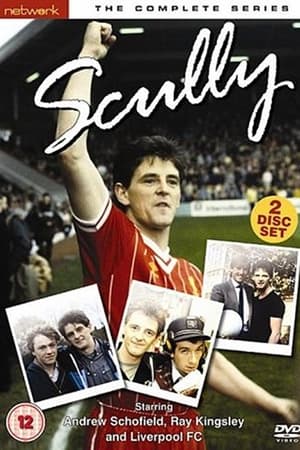
Scully was a British television drama with some comedy elements set in the city of Liverpool, England, that originated from a BBC Play For Today episode "Scully's New Years Eve". Originally broadcast on Channel Four in 1984, the single series was spread over six half-hour episodes plus a one-hour final episode. It was written by playwright Alan Bleasdale. The drama is notable for featuring many of the Liverpool football club first-team squad of that era. Francis Scully is a teenage boy who has his heart set on gaining a trial match for Liverpool to hopefully fulfil his ambition of playing for the club. Francis, in everyday situations during his waking hours, occasionally "sees" famous Liverpool players such as Kenny Dalglish when they are not really there. These dream-like sequences recur throughout the episodes. The main plotline is the efforts of Scully's school teachers to persuade Scully to appear in the school pantomime which they attempt by promising him a trial with his beloved Liverpool if he will cooperate. When Scully and his friends are not in school making trouble for the teachers and the school caretaker, they are seen roaming the local streets upsetting the neighbours and getting into trouble with the police. Scully sometimes has visions of the school caretaker appearing as a vampire due to the caretaker's nickname being Dracula. These frequent waking dream sequences give the show a somewhat surreal atmosphere.
Lee is a childish northerner who lives in a fancy penthouse apartment in London who goes through a variety of jobs such as a janitor and ice cream man, as well as attempting relationships with female flatmates. His best mate, Daily Mail reading, middle-class citizen Tim is always there to stop Lee from getting in trouble, or not? Mayhem is never far away with cleaner Barbara who has never done an honest day's work in her life.
Keen Eddie is an American action, comedy-drama television series that aired in 2003 on the Fox Network. The series follows a brash NYPD detective who goes to London when one of his cases goes sour and remains to work with New Scotland Yard. The basic premise of the show bears a close resemblance to the popular 1980s British series Dempsey & Makepeace, the only notable difference being that the female partner has been replaced by a female housemate. Stylistically, the series derived inspiration from British feature films by Guy Ritchie, such as Lock, Stock and Two Smoking Barrels and Snatch. The soundtrack and incidental music for the first episode was provided by British techno duo Orbital. Daniel Ash of Love and Rockets scored the rest of the series.
Linda La Hughes shares a flat with Tom Farrell. Linda is overweight, loudmouthed and not particularly attractive. She thinks she's gorgeous and irrestible, however. She's also sex mad and obsessed with men. Tom is an aspiring actor. He's got an agent, but finds it difficult to get parts. He doesn't like Linda much, in spite of (or perhaps because of) the fact that they share a flat. She isn't completely comfortable with his homosexuality, perhaps because she finds it difficult to live with a man who doesn't find her sexually attractive.
Birds of a Feather is a British sitcom that was broadcast on BBC One from 1989 until 1998 and on ITV from 2013. Starring Pauline Quirke, Linda Robson and Lesley Joseph, it was created by Laurence Marks and Maurice Gran, who also wrote some of the episodes along with many other writers. The first episode sees sisters Tracey Stubbs and Sharon Theodopolopodos brought together when their husbands are sent to prison for armed robbery. Sharon, who lived in an Edmonton council flat, moves into Tracey's expensive house in Chigwell, Essex. Their next-door neighbour, and later friend, Dorien Green is a middle-aged married woman who is constantly having affairs with younger men. In the later series the location is changed to Hainault. The series ended on Christmas Eve 1998 after a 9-year-run.
Foul-mouthed kids Richie, Rabbit and Hooks share a flat in the titular London apartment, where they're usually after get-rich schemes and get into a lot of trouble with crack whores, pedophiles, etc.
Les Demoiselles de Suresnes
Porridge is a British situation comedy broadcast on BBC1 from 1974 to 1977, running for three series, two Christmas specials and a feature film also titled Porridge. Written by Dick Clement and Ian La Frenais, it stars Ronnie Barker and Richard Beckinsale as two inmates at the fictional HMP Slade in Cumberland. "Doing porridge" is British slang for serving a prison sentence, porridge once being the traditional breakfast in UK prisons. The series was followed by a 1978 sequel, Going Straight, which established that Fletcher would not be going back to prison again. Porridge was voted number seven in a 2004 BBC poll of the 100 greatest British sitcoms.
Max And Paddy's Road To Nowhere is the much-loved sequel to Peter Kay's critically-acclaimed comedy series, "Phoenix Nights". Written by and starring Peter Kay and Patrick McGuinness, this six-part comedy/drama series is the story of clueless Phoenix Club bouncers Max (Kay) and Paddy (McGuinness), as they escape clubland in their prized motor-home and take to the open highway.
Lock, Stock... was a 2000 television series off-shoot from the 1998 film Lock, Stock and Two Smoking Barrels. The series was shown on Channel 4 and starred Ralph Brown, Daniel Caltagirone, Del Synnott, Scott Maslen and Shaun Parkes. Lock, Stock... was Ginger Productions' first commission. The show prominently featured the rhyming slang of London's East End, making it harder for some viewers to comprehend.
Set during the 1960s in the fictional North Yorkshire village of Aidensfield, this enduringly popular series interweaves crime and medical storylines.
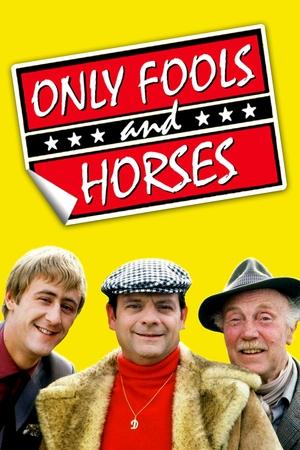
Only Fools and Horses.... Is a British sitcom created and written by John Sullivan. Seven series were originally transmitted on BBC One from 1981 to 1991, with sixteen sporadic Christmas specials aired until 2003. In working-class Peckham in south-east London, ambitious market trader Derek 'Del Boy' Trotter and his younger half-brother Rodney, explore their highs and lows in life, in particular their attempts to get rich. Initially not an immediate hit and receiving little promotion early on, it later achieved consistently high ratings, and the 1996 episode "Time on Our Hands" (originally billed as the series finale) holds the record for the biggest UK audience for a sitcom episode, attracting 24.3 million viewers. The series bears a significant influence on British culture, contributing several words and phrases to the English language.
Sugar Rush is an Emmy Award–winning British television comedy drama series developed by Shine Limited and broadcast by Channel 4, based on the Julie Burchill novel of the same name. It follows the trials and tribulations of teenager Kim Daniels, who is dealing with all the usual adolescent issues, plus one - she thinks she might be gay. Her family has recently moved to Brighton from London, and she finds herself with a huge crush on her new best friend, Maria `Sugar' Sweet. Sugar has a bit of a wild side, and frequently gets Kim into trouble, though Kim can find trouble on her own as well. Despite attractions to other girls, and a few attempts at being interested in guys, Kim continues to long for Sugar.
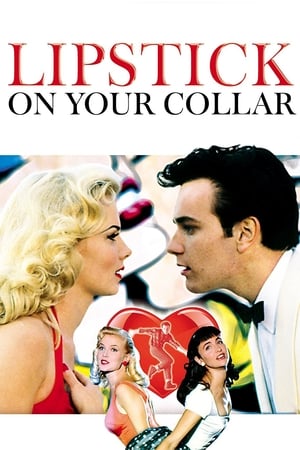
During the Suez Crisis of 1956, two young clerks at the stuffy Foreign Office in Whitehall display little interest in the decline of the British Empire. To their eyes, it can hardly compete with girls, rock music, and the intrigue of romantic entanglements.
This English follows the East End working-class Garnett family, headed by patriarch Alf, a reactionary working-class man who wields racist and anti-Socialist views. His long-suffering wife Else manages to keep things in control... for the most part. Their progressive daughter Rita lives with them, as does her Irish husband Mike, who, with an array of liberal worldviews, often quarrels with his father-in-law. It inspired the American show "All In The Family" and several other international variations on the same theme.
'Hurt' follows Stone Scriven as he plans for his own death - at least until he meets Fin Snell, another young man struggling with the weight of the world. Together, they will help each other learn to live.
Peep Show follows the lives of two men from their twenties to thirties, Mark Corrigan, who has steady employment for most of the series, and Jeremy "Jez" Usbourne, an unemployed would-be musician.
Disillusioned after a long career at Sunshine Desserts, Reginald Iolanthe Perrin endures a midlife crisis and fakes his own death. Returning in disguise after various attempts at finding a 'new life', Perrin gets his old job back and finds nothing has changed. He is eventually found out, and later finds success with a chain of junk shops. However, it becomes so successful that he feels he has created a monster and decides to destroy it.
Ben Harper is a moderately successful family man and dentist. He is also undergoing a mid-life crisis and trying to cope with the bizarre reality of raising teenage children. His wife Susan seems quite happy, enjoys her job as a London tour guide, however at home her ability to find her way around a cookbook or pantry is less successful. Their three children Nick, Janey, and Michael are as different as chalk and cheese. Nick (19) is on his gap year, but doesn't get much further than the sofa or job centre, Janey is as sharp as a tack and 16 going on 25, while Michael is a very bright, computer-nerdish 12 year old who is just discovering girls.
Spaced: the anti-Friends, in that it examines the lives of common 20 somethings, but in a way that is more down to earth and realistic. Here we have Daisy and Tim; two 'young' adults with big dreams just trying to get by in this crazy world. They are thrown together in a common pursuit of tenancy, which they find by posing as a couple. The house has a landlady and an oddball artist living there. The series explores the ins and outs of London living.