The world’s biggest fish market is to make room for a highway during the Olympic Games 2020 in Tokyo. After more than 80 years in daily business, the relocation of over 14,000 dealers is a turning point. Especially for old-established dealers this step is not easy. Within four days, all dealers, souvenir and shoe shops, restaurants and service providers such as knife sharpeners are to be relocated to the new location on an artificial island. The closure of Tsukiji is a step towards modern digital real-time trading and we are the only foreign reporter with exclusive access to accompany this adventurous relocation.
The underwater cinematographer, Rick Rosenthal follows the threatened Bluefin Tuna in their search for a safe refuge along the Atlantic.
A clash of true oceanic titans sees fights in the remote battlefields of Ascension Island. Tuna are often faster, fitter and bigger than the sharks.
The director explains his love for tuna meat which was in his family for generations.
Rick Rosenthal goes on a quest that plumbs the secrets of the legendary bluefin tuna. This fish can weigh up to 1,500 pounds and can move up to 50 miles per hour. Here he catches a bluefin tuna on camera.
With Pete Smith providing dry off-screen commentary, we watch some serious fishing: a marlin caught near Catalina, a hammerhead shark caught then wrestled in a small rowboat near Baja, the largest (721 pounds) great white shark caught to date in California waters, Chinook Indians catching salmon at Celilo Falls in Oregon - each with his designated place on the river where his ancestors stood, and, last, a crew on a boat off Mexico hoisting and hurling tuna using unbarbed hooks (baited only with a feather) as fast as they can as long as the school is there - backbreaking work - but a $25,000 catch.
Film director Branko Belan follows the journey of fishermen as they set out to catch tuna around the Velebit Channel.
L’Omerta, scandale de la pêche industrielle
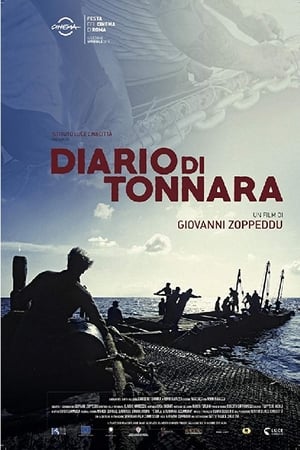
From the book by the same name by Ninni Ravazza, "Diario di Tonnara" tells the story of the towns, villages, communities and adventures that dictate the daily lives of the tuna fishermen in Italy.
Tuna are among the top predators in the oceans. But the hunter is also the hunted: many species are overfished. Can we use the riches of the oceans without destroying them?
Bananas, eggs, and tuna: three basic foodstuffs with three wildly different points of origin. Moullet begins with these on his plate but constructs his film by working backwards and finding the sources for these items and how they reach our plates. As Moullet’s investigation deepens, however, the film moves beyond the confines of a simple exploration of food origins into more political and social realms, not only relating to food but also to the medium of film.
After the end of WWII, a young Lithuanian woman and a young Italian man from Stromboli impulsively marry, but married life on the island is more demanding than she can accept.
After an unusual meteor shower leaves most of the human population blind, a merchant navy officer must find a way to conquer tall, aggressive plants which are feeding on people and animals.
A Portuguese tuna fisherman catches his bride with his first mate.
In a karaoke bar in post-apocalyptic Los Angeles, an expired can of tuna fish and a fake Louis Vuitton purse encourage each other to believe in their artistic voices even if the world sees them as trash.
While on leave in New York, a serviceman both weds a chorus girl and wins a red convertible in a charity raffle. Both his wife and the car turn out to be problematic.
Três cortes para Glauber
A seven-part "making-of" documentary featuring Jon Favreau, visual effects supervisor John Nelson, Embassy VFS supervisor Winston Helgason, 3D artist Paul Copeland, lead 3D artist Michael Blackburn, Orphanage VFX supervisor Jonathan Rothbart, visualization/HUD effects supervisor Kent Seki, HUD design supervisor Dav Rauch, ILM VFX supervisor Ben Snow, animation director Hal Hickel, view painter Ron Woodall, model supervisor Bruce Holcomb, VFX art director Aaron McBride, composing supervisor Jeff Sutherland, and technical director Philippe Rebours. It visits the three effects studios that handled Iron Man - The Embassy, The Orphanage, and ILM - and examines what each one did for the film. It goes through the appropriate effects topics in a solid manner that gives us a good idea of the challenges and their solutions.
At the 1996 Atlanta Games, the Magnificent Seven became the first American women to ever win gymnastics team gold. Sixteen years later, in London, the Fierce Five joined them in the history books. Relive all the excitement as Gabby Douglas, Aly Raisman, Jordyn Wieber, McKayla Maroney and Kyla Ross take the lead from the first rotation and never look back on their way to gold. Follow Gabby Douglas on her way to the podium to make it three straight American gold medals in the individual all-around competition. Every individual event final is featured on this DVD, including Aly Raisman's historic gold-medal performance in the floor exercise, her bronze on the balance beam, as well as McKayla Maroney's silver medal in the vault.
A strong and fast-paced overview piece that looks at the picture's set design, the inspirations from various versions of the comic, costume construction, and filming locations.