A behind-the-scenes look at the of how the Paris Opera is run under the direction of Stephane Lissner.
The Making of a Dream is a cinematic essay on stories of dancers. It shows joys and pains from the first steps in an amateur school to the goal to become a principal dancer in a world known ballet company.
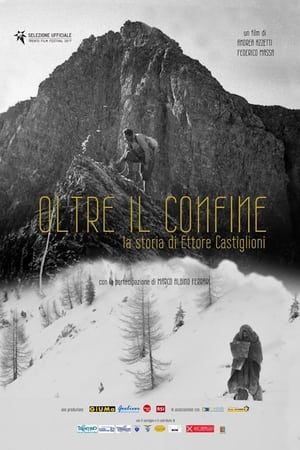
Oltre il confine - La storia di Ettore Castiglioni
In May of 1982 Julio Cortázar, the Argentinean writer and his companion in life, Carol Dunlop set out in their VW bus on a journey along the highway from Paris to Marseille that, for each of them, was to be their final one. Twenty-five years later, Océane Madelaine and Jocelyn Bonnerave set out to undertake the journey again.
The film reconstructs the memories of a divorced family with empathy yet merciless precision. An intimate family story emerges during the investigation into the reasons for the separation. Hinging on the subtle and touching testimonies of the family members, the film delves into complex interrelationships. Actors bring the family's memories alive as if they were their own. The result is a chronicle of a family drama, which the real protagonists complement and comment on – a reflection on the mechanisms and dynamics shaping and directing their family life over the years.
Klaus Rozsa, a well-known and politically active photographer, lived in Zurich for decades as a stateless individual. All of his applications for naturalisation were refused on political grounds. In 1956 he fled Hungary, growing up in Switzerland with a Jewish father who had survived Auschwitz and Dachau. Due to the extreme proximity of such a fate, the camera led him repeatedly to places where injustice was done. It was this particular quality of his camerawork that proved fateful for him.
An intimate portrayal of the everyday lives of Carthusian monks of the Grande Chartreuse, high in the French Alps (Chartreuse Mountains). The idea for the film was proposed to the monks in 1984, but the Carthusians said they wanted time to think about it. The Carthusians finally contacted Gröning 16 years later to say they were now willing to permit Gröning to shoot the movie, if he was still interested.
Switzerland was one of the last countries in the world to grant women the right to vote. This film guides us through a century of Swiss history, tracing the imprint left by the women who fought for the right to leave hearth and home – and by the men who did everything they could to send them back – until they gained legal equality, whose implementation seems to be in question still today.
Switzerland is presently the only country in the world where suicide assistance is legal. Exit: The Right to Die profiles that nation's EXIT organization, which for over twenty years has provided volunteers who counsel and accompany the terminally-ill and severely handicapped towards a death of their choice.
Remue-ménage
Switzerland still carries out special flights, where passengers, dressed in diapers and helmets, are chained to their seats for 40 hours at worst. They are accompanied by police officers and immigration officials. The passengers are flown to their native countries, where they haven't set foot in in up to twenty years, and where their lives might be in danger. Children, wives and work are left behind in Switzerland. Near Geneva, in Frambois prison, live 25 illegal immigrants waiting for deportation. They are offered an opportunity to say goodbye to their families and return to their native countries on a regular flight, escorted by plain-clothes police officers. If they refuse this offer, the special flight is arranged fast and unexpectedly. The stories behind the locked cells are truly heartbreaking.
Que viva Mauricio Demierre
“Namibia Crossings” takes a trip through a country of archaic beauty and bizarre contradictions. The film creates polyphonies of soulful landscapes made up of each individual's highs and lows.
Max Frisch was the last big Swiss intellectual widely respected as a “voice” in its own right – a character hardly found today. The film retells Frisch’s story as a witness of the unfolding 20th century, wondering if such “voices” are needed at all, or if we could do without them.
The real place where the penguin congress takes place is also the most fictional place on this planet where you can stand on your own two legs. Here, even the animals can talk. This land of dreams and nightmares is called Antarctica. In this desert of ice surrounded by a stormy sea, a few dozen human beings also live. Using sophisticated instruments, they observe the worrying changes affecting our world: the hole in the ozone layer, climate change, and so on.
This documentary offers a complex portrait of Hollman Morris, the Colombian war journalist whose multiple award-winning news show Contravía is one of the few local current-affairs programs that refuses to pander to President Alvaro Uribe's staunchly authoritative government. While most television viewers in Columbia opt for variety shows and soap operas, citizens in search of suppressed truths tune in to Contravía to hear the latest news about forced disappearances, secret mass graves, and various other atrocities taking place all across the countryside. But when you live and work in the country that Reporters Without Borders claims is one of the most dangerous places in Latin America for a journalist to work, denouncing human rights abuses can be a dangerous game. Yet despite the danger to both himself and his family, Morris remains convinced that the situation in Columbia will never been improved if outspoken media figures like himself simply disappear into exile.
The incredible story of how the mummified corpse of a 40-year-old man was discovered by a hunter in one of the most remote parts of the country. The dead man's detailed notes reveal that he actually committed suicide through self-imposed starvation only the summer before. Liechti's film is a stunning rapprochement of a fictional text, which itself is based upon a true event: a cinematic manifesto for life, challenged by the main character's radical renunciation of life itself.
Above and Below is a rough and rhythmic roller coaster ride seating five survivors in their daily hustle through an apocalyptic world. A journey of challenges and beauty in uncomfortable places: Rick & Cindy, Godfather Lalo in the flood channels deep down under the shiny strip of Sin City. Dave in the dry and lonesome Californian desert and April in simulation for a Mars mission in the Utah desert. Through the hustle, the pain and the laughs, we are whisked away to an unfamiliar world, yet quickly discover the souls we encounter are perhaps not that different from our own.
It is winter at an emergency shelter for the homeless in Lausanne. Every night at the door of this little-known basement facility the same entry ritual takes place, resulting in confrontations which can sometimes turn violent. Those on duty at the shelter have the difficult task of “triaging the poor”: the women and children first, then the men. Although the total capacity at the shelter is 100, only 50 “chosen ones” will be admitted inside and granted a warm meal and a bed. The others know it will be a long night.
Synopsis - For god's sake Isabella and Nando are two militant atheists. They live in Italy, a country where the Church still plays a strong political role. T hey are among the 4000 members of UAAR (Union Atheists Agnostics Rationalists), an association that keenly defends the fundamentals of the secular state, giving trouble even to the Vatican. Among the various actions of the association: the campaign for the de-baptize and the "atheist bus", ads that should have spread the slogan: “The bad news is that God doesn't exist. The good one is that you don't need him”