Four people recount different versions of the story of a man's murder and the rape of his wife.
Dolls takes puppeteering as its overriding motif, which relates thematically to the action provided by the live characters. Chief among those tales is the story of Matsumoto and Sawako, a young couple whose relationship is about to be broken apart by the former's parents, who have insisted their son take part in an arranged marriage to his boss' daughter.
In a small Tokyo apartment, twelve-year-old Akira must care for his younger siblings after their mother leaves them and shows no sign of returning.
In the future, the Japanese government captures a class of ninth-grade students and forces them to kill each other under the revolutionary "Battle Royale" act.
A family of four are the sole inhabitants of a small island, where they struggle each day to irrigate their crops.
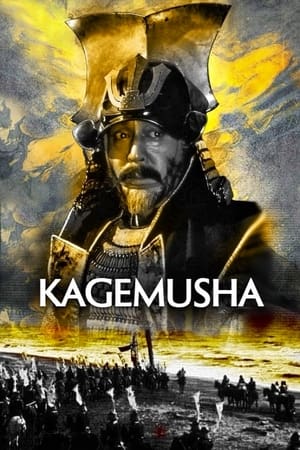
Returning to their lord's castle, samurai warriors Washizu and Miki are waylaid by a spirit who predicts their futures. When the first part of the spirit's prophecy comes true, Washizu's scheming wife, Asaji, presses him to speed up the rest of the spirit's prophecy by murdering his lord and usurping his place. Director Akira Kurosawa's resetting of William Shakespeare's "Macbeth" in feudal Japan is one of his most acclaimed films.
Kanji Watanabe is a middle-aged man who has worked in the same monotonous bureaucratic position for decades. Learning he has cancer, he starts to look for the meaning of his life.
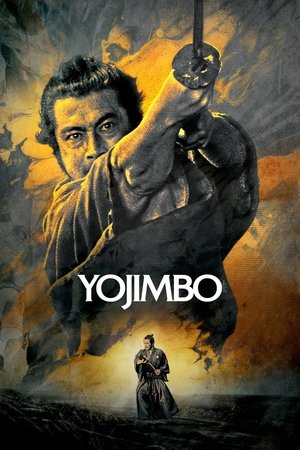
A samurai answers a village's request for protection after he falls on hard times. The town needs protection from bandits, so the samurai gathers six others to help him teach the people how to defend themselves, and the villagers provide the soldiers with food.
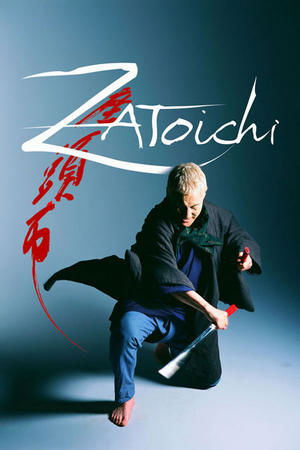
Blind traveler Zatoichi is a master swordsman and a masseur with a fondness for gambling on dice games. When he arrives in a village torn apart by warring gangs, he sets out to protect the townspeople.
Journalists Ichiro Sakai and Junko cover the wreckage of a typhoon when an enormous egg is found and claimed by greedy entrepreneurs. Mothra's fairies arrive and are aided by the journalists in a plea for its return. As their requests are denied, Godzilla arises near Nagoya and the people of Infant Island must decide if they are willing to answer Japan's own pleas for help.
In the turbulent last days of the Edo period, Kawai Tsugunosuke, a Japanese samurai serving the Makino clan of Nagaoka, dreamt of independence from the restraints of vassalship. Despite his progressive views and his desire for his estate to remain neutral during the Boshin Civil War, he was bound by loyalty and duty to the clan and was compelled to choose sides.
Sen no Rikyu (Ebizo Ichikawa) is the son of a fish shop owner. Sen no Rikyu then studies tea and eventually becomes one of the primary influences upon the Japanese tea ceremony. With his elegant esthetics, Sen no Rikyu is favored by the most powerful man in Japan Toyotomi Hideyoshi (Nao Omori) and becomes one of his closest advisors. Due to conflicts, Toyotomi Hideyoshi then orders Sen no Rikyu to commit seppuku (suicide). Director Mitsutoshi Tanaka's adaptation of Kenichi Yamamoto's award-winning novel of the same name received the Best Artistic Contribution Award at the 37th Montréal World Film Festival, the Best Director Award at the 2014 Osaka Cinema Festival, the 30th Fumiko Yamaji Cultural Award and the 37th Japan Academy Film Prize in nine categories, including Best Art Direction, Excellent Film and Excellent Actor.
Teacher Akira Suzuki breaks away from long-held customs and norms at his school. He tries hard to have the ideal classroom by using his own "Suzuki method". The new semester begins. His homeroom 2-A class is about to have a student council election and preparations for a school festival. A man then takes a female student hostage...
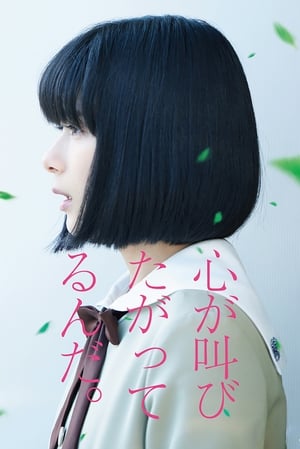
Sōra is a high school student who is basically invisible at school. He is friends with Chūya, who is an unpredictable character that often surprises those around him. Sōra and Chūya both have feelings for the same classmate, Kio Machida. The Machida girl refuses to come to class, because she doesn't want to dye her naturally brown hair black. Their school has unreasonable school rules, especially about uniforms, which include requiring all students to have black hair. Sōra and Chūya decide to stand up to change their school's black school rules so that Machida won’t have to repeat a year of school from missing too many classes.
An elderly Nagasaki hibakusha spends a summer caring for her four grandchildren, whose curiosity about the 1945 bombing stirs buried memories and moral questions. When an American nephew from Hawaii visits, the family confronts grief, guilt, and the possibility of reconciliation across generations.
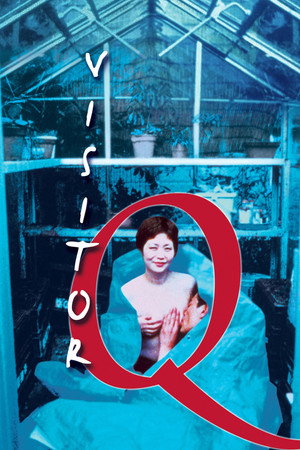
This erotically charged drama traces the intersecting stories of a group of employees and visitors at a notorious "love hotel" in Tokyo's red-light district.
A young man is falsely accused of molesting a high-school girl on a train. He is arrested and charged, and goes through endless court sessions, all the while insisting that he is innocent.
The story is about a convict released from prison for an old murder who is thinking about returning to his ex-wife and his former life. If she puts a yellow handkerchief on the window, it would mean that she wants him back at home.
Two high school girls who are about to graduate also happen to be highly-skilled assassins. When the organization they work for orders them to share a room, their relationship quickly sours. But when they become targets of the yakuza, the girls realize they'll have to work together to survive.
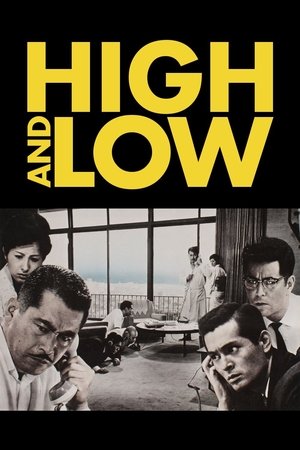
A Yokohama shoe executive faces a wrenching choice when kidnappers mistakenly seize his chauffeur’s son but demand the ransom anyway.