Invisible Revolutions
They have no roots, no seeds, no flowers, but mosses show immense survival capacities and can suspend their biological activity for long periods. Today, researchers are exploring the exceptional resistance of these archaic organisms. British ecologists have even resurrected a "zombie" moss that has been trapped in the permafrost for 1,500 years. Associated with decay and disliked in Europe, mosses are deified in Japan. With 25,000 species worldwide, bryophytes - their scientific name - are the seat of real ecosystems, and can develop in inhospitable landscapes, through an extravagant reproduction cycle.
Although a real awareness of the populations is underway - the multiplication of natural disasters and heat records helping - the human activities responsible for global warming remain unchanged, as if the threat was unreal. This collective immobility could have its origin in the brain. A number of cognitive biases impede judgment.
Secrets of the Empire State Building
"What's on your mind?" It's the friendly Facebook question which lets you share how you're feeling. It's also the question that unlocks the details of your life and helps turn your thoughts into profits.
The sun is the miracle that makes everything possible - but also the greatest danger. For the first time, a feature-length documentary is dedicated to the search for the significance of our home star for mankind, science and nature. Thanks to the researchers from the American space agency NASA, who work at the Canary Islands observatories in the hottest and coldest places on the planet.
Close and daily, sometimes comical but often tragic, sleepiness takes an important place in our lives. Suddenly falling asleep, sometimes with their eyes still open, affects more than 10% of the population. The leading cause of fatal accidents on motorways, drowsiness is also prevalent in the world of work. A silent, irrepressible phenomenon... a flaw in a system of performance, speed, reactivity. So what is happening in our brain? Can we control the conditions of sleepiness? By working on sleep and especially on the functioning of wakefulness, researchers are trying to understand the biological and environmental mechanisms that keep humans at the peak of their abilities. After a clear technological improvement, it turns out that man, having become an expert and process controller, finds it very difficult to focus his attention over time.
In 1996, electric cars began to appear on roads all over California. They were quiet and fast, produced no exhaust, and ran without gasoline... Ten years later, these cars were destroyed.
In October 2023, a European research team succeeded in generating an enormous amount of energy from very little fuel. A success that fusion research had been working towards for around 70 years. Now the competition for a fusion reactor has been reignited. What role can electricity from nuclear fusion play in the future?
Les secrets du mont Olympe
A team of scientists search for the lost island of Testerep in front of the Belgian coast, venturing into artificial landscapes and virtual realities.
A scientific expedition travels to an alternative Earth in hope of finding a new home for humanity, which has destroyed its own planet. But is it even possible to escape old patterns?
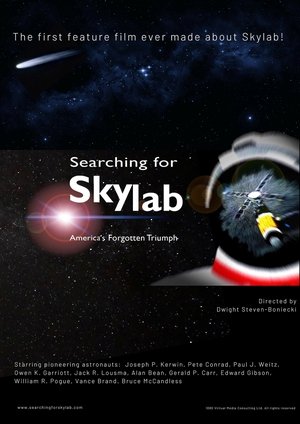
The first American space station Skylab is found in pieces scattered in Western Australia. Putting these pieces back together and re-tracing the Skylab program back to its very conception reveals the cornerstone of human space exploration.
Speed - the obsession of the modern world - is determining what people should eat and how. Traditional foods are at risk of disappearing forever. An international eco-gastronomic movement known as Slow Food champions the protection of traditional culture, the environment and biodiversity while encouraging regional production, food education and pleasure. For these passionate and dedicated food lovers, sustainability, community and lifestyle are as important as seasonality, quality and taste.
More and more bacteria are becoming insensitive to antibiotics, not least due to excessive drug consumption. According to the EU, this problem could soon become as explosive as the environmental issue - and antibiotic resistance threatens to become one of the main causes of death worldwide. Research must therefore find alternatives - not miracle cures, but permanently effective drugs. There has already been one in the past: One hundred years ago, the French biologist Félix d'Hérelle discovered mysterious "bacteria-eating" viruses, known as bacteriophages or phages for short. He used these to successfully treat bacterial infections before the development of antibiotics, but his method was forgotten again. Is bacteriophage therapy the miracle medicine of the future?
Artificial intelligence is taking on different roles in the filmmaking space. The questions we must ask ourselves are: what are the pros and cons of this advancement? How can we work with it, and what power do we have as human beings in the face of this technology?
In the first decades of the 20th century, when life was being transformed by scientific innovations, researchers made a thrilling new claim: they could tell whether someone was lying by using a machine. Popularly known as the “lie detector,” the device transformed police work, seized headlines and was extolled in movies, TV and comics as an infallible crime-fighting tool. Husbands and wives tested each other’s fidelity. Corporations routinely tested employees’ honesty and government workers were tested for loyalty and “morals.” But the promise of the polygraph turned dark, and the lie detector too often became an apparatus of fear and intimidation. Written and directed by Rob Rapley and executive produced by Cameo George, The Lie Detector is a tale of good intentions, twisted morals and unintended consequences.
This documentary outlines the unique properties and latest studies of "Physarum Polycephalum", also known as Blob.
Ring of Fire is about the immense natural force of the great circle of volcanoes and seismic activity that rings the Pacific Ocean and the varied people and cultures who coexist with them. Spectacular volcanic eruptions are featured, including Mount St. Helens, Navidad in Chile, Sakurajima in Japan, and Mount Merapi in Indonesia.
Destination astéroïdes