Starting as a documentary on the sexually liberated culture of late-Sixties Denmark, Sexual Freedom in Denmark winds up incorporating major elements of the marriage manual form and even manages to squeeze in a montage of beaver loops and erotic art. All narrated with earnest pronouncements concerning the social and psychological benefits of sexual liberation, the movie, is a kind of mondo film dotted with occasional glimpses of actual sex.
The story of Tasmanian-born actor Errol Flynn whose short & flamboyant life, full of scandals, adventures, loves and excess was largely played out in front of the camera - either making movies or filling the newsreels and gossip magazines. Tragically he was dead from the effects of drugs and alcohol by the time he was only 50 & the myths live on. But there is another side of Flynn that is less well known - his ambitions to be a serious writer and newspaper correspondent, his documentary films and his interest in the Spanish Civil War and Castro's Cuba
The story about Danish national football (soccer) team, a traditional minnow until the mid-1980s when they improved dramatically and eventually went on to win the European championship in 1992.
Thanks to new excavations in Mauritius and Madagascar, as well as archival and museum research in France, Spain, England and Canada, a group of international scholars paint a new portrait of the world of piracy in the Indian Ocean.
The earliest surviving motion-picture film, and believed to be one of the very first moving images ever created, was shot by Louis Aimé Augustin Le Prince using the LPCCP Type-1 MkII single-lens camera. It was taken on paper-based photographic film in the garden of Oakwood Grange, the Whitley family house in Roundhay, Leeds, West Riding of Yorkshire (UK), on 14 October 1888. The film shows Adolphe Le Prince (Le Prince’s son), Mrs. Sarah Whitley (Le Prince’s mother-in-law), Joseph Whitley, and Miss Harriet Hartley walking around in circles, laughing to themselves, and staying within the area framed by the camera. Roundhay Garden Scene is often associated with a recording speed of around 12 frames per second and runs for about 2 to 3 seconds.
When Rasmus was 15, his mother and siblings moved from the island Bornholm and left Rasmus with his mentally ill father. Influenced by his father's insecurity, anger and failure, Rasmus chooses to move from Bornholm at the age of 18. Two years later, Rasmus is trying to see if a reunion is possible, but in order to forgive and create a new relationship, father and son must go on a common journey that requires extreme courage and determination to succeed.
Award winning documentary filmmakers, Robin, Kathy and Shelly Beeck, with the help of filmmaker Michael Moore, have spent the last five years filming a 60-minute feature-length documentary on Bredo Morstoel, a Norweigan who was frozen by his grandson in 1983. Since then, the world famous...well...stiff has been lying under 800 pounds of dry ice in a TUFF SHED behind his grandsons' castle-like house in the 9000-ft Colorado ski town of Nederland. The grandson, Trygve Bauge, has long since been deported back to Norway, but Grandpa Bredo has remained, unwittingly becoming a worldwide symbol of the legal rights of the temporarily dead....
10 May 1943. Something is spotted drifting ashore off the coast of Northwest Donegal, Ireland. Something that would change the lives of the local people forever.
It’s the hit musical that changed Broadway forever and brought the genius of Lin Manuel Miranda to the attention of legions of fans across the world. A story of how a group of mavericks made an unlikely marriage of hip-hop and history to create the biggest show in America…and are getting ready to conquer the world. Featuring interviews with Miranda, as well as the cast and crew of Hamilton.
A new film made from more than a hundred fragments of archive film, Echoes of the North transports you back to Northern England a century ago, taking its audiences down the highways and byways of northern life in the early 20th century - its industries and rural life, its wartimes and festivals, its transport, holidays, family excursions and huge, city-wide occasions.
Following the Prophet Muhammad’s (PBUH) recommendation to journey to three mosques - (in Makkah, Madinah and Jerusalem), this film sets out in the company of British bass player Danny ‘Hamza’ Thompson to discover the reasons why the last of these three holds such an important place in the hearts of Muslims everywhere.
In 2016, a young Austrialian filmmaker began documenting amateur inventor Peter Madsen. One year in, Madsen brutally murdered Kim Wall aboard his homemade submarine. An unprecedented revelation of a killer and the journey his young helpers take as they reckon with their own complicity and prepare to testify.
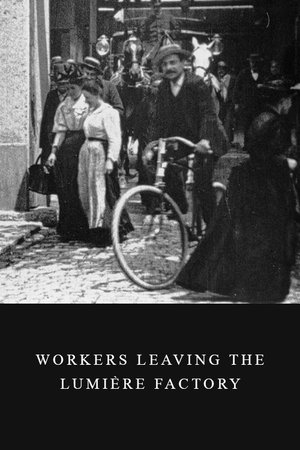
Working men and women leave through the main gate of the Lumière factory in Lyon, France. Filmed on 22 March 1895, it is often referred to as the first real motion picture ever made, although Louis Le Prince's 1888 Roundhay Garden Scene pre-dated it by seven years. Three separate versions of this film exist, which differ from one another in numerous ways. The first version features a carriage drawn by one horse, while in the second version the carriage is drawn by two horses, and there is no carriage at all in the third version. The clothing style is also different between the three versions, demonstrating the different seasons in which each was filmed. This film was made in the 35 mm format with an aspect ratio of 1.33:1, and at a speed of 16 frames per second. At that rate, the 17 meters of film length provided a duration of 46 seconds, holding a total of 800 frames.
Bruno Muel's documentary on the coup in Chile in 1973. Muel, who was part of the famed Medvedkine group, along with Chris Marker and Jean-Luc Godard, among others, captured one of the most powerful portraits of the early days of Dictatorship. Profound solidarity with the socialist cause, Muel and his team showed great courage to mix the official registration of images with those triumphant, clandestine, of the nascent opposition.
A historical perspective to understand Neoliberalism and to understand why this ideology today so profoundly influences the choices of our governments and our lives.
Ethnologist and adventurer, Count Eric von Rosen was a man of contradictions: interested in the natives of Africa and colonial racism. Nestler embarks on a journey in search of his grandfather.
17-year-old Skjold and 18-year-old Isabel are no longer together, but they will always be each other's first love. The film throws us into a whirlwind of conversations, quarrels and happy moments during a long summer in Copenhagen. A vulnerable and confusing time for the two of them, as they try to define who they are, both as a couple and as individuals. They are entangled in romantic feelings and a strong friendship, and find it hard to let each other go, so to break with her feelings, Isabel decides to move to Barcelona on her own. But will their new freedom give Skjold and Isabel the answers to who they are? Emil Næsby Hansen is the fly on the wall, who effortlessly and without interfering is there with the couple during their ups and downs, managing to capture all the emotional nuances. From romantic love and unbearable loneliness to poetic freedom, with the Danish summer as a moody backdrop.
To discover the truth behind the mysterious objects her uncle brought back from the Far East during her childhood, filmmaker Francesca Lixi embarks on a journey to those places through archival footage.
The life of Giuseppe, Maria, and their friends growing up in the charming Sicilian village of Villabate, which evolves over generations.
Danish soldiers are sent to Afghanistan in 2009 for 6 months, to help stabilize the country against the Taliban. They're stationed on Armadillo military base in Helman province. Unlike other war movies, this is the real deal – no actors.