Luciano Pavarotti live from the Piazza Grande, Modena.
Luciano Berio's opera a presented in 1996 in Milan
1987 recording of Wozzeck by the Vienna State Opera with Claudio Abbado conducting. Based upon Georg Büchner's 1837 play, Alban Berg's Wozzeck details the harsh existence of the title character, a former soldier in the German army who has to struggle mightily to make a living, even as others around him prosper.
LUCIANO PAVAROTTI was the rare artist who could easily bridge the divide between classical and popular music. Together with an impressive roster of the best-known names in rock, pop and jazz, Pavarotti entertained millions of people around the world with his "Pavarotti & Friends" concerts. This release is the first time that these tracks have been brought together in one album! Rarely has such a glittering array of singing legends from such varied genres been brought together at one time--on both DVD and CD! Featuring Bryan Adams, Andrea Bocelli, Bon Jovi, Bono/The Edge/Brian Eno, Mariah Carey, Eric Clapton, Sheryl Crow, Celine Dion, The Eurythmics, Elton John, Lionel Richie, Frank Sinatra, Sting and Zucchero.
Rarely has a theatrical world premiere been so warmly received as Dutch National Opera’s production of Arnold Schönberg’s late-Romantic Gurre-Lieder in 2014. The production fulfilled a fervent wish of principal conductor Marc Albrecht. The music of Gurre-Lieder is timeless, and so is its subject: a passionate, yet forbidden love. The story harks back to a Scandinavian saga, situated in Gurre. King Waldemar loves the girl Tove, who is a mysterious character, connected to both the world of people and the world of birds. The queen is jealous and has Tove killed. The Wood Dove tells of this in a moving song and the king accuses God of cruelty. A nightmarish scene follows, of a fierce army killed in battle, which rampages like a horde of ghosts. The radiant dawn at the end of Gurre-Lieder shows the insignificance of human destiny compared to the power of nature.
This incredible look at the preparation and production of a Live in HD cinema transmission takes you behind the scenes of the new Cav/Pag with the HD director, host, stars, and crew for an up-close view of the exciting process behind the Met's extraordinary HD presentations.
Toiere (meaning 'to sing') unites beloved operatic arias, duets, and ensembles in their original languages and te reo Māori, celebrating voice, language, and identity.
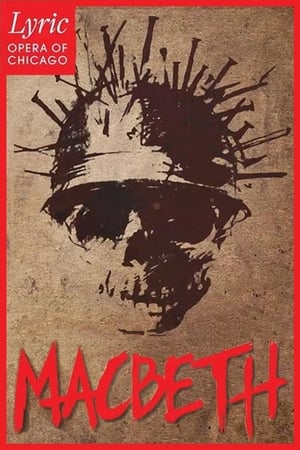
Giuseppe Verdi's opera "Macbeth" staged by Dario Argento, directed by Marco Scalfi.
A behind-the-scenes look at Moscow's prestigious Bolshoi Theatre as it's rocked by an acid-attack scandal in 2013.
A phone call during a busy shift in the restaurant kitchen of The Narcissistic Fish sparks a war between the owner Angus and his brother Kai. As they argue over their dead father, talented and underpaid chef Belle has a revelation of her own. Join Scottish Opera’s Emerging Artists (Charlie Drummond, Mark Nathan and Arthur Bruce) for a visceral exploration of the clash between class, gender and workplace pressure in 21st century Scotland, in this brand new digital opera with music by Samuel Bordoli, libretto by acclaimed Scottish writer Jenni Fagan and directed by in-house film-maker Antonia Bain.
After 2000 years of history, the Arena of Verona is celebrating the Centenary of its Opera Festival with Verdi's AIDA by La Fura dels Baus. From rehearsals to the opening night, we follow the workers and artists who created the most famous operatic festival in the world.
Opera singer and professor Dr P is examined both in a clinic and in his home, as he suffers from a degeneration of the occipital lobe that allows him to see details but not wholes.
Jeanne's beautiful breasts spill out from her torn clothes, and her gouged internal organs lie beneath. The contrast between death and eroticism is captured in a profound image. The opera that unfolds in the underground ward comes to a powerful catastrophe with jazz-like dissonance. Are they the living or the dead, shedding blood and singing in high spirits? The director comments, "This film will be the beginning of a new contemporary opera film“.
This 1981 Bolshoi production performed in the concert hall of The Kremlin is by far the best available, despite the more ‘historical’ picture and mono sound. The production itself is a very classic period production, with utterly authentic costumes and aptly dramatic sets. There are even horses on stage. The depiction of the Don Cossacks’ Khan Konchak and his tribe is colourful and historically informed in one. Needless to say, the scene of the Polovtsian Dances is spectacularly presented with great choregraphy and terrific dancing, in the league of the Spartacus of Bolshoi, no less.
At the end of 2013, the year that marked the 50th anniversary of Francis Poulenc’s death, his gripping and moving operatic masterpiece, Dialogues des Carmélites was staged in Paris by director Olivier Py with a cast featuring some of France’s finest female singers – Patricia Petitbon, Véronique Gens, Sandrine Piau and Sophie Koch – under the baton of Jérémie Rohrer. Le Figaro described the production as “a thing of wonder,” while Le Monde called it: “A masterpiece ... the most exciting and consummately achieved show to have been seen on a Parisian stage in a long time … This was great work, magisterial and unforgettable.” “The memorable Dialogues des Carmélites at the Théâtre des Champs-Elysées marked the climax of commemorative activities for the 50th anniversary of Poulenc’s death,” wrote Opera magazine of the production of Poulenc’s gripping and moving opera that was staged by the French director Olivier Py in Paris in December 2013.
Don Giovanni
The Met production easily has the most beautiful staging, designed by Otto Schenck, who also produced the fabulous set for the Met's previous Ring cycle. Kurt Moll is a wonderful Gurnemanz, but compared to his studio recording under Karajan a decade earlier it has lost some of its original velvety body and luster. As Parsifal, Jerusalem is starting to show some wear and tear on his voice at the Met in 1992 as opposed to his prime form at Bayreuth in 1981, but is still quite good; only Placido Domingo could compete with him in the role at that time.
A valuable testimony that approaches the essence of Nijinsky who did not leave a video. Boris Kochno, who was at the center of Russian ballet, vividly tells how Nijinsky, who had fallen ill, witnessed his newly choreographed self-made work. Nijinsky's successor machine is a rare record of transferring Nijinsky's appearance in the popular work "Afternoon of a Faun" to two great dancers, Grigorowich and Wasiriev, who carry Bolshoi ballet on their backs.
A Scottish lighthouse goes dark. A visiting supply ship finds the building in order. But the keepers have vanished without trace.
The story is set in southern Italy and recounts the tragedy of Canio, the lead clown (or pagliaccio in Italian) in a commedia dell'arte troupe, his wife Nedda, and her lover, Silvio. When Nedda spurns the advances of Tonio, another player in the troupe, he tells Canio about Nedda's betrayal. In a jealous rage Canio murders both Nedda and Silvio. Although Leoncavallo's opera was originally set in the late 1860's, Zeffirelli's production is updated to the period between World War I and World War II.