Canada was led to war by a bigoted, ignorant, self-obsessed Minister of Militia, who may well have been clinically insane, but the importance of Canada's contribution in that war owes a great deal to him. The man of course, was Colonel - later made Lieutenant General by his own hand - Sam Hughes. Sam's Army is a compelling portrait of a complex man and the formidable military he built. Sam Hughes was not your standard-issue military leader. Canada's World War I Minister of Militia and Defence concentrated power in his own hands, insisted that the Canadian military use the ill-conceived Ross rifle and liberally promoted his cronies. But there was no denying Hughes was a visionary. He assembled the world's largest-ever volunteer army and bucked superiors to keep his ferocious fighting force together in one Canadian Corps.
A two-hour documentary which recreates for the viewer one of the greatest battles in Canadian military history. The film was made to show that Canadian character at its best, forging an identity for a country that before the First World War had been seen only as a British colony - an identity and a character that became recognized and respected throughout Europe.
Canadian military accomplishments in the last hundred days of World War I, when the German Army was destroyed, surpassed those of any other army. The Canadian success was, in no small measure, due to Arthur Currie, whom a recent British historian describes as "the most successful Allied General and one of the least well known."
Over Beautiful British Columbia is a spectacular scenic tour of Canada's Pacific province. Savor the grandeur of British Columbia as you join a helicopter adventure from elegant Victoria to rugged Fort Nelson, from the ski slopes of Whistler to the sun-drenched Okanagan shores, from the razor spine of Mount Robson to the primeval coast of the Queen Charlotte Islands.
Documentary on career criminal Jack Black during an episode of burglary in Victoria BC. Locations around Victoria and Vancouver are explored in present day, with narration from Black's autobiography.
Experimental meditation on land, consciousness, and artificial intelligence. Shot in the Okanagan and West Kootenays. Original music by Jack Brintnell.
The world knows the image of the good Canadian. But what if there was a dark secret behind a national identity? THE GOOD CANADIAN exposes the truth behind the idea of a True North strong and free. In this unflinching and eye-opening documentary, directors Leena Minifie and David Paperny move us through the corridors of systemic inequity, from the Indian Act to residential schools, to modern-day family separation. Fusing shocking footage with detailed interviews with experts, advocates, whistleblowers and politicians, THE GOOD CANADIAN challenges national myth-making, while offering Canadians the chance to forge a new identity from the truth.
Gil Cardinal searches for his natural family and an understanding of the circumstances that led to his becoming a foster child. An important figure in the history of Canadian Indigenous filmmaking, Gil Cardinal was born to a Métis mother but raised by a non-Indigenous foster family, and with this auto-biographical documentary he charts his efforts to find his biological mother and to understand why he was removed from her. Considered a milestone in documentary cinema, it addressed the country’s internal colonialism in a profoundly personal manner, winning a Special Jury Prize at Banff and multiple international awards.
Upon learning of his father's terminal illness diagnosis, a young, autistic, hearing-impaired artist travels back to Taiwan with a filmmaker to make a film in his honour.
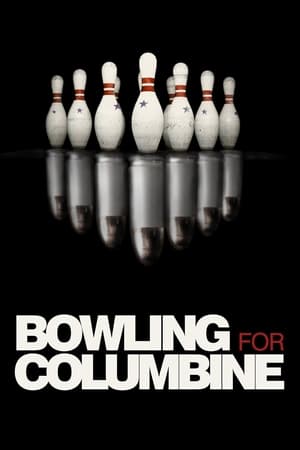
This is not a film about gun control. It is a film about the fearful heart and soul of the United States, and the 280 million Americans lucky enough to have the right to a constitutionally protected Uzi. From a look at the Columbine High School security camera tapes to the home of Oscar-winning NRA President Charlton Heston, from a young man who makes homemade napalm with The Anarchist's Cookbook to the murder of a six-year-old girl by another six-year-old. Bowling for Columbine is a journey through the US, through our past, hoping to discover why our pursuit of happiness is so riddled with violence.
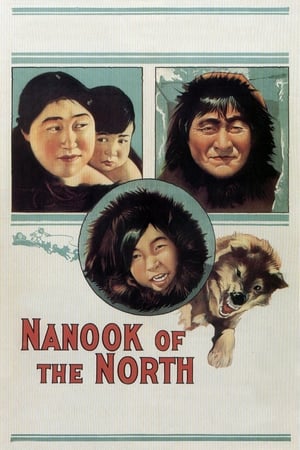
This pioneering documentary film depicts the lives of the indigenous Inuit people of Canada's northern Quebec region. Although the production contains some fictional elements, it vividly shows how its resourceful subjects survive in such a harsh climate, revealing how they construct their igloo homes and find food by hunting and fishing. The film also captures the beautiful, if unforgiving, frozen landscape of the Great White North, far removed from conventional civilization.
Director Mirjam Leuze’s The Whale and The Raven illuminates the many issues that have drawn whale researchers, the Gitga’at First Nation, and the Government of British Columbia into a complex conflict. As the people in the Great Bear Rainforest struggle to protect their territory against the pressure and promise of the gas industry, caught in between are the countless beings that call this place home.
After their success climbing the world’s hardest offwidth, the Wide Boyz, Pete Whittaker and Tom Randall, embark on their next crack climbing mission. This time their sights are set on the thinner end of the crack climbing spectrum. Their goal is the mighty Cobra Crack in Squamish BC, considered to be the hardest finger crack in the world. First climbed by Canadian ‘rock star’ Sonnie Trotter after battling it out with Didier Berthod, the route hit the media spotlight in the film First Ascent. With no local hard cracks to train on, the Wide Boyz refit their underground training dungeon and commit to a year of torturous finger training. With only a short trip to Canada planned, the Boyz face their biggest challenge yet against the sharp granite bite of the mighty Cobra Crack!
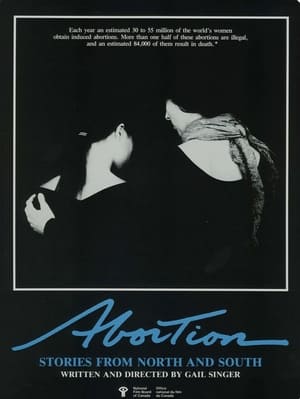
Women have always sought ways to terminate unwanted pregnancies, despite powerful patriarchal structures and systems working against them. This film provides a historical overview of how church, state and the medical establishment have determined policies concerning abortion. From this cross-cultural survey--filmed in Ireland, Japan, Thailand, Peru, Colombia, and Canada--emerges one reality: only a small percentage of the world's women has access to safe, legal operations.
Documentary about a place in Canada above the tree line.
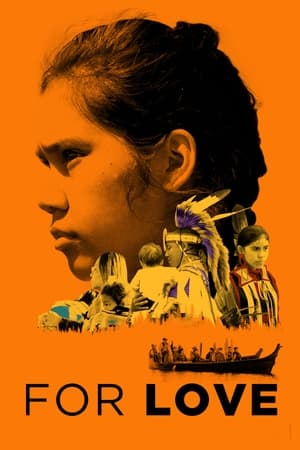
Three intrepid women battle for Indigenous women's treaty rights.
Every winter for decades, the Northwest Territories, in the Canadian Far North, changes its face. While the landscape is covered with snow and lakes of a thick layer of ice, blocking land transport, ice roads are converted to frozen expanses as far as the eye can see.
A feature length documentary about extraordinary Canadian singer songwriter, Ron Hynes... an insightful and entertaining exploration of the creative process, the genesis of song, the meaning of performance and the vulnerability of an artist compelled to bare his soul through his music. The film is comprised of Ron performing his music (distinct and live for the camera), interwoven with very intimate black box 'interviews' with Ron (shot tightly and directly addressed to the camera), in which he discusses the songs and the life that informed them: late nights, dark alleys, marriage, children, divorce, his near death and recovery from drug addiction... and punctuated with back stage moments, insight from the street, and Ron's nephew author Joel Thomas Hynes, taking the role of 'chorus of the people'.
From challah to immigration to the wandering Jew, Ma Nishma Manitoba is a mid-length documentary that explores Manitoban Jewish stories of identity and history. Filmmakers Johanna and Sara put their own experiences in local context by chatting with several Jewish Manitobans, including a rabbi, politician, artist, Israeli immigrant, and others. Archival materials, illustrations, and stop animations connect history with present-day opinions and stories, as Sara and Johanna explore what being Jewish in Manitoba means to them and others.
An intimate look into Demers family's experience raising children while dealing with the societal stigmas around disabilities and the consequences of Alberta's forgotten experiment in eugenics.