The Fall of the I-Hotel brings to life the battle for housing in San Francisco. The brutal eviction of the International Hotel's tenants culminated a decade of spirited resistance to the razing of Manilatown. The Fall of the I-Hotel works on several levels. It not only documents the struggle to save the I-Hotel, but also gives an overview of Filipino American history.
During World War II, many Japanese immigrants in Santos, Brazil, were forced to move to another place. Matsubayashi draws attention to the fact that 60% of the immigrants were from Okinawa. Based on testimonies from interviewees, this film reveals the hidden historical relationship between Okinawa and Brazil.
In Surinamers in Nederland: De terugkeer van het zwarte goud, we see Surinamese people arriving in the Netherlands, unsure of what to expect, and being packed into overcrowded boarding houses. The government's idea is that they should then be integrated into society as quickly as possible. This was to be done by the Centraal Bureau Uitvoering Vestigingsbesluit Rijksgenoten, set up in 1974.
The Heroes of the Massacre River is a powerful documentary that chronicles the stories of the pioneers behind the construction of the historic Canal of Ouanaminthe, a project that united Haitians across the nation and the diaspora. This film celebrates the groundbreaking efforts of key figures, centering on Dr. Bertrhude Albert, Dr. Naismy-Mary Fleurant, architect Wideline Pierre, economist Etzer Emile as well as dedicated canal workers Milourie Sylfrard, Theodore Johnson and Joseph Pressoir — all guided by the investigative journey of Max Angie Clervil. It also serves as a commentary on the complexity of colonialism and borders, tracing the role that the Massacre River continues to play in the history of Ayiti.
Mark Urban tells the inside story of Britain's fight for Helmand, told with unique access to the generals and frontline troops who were there.
A documentary featuring interviews with teachers and officials on the profession of teaching and what it means to them.
yaya/ayat explores identities, being lost in translation and distance. But at its core it's about the filmmaker longing for a relationship with her geographically distant grandma and her journey to Greece to find her. This is an experimental documentary about how being a part of any diaspora shapes a person's identity.
"No Book This Year" tells the story of Yalda, a former staff member of Afghanistan's booth at the Frankfurt Book Fair. Years after the booth's closure, Yalda takes it upon herself to independently relaunch Afghanistan's presence at the fair. Despite numerous challenges and obstacles, her unwavering determination to showcase Afghan literature and culture shines through, illustrating the resilience of the human spirit in preserving cultural heritage.
Australian riders Clint Allan, Mitch Allan and Nick Gregory make a once-in-a-lifetime journey to ride untouched awe-inspiring mountains, and experience the rich culture, in one of the most remote and dangerous parts of the world.
Rosa is from Croatia and lives in Switzerland, with her husband who depends on her care. She takes care of everything. Her children have grown up and want to leave home. Rosa stays behind alone.
Documentary Film maker, Mark Brown, attempts to discover the damaging effect the over-spilling immigrant population has on the coastal city of Calais, France.
Over 90% of the world's opium now comes from Afghanistan. In this shocking new film, we ride the drugs caravan, from cultivation, to process, to market. On route, we lift the curtain on the hidden world of the drug barons; learn how to process heroin in the crudest of laboratories and encounter deadly gunfights on the Iranian border.
A short documentary that follows Korean grandparents as they share their modern-day reckoning of their immigration story and grandparenthood.
In 1960, acclaimed filmmaker James Ivory traveled to Afghanistan to shoot scenes for a documentary that was never completed. In 2022, he decided to revisit this unique footage, which takes him back to his adventurous youth.
Unfolding over 18 monumental days in August 2021, this deeply immersive and emotional documentary combines never-before-seen archival footage from those on the ground at the airport with exclusive interviews with people who were there throughout the period, including Afghan citizens attempting to flee, U.S. Marines tasked with managing the evacuation, and Taliban commanders and fighters who had recently taken the city.
The eight-year Iran-Iraq War was one of the most brutal conflicts to devastate the region in the 20th century. Zahed was 13 years old when he enrolled in the Iranian army. Najah was 18 when he was conscripted into the Iraqi army, and he fought against Zahed in the Battle of Khorramshahr. Fast forward 25 years, a chance encounter in Vancouver between these two former enemies turns into a deep and mutually supportive friendship. Expanded from the 2015 short film by the same name.
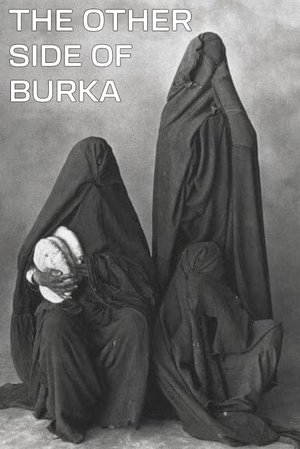
The Other Side of Burka is a 2004 Iranian documentary directed by Mehrdad Oskouei. In the southern island of Qeshm, Iran, which is a very strict region in point of tradition and African-Arabic rules, all women are under the pressure of patriarch society. Their sufferance is manifested by different mental (Zar, Possession) and physical diseases which must be only treated by Zar Ceremony. For the first time, despite the danger these women face, this film tells us the sad story of their life and shows their confection in front of the camera. It tries to be an honest mirror which reflects their sufferance and unveils their Burka to reveal their real characters.
An undercover investigation focuses on the Taliban's crackdown on women in Afghanistan.
Charming amateur film featuring the Eisner family, who emigrated to Britain from Romania the year this film was made.
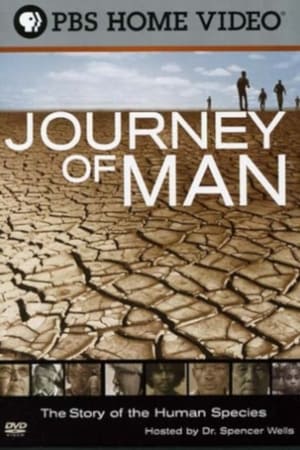
Many geneticists and archaeologists have long surmised that human life began in Africa. Dr. Spencer Wells, one of a group of scientists studying the origin of human life, offers evidence and theories to support such a thesis in this PBS special. He claims that Africa was populated by only a few thousand people that some deserted their homeland in a conquest that has resulted in global domination.