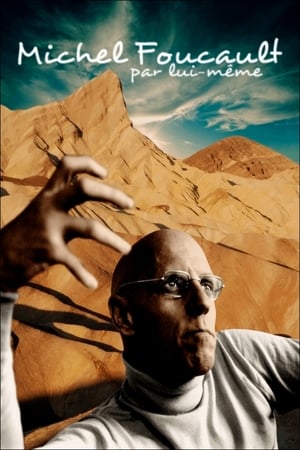
A voyage to the center of the thought of Michel Foucault (1926-1984), a tireless explorer of the margins, a brilliant and atypical thinker, through excerpts from his books and lectures, and the use of images that resonate with them.
Le besoin de croyance et le besoin de vérité
In a time of resurgence of social protests, political radicalization and distrust of power, Arendt's thought has never been more relevant: A critical thinker according to some or a conservative according to others, this great figure of the intellectual world remains, in many ways, an enigma. Who was Hannah Arendt?
102 Years in the Heart of Europe: A Portrait of Ernst Jünger (Swedish: 102 år i hjärtat av Europa) is a Swedish documentary film from 1998 directed by Jesper Wachtmeister. It consists of an interview by the journalist Björn Cederberg with the German writer, philosopher and war veteran Ernst Jünger (1895-1998). Jünger talks about his life, his authorship, his interests and ideas. The actor Mikael Persbrandt reads passages from some of Jünger's works, such as Storm of Steel, The Worker, On the Marble Cliffs and The Glass Bees.
Xan García, in search of the meaning of things, interviews 13 classmates to discuss and reflect on life. They talk about death, love, happiness, and life itself. Finally, upon finishing high school, the 13 participants say goodbye and embrace the future that awaits them: the adult world. "An exhilarating story" - Ian Porto
The documentary focuses on the annual Mani Rimdu festival of Tibet and Nepal, an event which encapsulates the Himalayan Buddhist experience.
A colorful and provocative survey of anarchism in America, the film attempts to dispel popular misconceptions and trace the historical development of the movement. The film explores the movement both as a native American philosophy stemming from 19th century American traditions of individualism, and as a foreign ideology brought to America by immigrants. The film features rare archival footage and interviews with significant personalities in anarchist history including Murray Boochkin and Karl Hess, and also live performance footage of the Dead Kennedys.
A critical analysis by Jacob Geller analyzing the depiction of head- (or consciouness-) transplants in video games such as Wolfenstein 2 or Soma in parallel with the history of the almost-father of head transplants (his experiences having been limited to monkeys), Robert Joseph White. How did we end up moving the center of human consciouness from the heart to the brain ? Where does the soul come in to play here? When is the body / Theseus' ship no longer the body / Theseus' ship for having had its limbs / its wood transplanted too much ?
Amid Guanajuato's vibrant streets, an aging filmmaker becomes a modern Don Quixote, joined by a spirited young animator as his loyal Sanchia. Together, they navigate themes of mortality, unfulfilled dreams, and the fragile line between madness and clarity, uncovering the transformative power of light, art, and the landscapes that shape our souls.
Published in 1949, The Second Sex became the bible of global feminism. An essential work that passionately advocates for gender equality, women's independence, and the liberation of morals. Today, how does this seminal work continue to resonate in our contemporary world? Conceived as an initiatory journey to the origins of Simone de Beauvoir's thinking, the film The Second Sex: In the Footsteps of Simone de Beauvoir takes us to the United States, to the places that inspired the philosopher and nourished her theories. An American road trip bringing together the worst and the best, predatory capitalism and mad love. A unique reinterpretation in the company of the great thinkers of our century.
Tudo é Irrelevante. Hélio Jaguaribe
A discussion between Jean Hyppolite, Georges Canguilhem, Paul Ricoeur, Michel Foucault and Alain Badiou on the subject of philosophy and truth. Curated by Dina Dreyfus.
Explorer Bruce Parry visits nomadic tribes in Borneo and the Amazon in hope to better understand humanity's changing relationship with the world around us.
Musings on life and literature in this student drama made by the Cambridge Film Unit.
Examined Life pulls philosophy out of academic journals and classrooms, and puts it back on the streets. Offering privileged moments with great thinkers from fields ranging from moral philosophy to cultural theory, Examined Life reveals philosophy's power to transform the way we see the world around us and imagine our place in it.
A feature length documentary which invites the viewer to rediscover an enchanted cosmos in the modern world by awakening to the divine within. The film examines the re-emergence of archaic techniques of ecstasy in the modern world by weaving a synthesis of ecological and evolutionary awareness,electronic dance culture, and the current pharmacological re-evaluation of entheogenic compounds.
Documentary examining the medieval myth of the Philosopher's Stone, a Holy Grail-type relic which supposedly held the key to alchemy and immortality. Many noted alchemists and adventurers searched obsessively for the artifact hoping to learn its powerful secrets, a quest which allegedly drove some to madness and others to celestial encounters.
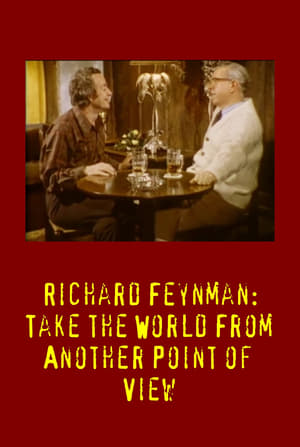
In 1973 Yorkshire public television made a short film of the Nobel laureate while he was there. The resulting film, Take the World from Another Point of View, was broadcast in America as part of the PBS Nova series. The documentary features a fascinating interview, but what sets it apart from other films on Feynman is the inclusion of a lively conversation he had with the eminent British astrophysicist Fred Hoyle.
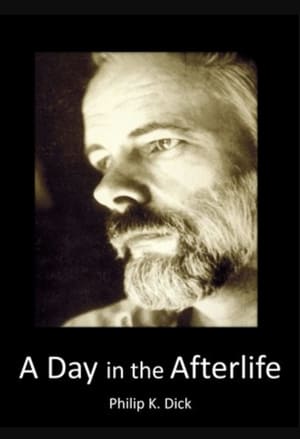
A poetic look at the life and legacy of legendary author Philip K. Dick (1928-1982), who wrote over a hundred short stories and 44 novels of mind-bending sci-fi, exploring themes of authority, drugs, theology, mental illness and much more.
This refreshingly frank and impartial study of the discovery and development of the notorious hallucinogenic drug is notably free of moral judgmental, and features contributions from such legendary heroes of psychedelia as Albert Hoffman - the Swiss scientist who discovered the drug - Aldous Huxley - author of 'The Doors of Perception' - Ken Kesey - author of 'One Flew Over the Cuckoo's Nest.