In his new film, Erwin Wagenhofer is looking for the good and beautiful in this world.
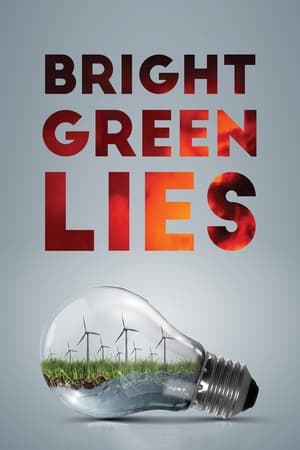
Bright Green Lies investigates the change in focus of the mainstream environmental movement, from its original concern with protecting nature, to its current obsession with powering an unsustainable way of life. The film exposes the lies behind the notion that solar, wind, hydro, biomass, or green consumerism will save the planet. Tackling the most pressing issues of our time will require us to look beyond the mainstream technological solutions and ask deeper questions about what needs to change.
L'éclosion low-tech
A short documentary illustrating how art can influence public perception towards environmental issues. Green Patriot Posters is a highly acclaimed multimedia design campaign that challenges artists to deepen public understanding and ignite collective action in the fight against climate change. So far, it has reached five million people through print media, public space and digital culture. The film features interviews with key Green Patriot Posters contributors (Shepard Fairey, Michael Bierut, DJ Spooky, Mathilde Fallot) and its founders (The Canary Project, Dmitri Siegel).
Dr George McGavin and Dr Zoe Laughlin set up base camp at one of the UK's biggest sewage works to investigate the revolutionary science finding vital renewable resources and undiscovered life in human waste. Teaming up with world-class scientists, they search for biological entities in sewage with potentially lifesaving medical properties, find out how pee can generate electricity, how gas from poo can fuel a car and how nutrients in waste can help solve the soil crisis. They follow each stage of the sewage treatment process, revealing what the stuff we flush can tell us about how we live today, and the mindboggling biotechnology being harnessed to clean it, making the wastewater safe enough to return to the environment.
13-year-old inventor Aidan has discovered that trees use a mathematical formula to gather sunlight in crowded forests. Now he wonders why we don't collect solar energy the same way.
Invisible Revolutions
Winfried Kretschmann is the first Green politician to rise to the top of a state government — and so far the only one. He has governed Baden-Württemberg as Minister-President since 2011, longer than any of his predecessors. Soon, his tenure will come to an end: Kretschmann will not run again in the 2026 state election. This film takes stock of his time in office. A Catholic with a communist past. A conservative in a left-leaning party. A Green in the automotive heartland of Baden-Württemberg: Winfried Kretschmann’s political biography is a long journey marked by surprises and contradictions. Jenni Rieger and Jürgen Rose retrace this path. They speak with Kretschmann’s party colleagues and coalition partners, long-time close aides and early companions such as Joschka Fischer, Cem Özdemir, and Annalena Baerbock, as well as political rivals like Volker Bouffier, Markus Söder, and Bodo Ramelow. Has Germany’s first Green Minister-President changed the country?
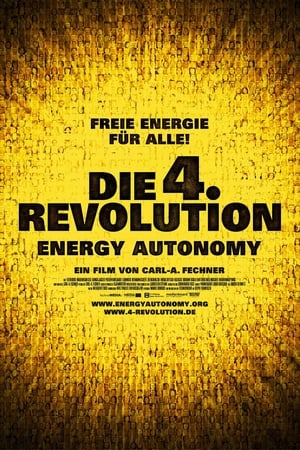
The documentary presents a compelling vision: a global community whose energy supply is 100 percent renewable, accessible, affordable, and clean for all. A global restructuring that reorganizes the balance of power and distributes capital more fairly could begin now. We just have to do it!
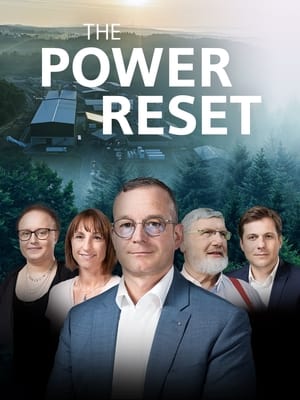
20 years ago the small town of Wunsiedel was at the edge: businesses had to close, jobs were lost, locals left for good. When a bunch of idealists decided to stop this race to the bottom. They developed a plan not only to put the region's energy supply on a completely new foundation, but also to create new prospects.
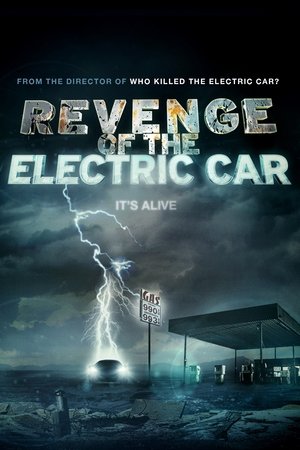
A sequel to 2006's Who Killed the Electric Car?, director Chris Paine once again looks at electric vehicles. Where in the last film electric cars were dismissed as uneconomical and unreliable, and were under multiple attacks from government, the auto industry, and from energy companies who didn't want them to succeed, this film chronicles, in the light of new changes in technology, the world economy, and the auto industry itself, the race - from both major car companies like Ford and Nissan, and from new rising upstarts like Tesla - to bring a practical consumer EV to market.
Stocker l'énergie - Un défi technologique
In Lopera (Jaén), the ecological transition has turned into a nightmare: centuries-old olive groves are being uprooted to make way for massive photovoltaic plants, in an unfair battle between powerful corporations and the local community. Through firsthand testimonies, striking visuals, and an analysis of the current energy model, Forced Renewables reveals how progress, when poorly planned and disconnected from rural life, can lead to an unprecedented ecological, social, and economic disaster.
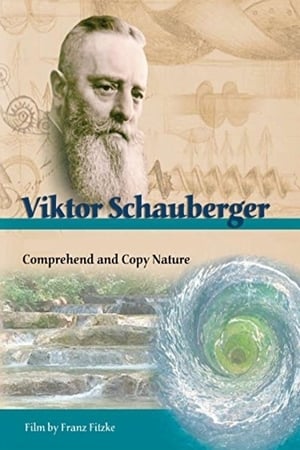
The first film about Viktor Schauberger's life's work. A comprehensive survey of historical facts, current research and various practical applications into both technology and the natural world.
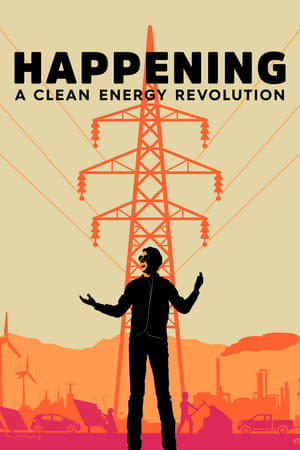
Filmmaker Jamie Redford embarks on a surprising journey across the U.S. to meet entrepreneurs, community activists and ordinary citizens who are pioneering the use of clean energy technology, often in the most unlikely places, in the process creating jobs, turning profits and making Americans’ lives healthier.
De l'eau dans le gasoil
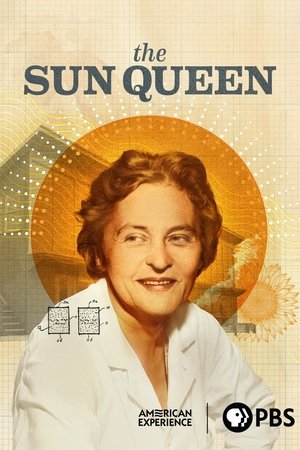
Chemical engineer and inventor Maria Telkes worked for nearly 50 years to harness the power of the sun, designing and building the world's first successful solar-heated modern residence and identifying a new chemical that could store solar heat like a battery. Telkes was undercut and thwarted by her (male) boss and colleagues at MIT, but she persevered. Upon her death in 1995 Telkes held more than 20 patents, and now she is recognized as a visionary pioneer in the field of sustainable energy whose work continues to shape how we power our lives today.
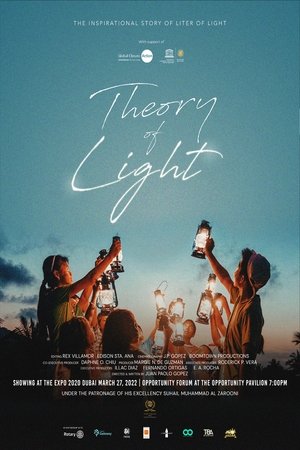
Theory of Light is a documentary centred on the climate emergency through a climate justice lens. It's committed to uplifting the perspectives of communities already being impacted by climate change and representing those who feel excluded from the climate movement.
A three year self-described labour of love, 2040 takes the form of a visual letter from the filmmaker to his four-year-old daughter Velvet, showing her what the year 2040 could look like “if we simply embraced the best solutions that exist today.”
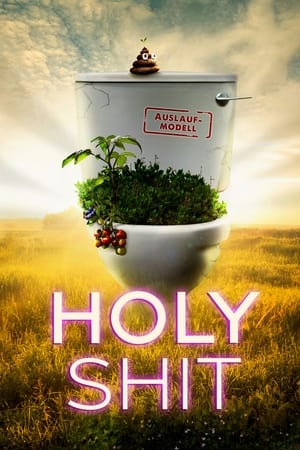
What happens to the food we digest after it leaves our body? Is it waste that is thrown away or a resource that can be reused? In search of answers, director Rubén Abruña embarks on an investigative and entertaining search through 16 cities on four continents. He follows the trail of feces from the long sewers of Paris to a huge sewage treatment plant in Chicago.