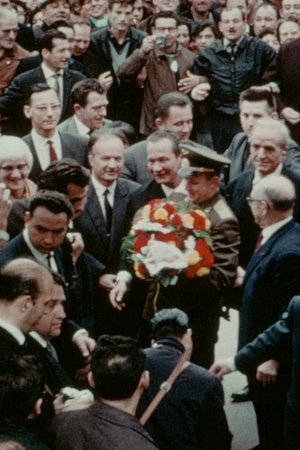
Yuri Gagarin's triumphant visit to Ivry-sur-Seine, in the Paris suburbs, for the Cité Gagarine inauguration.
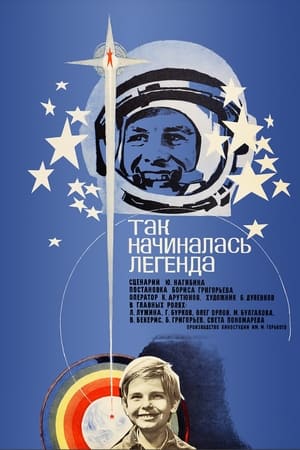
The film tells about the childhood of Yuri Gagarin, about that time of life, which, in his own words, played an important role in shaping his character: war, the occupation of their villages by the Germans, famine, the theft of the elder brother and sister to Germany, the expulsion of the Nazis from Smolensk, moving family in the city of Gzhatsk.
Yohji Jamamoto: Rebel In Black
Even before the days of top-rated global shows, Ukrainian television had no money for international formats. To retain viewers, TV workers created original programs. As a result, cult TV shows appeared and gave Ukraine stars who became symbols of the era. Ihor Pelykh sends strangers on a romantic journey, Kuzma Skryabin makes the contestants spend money quickly, and Ihor Kondratyuk makes stars in one day. This is a story about the diverse and sincere Ukrainian television of the noughties, the legacy it left and why everything changed.
In 2001, young Kyiv developers led by Serhiy Hryhorovych decided to create the most complex game in the world with realistic graphics, an open world and an unusual plot revolving around the Chornobyl zone. With the launch of the promotional campaign, tens of thousands of people around the world were waiting for STALKER, but the developers became hostage to their ambitions. They endlessly improved the game, postponing its release date every year. But at one point, the American publisher's patience ran out.
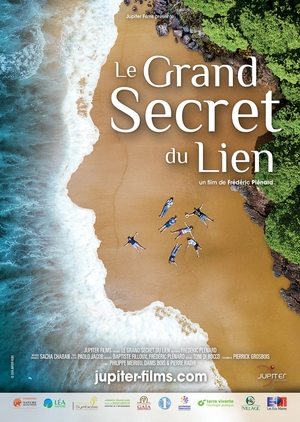
In 2009, the underwater world around the Central Polynesian Sporades in the eastern Pacific was intact. But a few years later, the corals died massively. Now they have recovered.
Sanctuary Station traces a series of encounters with women and youth who have cultivated intrinsic attachments to the various life forms inhabiting the redwood forests and remote terrains of northwestern California. Oscillations between the desire for solitude and the need for collaboration recur through an album-like progression of personal stories and actions. These encounters are framed through the poems of Mary Norbert Korte (1934-2022), an ex-nun who built her own cabin deep in the forest, adjacent to a former logging railroad. Korte’s life and work bear witness to the daily phenomena of internal and external experience. Depictions of ongoing forest defense movements, collective and personal rites of mourning, and intimate everyday routines evoke cycles of life unfolding within this intricately interwoven environment.
A TikTok creator who gained popularity under the username JinnKid in late 2019, Ali Abulaban is known for his viral Skyrim and Scarface comedic impressions, often featuring his beautiful wife, Ana. To his fans, Ali is talented, funny, charismatic and has a picture-perfect relationship with the modelesque Ana. They seemingly have it all, but not everything online is as it seems. Under the surface is a relationship falling apart, full of domestic violence, and Ali is filming it -- disturbing never-before-seen footage of private fights from his cell phone. In October of 2021, the abuse takes a deadly turn that leaves two people dead, and another facing a lifetime behind bars.
Documentary relating Ingmar Bergman's life, from his high school graduation up until he became an established filmmaker in the latter half of the 40's.
A firestorm has been raging on many American college campuses. Ignited by the devastating October 2023 Hamas attack on Israel and the catastrophic war in Gaza, the outrage deeply divided American campuses and in some places devolved into hate-filled rhetoric and arrests. FRONTLINE and Retro Report have been following the escalating turmoil since the war began — talking to people on all sides of the divide, investigating how universities have responded, how powerful interests joined the fray, and how the conflict over the conflict ultimately spiraled out of control. From director James Jacoby (Netanyahu, America & the Road to War in Gaza, Amazon Empire, Age of Easy Money) and Retro Report producers Scott Michels and Joseph Hogan, Crisis on Campus examines how the debate over one of the world’s most intractable and complex conflicts has gripped American college campuses.
Situation 1: Mondongo, a duo of Argentinian artists, create a work inspired by The Art of colors, a treatise by Johannes Itten. Situation 2: A filmmaker begins a portrait of them.
Once again, David Graham Scott examines how some addicts use the plant medicine iboga to detox rapidly—and how, sometimes, the conditions in which they detox put them at risk.
An autobiographical essay film structured as a letter to the director’s young daughter, "Où en êtes-vous, Bertrand Bonello?" weaves clips from Bonello’s films, excerpts from his scripts, pop songs, and snippets of original footage into a lyrical, reflexive cinematic self-portrait. "Où en êtes-vous?" is a collection initiated by Centre Pompidou, who asked directors to make retrospective and introspective films.
Based on more than two decades of systematic research and cross-cultural comparison by comparative mythologist David Talbott, Remembering the End of the World reconstructs a cosmic drama when planets hung in the sky close to the earth–an epoch of celestial wonder giving way to overwhelming terror. This highly visual presentation offers new answers to enigmas that have baffled experts for centuries. Why did every ancient civilization celebrate a former “Age of the Gods”, an age claimed to have ended in earth threatening disaster? What was meant by the lost “Golden Age?” Why did ancient sky worshipers refer to Saturn as “the sun?” Why was Venus worshiped as the “Mother Goddess?” And why did both Old and New World astronomers celebrate the planet Mars as a great warrior whose battles shook the heavens?
A hybrid documentary about the decommissioning of a nuclear plant in Scotland. Concerned with landscape and time, myth and technology, the film explores the nature of ruins, and asks what environmental scars our generation will leave behind for the future.
Cobby's Hobbies was a 1960's children's TV program featuring a chimpanzee getting hmself into all sorts of mischief. For filmmaker Donna McRae, the show was a crucial part of getting through a lonely childhood. McRae seeks people that made the show, Cobby's zoo friends, zoo keepers and the animal rights activists that help her piece together the story of an animal stolen from his natural habitat to work on TV before, being retired into the San Francisco Zoo at age 7. Most primates chimps in entertainment suffered horrifically, becoming research animals or caged in roadside zoos. This documentary examines how we perceive animals in entertainment and how we address their plight now.
The story of Dujuan, a 10-year-old Aboriginal boy living in Alice Springs, Australia, who is struggling to balance his traditional Arrernte/Garrwa upbringing with a state education.
Samuel’s home port is in Gaspesia, eastern Quebec, in Saint-Maxime-du-Mont-Louis. It is winter and the fishing boats have been put into dry dock. Samuel makes the most of this respite to implement his career plan. He wants to buy the boat from Clément, who is retiring, and become his own captain. Samuel is ambitious and passionate. Despite the obvious difficulties represented by such a project today, the strengthening of regulations, quotas and diminishing resources, he persists with his idea. Few young people in his village have chosen to stay like him and even fewer have chosen to take over a traditional activity that is jeopardised these days.
Originally there was a silence. That of Malek, the filmmaker’s father, who for years said nothing of his childhood in Algeria. And then, the need to break the silence, with a script that he gives to his children, to start telling his story. Several years later, the father and daughter finally make the journey to Mansourah, his native village: seeing his house, meeting other men who experienced the same heartbreak. Little by little, the film reveals what Malek, like many others, has long kept quiet about.
Before sliding into the uniform of his father, the dictator and founder of the “Republic” of North Korea, Kim Jong II was passionate about film. He was said to have a collection of 20,000 videos, with a predilection for action films… from the West of course. One-time director of Arts and Humanities at the Department of Agitation and Propaganda, he wrote in the 1970s an essay on the theoretical practice of how the 7th art should express the ideology in place. Jan Iljäs drew inspiration from the clear principles of the “Shining Star” to create a short film composed of shots taken during a touristic trip to the country.