Sixty years ago, the Canary Islands were the first in Europe to adopt desalination of ocean water to produce drinking water. Often considered a miracle solution, is this technique compatible with sustainable development?
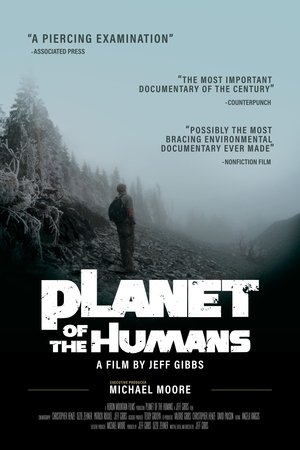
Forget all you have heard about how “Renewable Energy” is our salvation. It is all a myth that is very lucrative for some. Feel-good stuff like electric cars, etc. Such vehicles are actually powered by coal, natural gas… or dead salmon in the Northwest.
Dr George McGavin and Dr Zoe Laughlin set up base camp at one of the UK's biggest sewage works to investigate the revolutionary science finding vital renewable resources and undiscovered life in human waste. Teaming up with world-class scientists, they search for biological entities in sewage with potentially lifesaving medical properties, find out how pee can generate electricity, how gas from poo can fuel a car and how nutrients in waste can help solve the soil crisis. They follow each stage of the sewage treatment process, revealing what the stuff we flush can tell us about how we live today, and the mindboggling biotechnology being harnessed to clean it, making the wastewater safe enough to return to the environment.
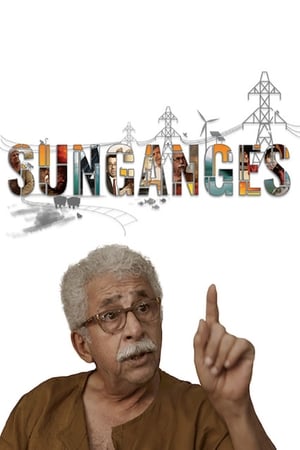
A panoptic film on water, energy and climate, SunGanges (SuryaGanga) is a wild and intense ride three filmmakers take across the vast Indian landscape in an attempt to connect the dots between vanishing rivers, massive energy projects and the quiet rise of renewable energy.
A three year self-described labour of love, 2040 takes the form of a visual letter from the filmmaker to his four-year-old daughter Velvet, showing her what the year 2040 could look like “if we simply embraced the best solutions that exist today.”
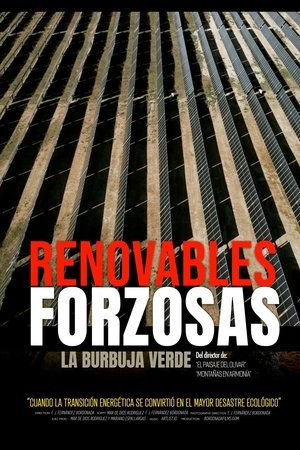
In Lopera (Jaén), the ecological transition has turned into a nightmare: centuries-old olive groves are being uprooted to make way for massive photovoltaic plants, in an unfair battle between powerful corporations and the local community. Through firsthand testimonies, striking visuals, and an analysis of the current energy model, Forced Renewables reveals how progress, when poorly planned and disconnected from rural life, can lead to an unprecedented ecological, social, and economic disaster.
Documentary about human impact on the world.
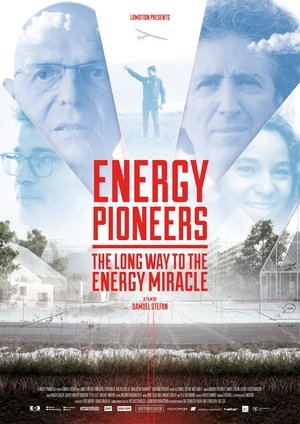
«Energy Pioneers» portrays two visionaries and their fellow campaigners as they fight to solving one of humanity’s most challenging problems. A film about obstacles, crises and the power of an idea.
Offshore wind farms are a major player in the move away from fossil fuels, especially in the North Sea, and they are increasing in number. But their impact on the environment is not yet clear: We take a look at ongoing research in Europe that is measuring the impact of wind turbines and their harm, or benefit, to biodiversity in our seas.
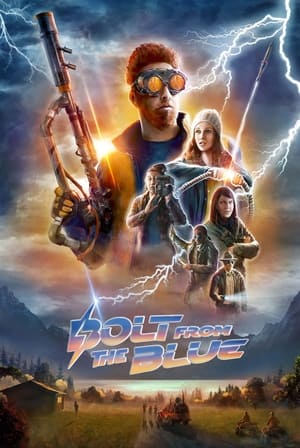
An overlooked engineer is sent to Alaska to scope out an eccentric scientist's claim that capturing lightning can be a new source of renewable energy.
Go Like The Wind
The video explores the issue of energy as a critical factor for the development of life conditions, at the same time energy is the reason for wars of power, environmental disasters, and economic monopolies. People suffer passively from this system and go on its path suffering the weight of political choices. Only renewable energy can save the earth and human being from collapse and become the new symbol of contemporary passion.
To stay below a 1.5 degree increase in global temperature, we must leave between 60 and 80% of fossil fuel reserves in the ground. Which energies should be preferred to replace oil, gas and coal? Renewable energies or nuclear energy?
M2M's first original long-form documentary, Battle at Versailles, follows an event in 1973 at Palace of Versailles where top French designers such as Yves Saint Laurent and Pierre Cardin faced of against American newcomers Oscar de la Renta, Bill Blass, Anne Klein and Halston. That pitted France’s best designers against the best America had to offer. It was the first time the fashion world's gaze was fixated on American design.
How can structures, which take up defined, rigid portions of space, make us feel transcendence? How can chapels turn into places of introspection? How can walls grant boundless freedom? Driven by intense childhood impressions, director Christoph Schaub visits extraordinary churches, both ancient and futuristic, and discovers works of art that take him up to the skies and all the way down to the bottom of the ocean. With the help of architects Peter Zumthor, Peter Märkli, and Álvaro Siza Vieira, artists James Turrell and Cristina Iglesias, and drummer Sergé “Jojo” Mayer, he tries to make sense of the world and decipher our spiritual experiences using the seemingly abstract concepts of light, time, rhythm, sound, and shape. The superb cinematography turns this contemplative search into a multi-sensory experience.
Hasse and Tage were best friends for over 30 years. Their films, shows, songs and books influenced an entire nation and were the glue that held people's home together. As a comedic duo, they united right-wing ghosts and anarchists in laughter. When Tage dies prematurely, his children lose a father, Hasse a father figure and all of Sweden a country father. And when Palme dies just months after Tage, the Swedish stable society begins to crumble. For the first time, the Alfredson and Danielsson families open up the archives and give us exclusive access to their stories, photographs and recordings.
In this documentary, Joachim Hellwig uses partly unpublished footage to shed light on a dark chapter of German history and shows the entanglements between the politicians' claims to power and the interests of industry and business in Germany from the beginning of the First World War to the end of the Second World War (1914 to 1945). The Nuremberg War Crimes and Industrial Trials served as the basis for this documentary.
An inspirational story about the power of hope in the face of seemingly insurmountable odds, and an object lesson in what it really means to be a winner in life.
1961 documentary about the history and seedy reality of the sex industry in London's Soho.
In Bettina Büttner’s exquisitely lucid documentary Kinder (Kids), childhood dysfunction, loneliness, and pent-up emotion run wild at an all-boys group home in southern Germany. The children interned here include ten-year-olds Marvin and Tommy. Marvin, fiddling with a mini plastic Lego sword, explains matter-of-factly to the camera, “This is a knife. You use it to cut stomachs open.” Dennis, who is even younger, is seen in a hysteric fit, mimicking some pornographic scene. Boys will be boys, but innocence is disproportionately spare here. Choosing not to dwell on the harsh specifics, Büttner reveals the disconcerting manner in which traumatic episodes can manifest themselves in the mundane — a game of Lego, Hide and Seek, or Truth or Dare. Filmed in lapidary black-and-white, Büttner’s fascinating film sheds light on childhood from the boys’ characteristically disadvantaged perspective — one not yet fully cognizant — leaving much ethically to ponder over.