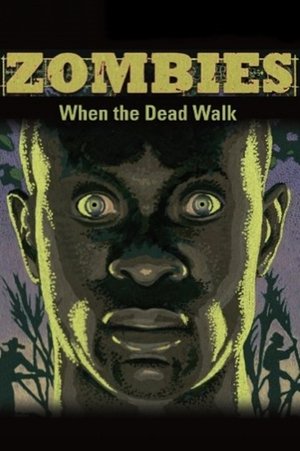
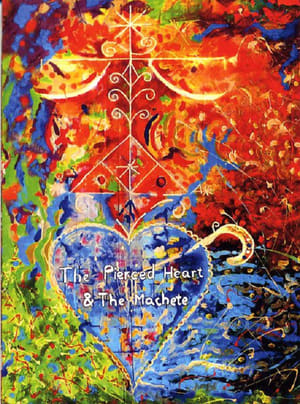
Zombies are part of pop culture, but what are they? Where do they come from? To find real zombies we visit Haiti where Zombies are an integral part of the island's cultural and religious roots.
About the extraordinary doctors and activists—including Paul Farmer, Jim Yong Kim, and Ophelia Dahl—whose work 30 years ago to save lives in a rural Haitian village grew into a global battle in the halls of power for the right to health for all.
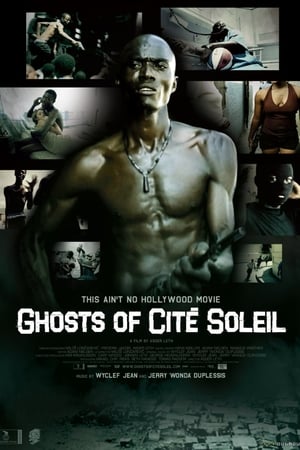
In the slum of Cité Soleil, President Aristide's most loyal supporters were ruling as kings. The five major gang leaders were controlling heavily armed young men; the Chiméres. The Secret army of President Jean-Bertrand Aristide. "Ghosts of Cité Soleil" is a film about Billy and Haitian 2pac. Two brothers. Gang Leaders of the Chiméres.
Abandoned on the doorstep of a Montreal orphanage, Johanne Harrelle eventually rose to prominence as a gifted artist, actress, and one of North America's first Black models. Simply Johanne deftly explores her complex and audacious life through archival footage, interviews with loved ones and performances of her writings by three contemporary actresses. The film chronicles the journey of a magnetic and passionate woman who defied the expectations of her time.
A woman with indiginous roots in her 40s goes on a trip into her past: When she was four years old she had been taken away from her mother by the canadian authorities, like many others. This is her very sad story as an example for many others.
John is a Haitian migrant who fled his country due to political instability and death threats. After a long journey, he managed to be recognized as a refugee in Mexico, allowing him to start a new chapter in a new land. However, for John, this story is far from over as his wife and baby remain stranded in Chile. Every day, John takes steps towards family reunification, longing to embrace those who are his true refuge.
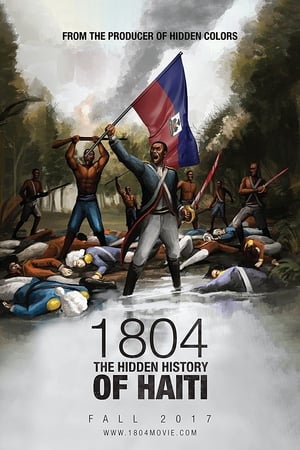
1804 is a feature length documentary film about the untold history of the Haitian revolution
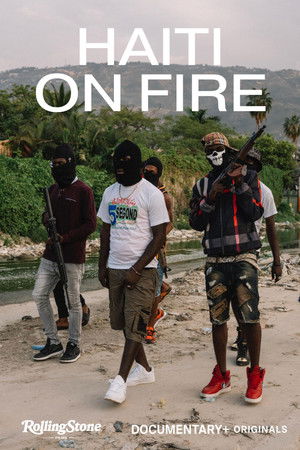
An acting ensemble rehearses for an upcoming theater festival. They rig up stage scenery and practice dialogue and set pieces in the middle of a residential area. But this is no ordinary theater setting, as evidenced by the armed guards at the entrance. Festival 4 Chemins is taking place in Port-au-Prince, the capital of Haiti. Gangs are active in the city; you can hear machine-gun fire in the distance.
One hundred years after the Haitian Revolution, the people of Haiti find themselves once again having to defend their liberty, this time against a powerful neighbor, the United States.
Ma traversée is a personal quest, filmed over 20 years, recounting the racial issues and privileges that have punctuated the filmmaker’s life in three French-speaking societies: Guadeloupe, France and Quebec. From her own story emerges the broader narrative of colonization, colorism, assimilation, integration and the social benefits of “race” and their impact even today. Brutalized by police officers in Montreal in December 2017 in front of witnesses, the filmmaker takes a step back to understand this gesture, which speaks to the social interpretation of skin color.
Living Memories is a documentary film that traces the history of the director’s neighborhood and native country, Haiti, through a personal and engaged perspective. Brick by brick, through encounters and wanderings throughout Port-au-Prince’s neighborhoods, archival photos, graffiti, and animations, the filmmaker introduces us to architect Léon Mathon and the residential architecture of the early 20th century. Over the ruins of her family home, Dominique, the director's mother, an architect like her father and grandfather before her, searches through her memories and significant places for traces of the past and the history of her country. Many of her landmarks are no longer there. From this tragedy arises a quest — a need to reconnect memory and history to understand the present better. The filmmaker follows her mother during her journey, capturing her reflections and conversations and documenting them to bring memories back to life.
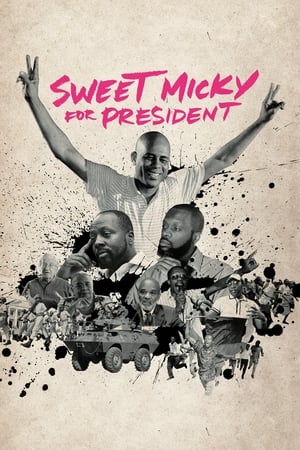
Music and politics collide when international music star, Pras Michel of the Fugees, returns to his homeland of Haiti following the devastating earthquake of 2010 to mobilize a presidential campaign for Haiti's most controversial musician: Michel Martelly aka Sweet Micky. The politically inexperienced pair set out against a corrupted government, civil unrest, and a fixed election. When Pras's former bandmate, superstar Wyclef Jean, also enters the presidential race, their chances seem further doomed. But with the help of a few friends, including Ben Stiller and former president Bill Clinton, they never give up on their honest dream of changing the course of Haiti's future forever
This incisive, urgent documentary examines the history of anti-Black racism in hockey, from the segregated leagues of the 19th century to today’s NHL, where Black athletes continue to struggle against bigotry.
A couple from North Preston, Nova Scotia plan an elaborate wedding with dozens of bridesmaids.
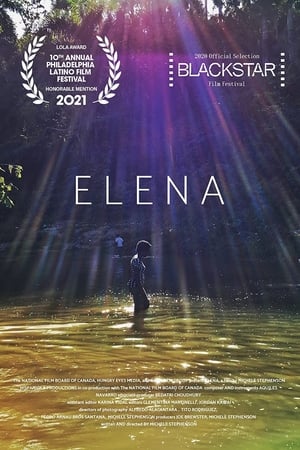
In 1937, tens of thousands of Haitians and Dominicans of Haitian descent were exterminated by the Dominican army, on the basis of anti-black racism. Fast-forward to 2013, the Dominican Republic's Supreme Court stripped the citizenship of anyone with Haitian parents, retroactive to 1929, rendering more than 200,000 people stateless. Elena, the young protagonist of the film, and her family stand to lose their legal residency in the Dominican Republic if they don't manage to get their documents in time. Negotiating a mountain of opaque bureaucratic processes and a racist, hostile society around, Elena becomes the face of the struggle to remain in a country built on the labor of her father and forefathers.
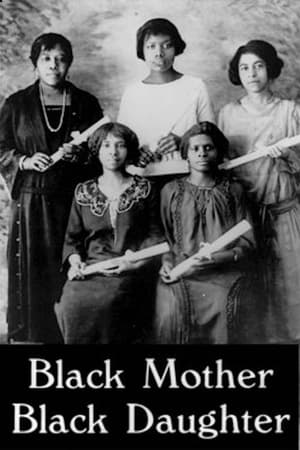
In this short documentary, five black women talk about their lives in rural and urban Canada between the 1920s and 1950s. What emerges is a unique history of Canada’s black people and the legacy of their community elders. Produced by the NFB’s iconic Studio D.
In the collective imagination, international adoption evokes images of children being saved from a life of destitution in poorer countries by being adopted by families in Europe or America. But the reality that has emerged is one of child trafficking, falsified documents and governments around the world turning a blind eye.
A documentary that reveals the underbelly of the global aid and investment industry. It's a complex web of interests that span the earth from powerful nations and multinational corporations to tribal and village leaders. This documentary offers unique insights into a multi-billion dollar world by investigating how aid dollars are spent.
The Heroes of the Massacre River is a powerful documentary that chronicles the stories of the pioneers behind the construction of the historic Canal of Ouanaminthe, a project that united Haitians across the nation and the diaspora. This film celebrates the groundbreaking efforts of key figures, centering on Dr. Bertrhude Albert, Dr. Naismy-Mary Fleurant, architect Wideline Pierre, economist Etzer Emile as well as dedicated canal workers Milourie Sylfrard, Theodore Johnson and Joseph Pressoir — all guided by the investigative journey of Max Angie Clervil. It also serves as a commentary on the complexity of colonialism and borders, tracing the role that the Massacre River continues to play in the history of Ayiti.
In this documentary, wealthy entrepreneur Bryan Johnson puts his body and fortune on the line to defy aging and extend his life beyond all known limits.