The United States of America has been at war for almost all of its 250 years of existence. From the wars of independence to current armed conflicts, its armed forces have not only shaped American identity, but also influenced the political decisions of its leaders. The documentary delves deep into this complex history and analyzes the hot and cold wars that shaped the development of the USA, along with lessons for the future. How have generations of Americans experienced these wars and how have their lives been changed by them? How has military engagement been used to shape the image and role of the USA on the world stage? Do military decisions today shape the world of tomorrow and what are the effects on democracy and society? And as the US president begins his new term in office, the question also arises: what role does the army play in Donald Trump's understanding of the world?
This lost WWI documentary appears to be about the German zeppelin attacks on Londonon September 2nd, 1916.
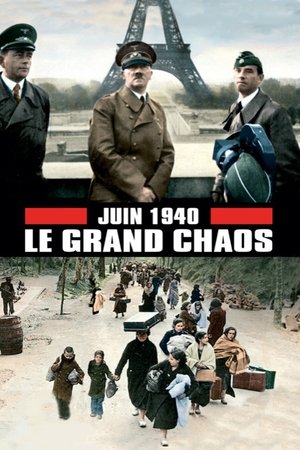
From May 10, 1940, France is living one of the worst tragedies of it history. In a few weeks, the country folds, and then collapsed in facing the attack of the Nazi Germany. On June 1940, each day is a tragedy. For the first time, thanks to historic revelations, and to numerous never seen before images and documents and reenacted situations of the time, this film recounts the incredible stories of those men and women trapped in the torment of this great chaos.
The smallest of sparks can lead to the largest of explosions. Such is the case of the Atomic Bomb and the minds who have conceived of the deadliest force the world has ever known. This new documentary Atomic: The History of the A-Bomb follows this weapon of mass destruction from inception to detonation.
Des trains dans la guerre
The protagonists of the film are the Zainichi Korean women living in Kawasaki. They were tossed about by the war, and after many trips to and fro across the sea in search of a place to live, they finally arrived in Kawasaki, where they have lived modestly and vigorously.
Easy Company, the 2nd Battalion of the 506th Parachute Infantry Regiment of the 101st Airborne Division, fought their way through Europe, liberated concentration camps, and drank a victory toast in April 1945 at Hitler's hideout. Veterans from Easy Company, along with the families of three deceased others, recount their horrors and victories, bonds they made and the friends they lost.
Amid violence and war, Ukrainian citizens are coming together to rescue animals that have been left behind by those forced to flee. From cats and dogs in abandoned buildings to lions and tigers in the nation’s zoos, extraordinary rescue efforts are underway to bring them to safety. The film is a tribute to the very best of the human spirit despite the horrors of war.
18. April
A documentary, using dramatization of fact, that examines the Battle of Verrières Ridge, where on July 25, 1944 and not long after D-Day, an inexperienced battalion of the Canadian Black Watch Regiment launched a doomed attack and was defeated with heavy casualties by veteran German SS troops. Part of "The Valour and the Horror" mini series.
Ghitas hemmeligheder
The unique testimony of the tragic events and crimes of russia through the eyes of Ukrainians, which the entire world must see and feel. Film was created from 200 hours of chronicles: survival, resistance, and life during the war. Every minute was filmed by Ukrainians with their mobile phones. Each story in the documentary is a film captured and filmed by Ukrainians on their devices.
At five o'clock in the evening, Red Cross and OSCE observers leave the front line and leave the fighters under fire. Hypocrisy takes over, and here begins the story of these women, which first kicked off in Maidan Square in Kiev. Heartache and hatred, broken love, wrong decisions and yet hope for a new life, even in the face of death. This is a documentary about the war that broke out in the spring of 2014 in Eastern Ukraine through the eyes of women.
2010 documentary film on the Armenian Genocide by the Young Turk government of the Ottoman Empire during World War I. It is based on eyewitness reports by European and American personnel stationed in the Near East at the time, Armenian survivors and other contemporary witnesses which are recited by modern German actors.
From Gallipoli to Brest-Litovsk, witness WWI's turning points-naval clashes, mutiny, and revolution-shaping the fate of empires and the world.
In 2014, the war begins. Immediately, a system of evacuation of the wounded and killed is being built, the outpost of which is the Dnieper - it is here that the first will be delivered, it is here that they are still received. Tatiana Guba has been coordinating the evacuation for 5 years. She is called "Mom Tanya". Thousands of people are grateful to her for her life. Serhiy Kryvorotchenko, director of the Dnipro Airport, has deployed a helicopter evacuation system since the beginning of the war. Eugene Titarenko, the film's director, in 2014-2015 was part of a volunteer medical battalion, communicates with the heroes of the film about the evacuation system. The viewer will see the whole way of saving lives, will be directly in the vortex of events and will understand how many people are involved in the process of saving one person.
"Surrounded by dozens of soldiers like me, I was led by bus to a remote camp in the desert, a place I knew nothing about. As a military photographer, I collected fragments of moments in my photos, serving as solid evidence for me." Shivtown is the story of an ordinary soldier who, in an intimate and courageous act, revisits memories from his military service through the still images he captured with an analog camera.
On February 24, 2022, Yevhen, together with his friends, volunteered to join the first aid squad on the front line. They provided life-saving support and evacuation of the wounded. This film reveals the experiences of these young men for six months full of drama, despair, fear, hatred, bitterness, love, and, most importantly, faith in victory.
When Russian armed forces invaded Ukraine, Moldovans raced to the borders to assist refugees, offering warm food, rides, and shelter. At the same time, a group of Moldovan filmmakers formed an ad-hoc film collective to document the unwavering efforts of volunteers and the fate of refugees through multifaceted lenses. Despite these acts of solidarity, a segment of the population's Soviet nostalgia fuels a growing fear that the country could be drawn into the war.
After twenty years, Wiam Al Zabari starts a conversation with his father. Why did they flee from Iraq? Why was that never discussed? Will he be able to let go of the past and embrace a Dutch future?