How did Nazi Germany, from limited natural resources, mass unemployment, little money and a damaged industry, manage to unfurl the cataclysm of World War Two and come to occupy a large part of the European continent? Based on recent historical works of and interviews with Adam Tooze, Richard Overy, Frank Bajohr and Marie-Bénédicte Vincent, and drawing on rare archival material.
J. Robert Oppenheimer and other key figures involved in the decision to drop the first atomic bomb discuss their motivations in this NBC News documentary. Originally produced and televised in 1965, two decades after the bombings of Hiroshima and Nagasaki, it was re-released in 2023 with an epilogue by Michael Beschloss, NBC News Presidential Historian.
After the World War I, Mussolini's perspective on life is severely altered; once a willful socialist reformer, now obsessed with the idea of power, he founds the National Fascist Party in 1921 and assumes political power in 1922, becoming the Duce, dictator of Italy. His success encourages Hitler to take power in Germany in 1933, opening the dark road to World War II. (Originally released as a two-part miniseries. Includes colorized archival footage.)
To help prevent the unthinkable from ever coming true, it is important to know what could really happen....the most awesome and deadly display of warfare that the world has ever seen.
They raised children, baked cakes... and built world-class fighter planes. Sixty years ago, thousands of women from Thunder Bay and the Prairies donned trousers, packed lunch pails and took up rivet guns to participate in the greatest industrial war effort in Canadian history. Like many other factories across the country from 1939 to 1945, the shop floor at Fort William's Canadian Car and Foundry was transformed from an all-male workforce to one with forty percent female workers.
It is not in the cards that young Anne Marie Christensen from Fanø ends up as one of the most notorious Danish war criminals from World War II. Nevertheless, she is recruited by the Gestapo under the name Jenny Holm during the occupation. She turns out to have agent skills beyond the usual. It is believed that she is responsible for many hundreds of arrests of enemies of Nazism. She is so skilled that she is recruited by Danish and British intelligence in the years just after the war, where she uses her skills to catch Nazi war criminals in Germany. Jenny Holm disappears into oblivion - until a day when a resourceful writer finds out where Jenny Holm ends her days. The trail ends surprisingly, at a celebrated alternative therapist with electric hands on Gammel Kongevej
In May 1943, Ernst Kaltenbrunner, the new head of the Reich Central Security Office, gave Hitler a report describing in detail the organization of the French Resistance. Indeed, during the Second World War, most of the Resistance networks had been infiltrated by traitors, the "V Man" (trusted men) in the service of the occupier. The Germans had established treason as a system and recruiting Frenchmen ready to inform on them was one of their priorities. It was these Frenchmen, whose number is estimated at between 20,000 and 30,000, who dealt terrible blows to the Resistance.
A documentary on the famous World War II battle, using only on-ground footage from Marines and interviews with veterans.
In 1945, two young American soldiers, brothers Budd and Stuart Schulberg, are commissioned to collect filmed and recorded evidence of the horrors committed by the infamous Third Reich in order to prove Nazi war crimes during the Nuremberg trials (1945-46). The story of the making of Nuremberg: Its Lesson for Today, a paramount historic documentary, released in 1948.
39-45 L'histoire des bases sous-marines
Actual footage by the United States Signal Corps of the landing and attack on Arawe Beach, Cape Glouster, New Britain island in 1943 in the South Pacific theatre of World War Two, and the handicaps of the wild jungle in addition to the Japanese snipers and pill-box emplacements.
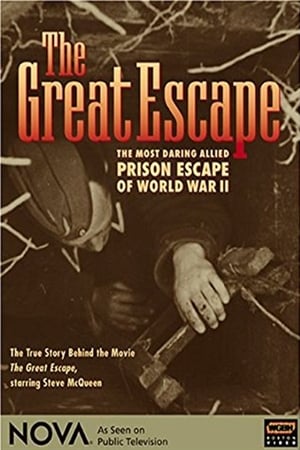
The classic movie "The Great Escape" was based on a real life escape attempt during the second world war. This documentary follows Archaeologists who are trying to find the original tunnels dug by the real prisoners of war who escaped. Some of the surviving prisoners also join the team to assist with the tunnel locations and to describe what it was really like to live that situation. In an effort to understand the technical details of how this feet of ingenuity was achieved, the team recreate some of the equipment used by the prisoners.
This is a rare look at one of the worst horror stories in the long infamous history of warfare. This series features captured German and Russian film footage, much of which has never been seen before. For decades the Cold War prevented us from looking closely at what really happened between the Russians and the Germans on the Eastern Front during World War II. More than a struggle between nations, it pitted maniacal tyrant against maniacal tyrant, evil ideology against evil ideology. The lives of tens of millions of human beings were consumed by its raging hatreds and appalling indignities. One in every ten Russians died. One in every four Poles died. Whole divisions of Italians, Romanians, Hungarians disappeared with barely a trace. An average of 17,800 people died on every single day and this, the war on the Russian German Front, lasted for 1,400 days. This series features captured German and Russian film footage, much of which has never been seen before.
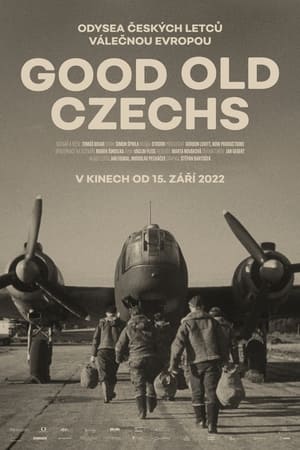
On March 24, 1944, in the heart of Nazi Germany, 76 British, Canadian, Norwegian and French pilots who were held in Stalag Luft III, a prison camp of the Luftwaffe, escaped. Unique testimony from the last survivors, recreations and today’s digital images sheds new light on the audacious escape.
Hiroshima and Nagasaki: 75 Years Later is told entirely from the first-person perspective of leaders, physicists, soldiers and survivors.
Captain Eric 'Winkle' Brown recounts his flying experiences, encounters with the Nazis and other adventures leading up to and during the Second World War. Illustrated with archive footage and Captain Brown's own photos.
World War II propaganda short which focuses on the dangers of inadvertent dispersal of military information.
This documentary follows the steps of the boys of H Company as they fight on the island of Iwo Jima.
Despite his horrible experience as a prisoner of war during WWII, Frank Maselskis stays in the military and goes on to fight in Korea, where he participates in the brutal battle of the Chosin Reservoir. Upon returning home, Frank struggles to live a normal life while raising his daughters.
Film journalist and critic Rüdiger Suchsland examines German cinema from 1933, when the Nazis came into power, until 1945, when the Third Reich collapsed. (A sequel to From Caligari to Hitler, 2015.)