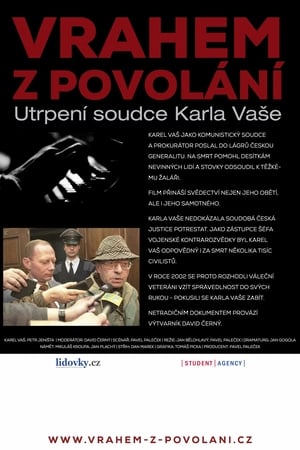
Vrahem z povolání – Utrpení soudce Karla Vaše
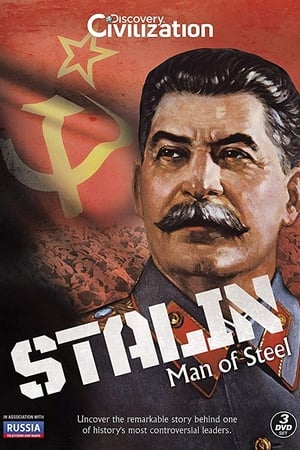
Emmy Awards nominee for "Outstanding Individual Achievement in a Craft: Research: Multi-faceted portrait of the man who succeeded Lenin as the head of the Soviet Union. With a captivating blend of period documents, newly-released information, newsreel and archival footage and interviews with experts, the program examines his rise to power, deconstructs the cult of personality that helped him maintain an iron grip over his vast empire, and analyzes the policies he introduced, including the deadly expansion of the notorious gulags where he banished so many of his countrymen to certain death.
The story of what daily life was like in Poland under communism: private conversations, cruel interrogations, recruitment attempts, recorded and filmed with hidden devices; of how the secret services spied on every activity of ordinary citizens: nothing escaped the brutal system of control developed by the Soviets in the name of freedom.
This excellent and breathtaking documentary is the result of a long study on the Gulag to try to understand why more than 60 million Soviet citizens were sent to the camps from 1918 to 1956, how such a massive confinement could take place during two generations. From the Solovki in the north-west to the Kolima in Siberia, from Lenine to Kroutchev, a polar geography is erected into the Gulag system. One does not escape from camps. After ten years of imprisonment, one dies. Some survived, some left traces; they witness: organisation, work and discipline, but also resistance, repression and revolt.
Věž smrti
The forest in Bykovnia near Kyiv hides the remains of more than 30,000 NKVD victims, including several thousand Poles. In 2006, a team of Polish archeologists, with the cooperation of the Ukrainian side, conducted exhumation work there, which confirmed that Poles were buried in the cemetery. At the time, two people whose fathers are believed to be buried there also came to the Bykovsky forest. The film tells the story of the history of the place, the local residents' perception of it, and the search for the fathers' graves.
A documentary about the modern controversy between Poland and Russia over Russian prisoners of war from the time when Poland regained its independence, after the First World War.
The trial of Alfred Plock differed from previous trials in that it did not have an explicitly political background. A group of engineers from the Ministry of Post, Industry, and Standard Electric were charged solely because they wanted to implement a revolutionary technological innovation and turn Prague into the headquarters of a new pan-European telecommunications system. Among other things, they wanted to enhance their country's prestige on the international stage. However, it was precisely this intention that aroused the suspicion of the security authorities and Soviet advisers. They therefore decided to take decisive action.
Nesmíš plakat
Three family cope with having lost their only child in 2008 deadly Chinese earthquake.
Young teen girl Xiu Xiu is sent away to a remote corner of the Sichuan steppes for manual labor in 1975 (sending young people to there was a part of Cultural Revolution in China). A year later, she agrees to go to even more remote spot with a Tibetan saddle tramp Lao Jin to learn horse herding.
A woman prisoner is harshly incarcerated and suddenly released.
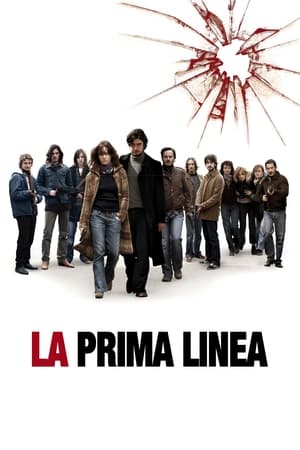
United by an uncompromising struggle as members of the infamous 1970s far-left terrorist group Prima Linea, fugitive couple Sergio and Susanna have become increasingly alienated from the real world. Their luck runs out when Susanna is captured and thrown in jail. Putting his life on the line, Sergio embarks on a radical plan... Loosely based on the memoir by Prima Linea's 'commander' Sergio Segio.
À pleines dents
Sex, Lies and Love Bites The Agony Aunt Story, presented by psychotherapist and agony aunt Philippa Perry, is a witty and revealing look at the problem page's enduring appeal. In the documentary Philippa picks her way through three centuries of advice on broken hearts, cheating partners and adolescent angst to uncover a fascinating portrait of our social history.
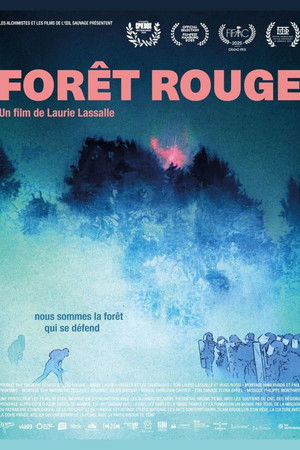
A poetic David and Goliath tale, where David is an eco-activist with shields, helmets and Molotov cocktails in the backpack. Director Laurie Lassalle documents the spirit and atmosphere with loyalty and an extraordinarily confident cinematic vision.
Chorrojumo’s body in ruins has been wandering silently through the streets of Granada for one hundred and eighty-three years. Under the scorching sun, he waits, with his hand raised, for some currency. The infinite limbo in which he lives is interrupted with the arrival of a young Moroccan who brings an ancient key in his hands. Together they begin a search through the Ruins, spaces that have disappeared or are in transition, of present-day Granada, in search of the house of the young man’s ancestors; the last expelled Moriscos, of whom he still retains memories.
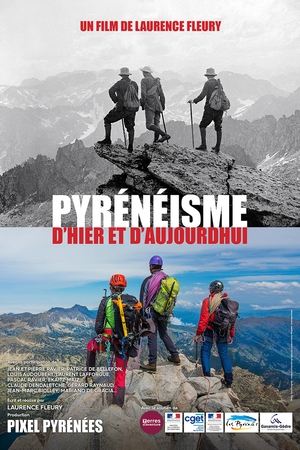
The word Pyreneism was invented by the writer Henri Beraldi at the end of the 19th century. Its definition did not come down to a simple practice of mountaineering in the Pyrenees. To be recognized as a Pyrenean, it was necessary to “ascend, write and feel”. An approach to the mountains, according to him, necessarily accompanied by an artistic or intellectual activity. This documentary looks back at the Pyrenees who have left their mark on history, before interviewing contemporary mountain dwellers who, through their mountain practice, consider themselves, or not, Pyreneanists. What prompted Beraldi to coin this term? Does it result from a Pyrenean complex facing the Alps? Chauvinism or a demand for identity? And today, does this word still have meaning? Beyond the reflection on the subject, this film is a wonderful tribute to the massif.
Profile celebrating the centenary of the famous author Agatha Christie’s birth. Looking at her life, her character and the key moments in her childhood that influenced her writing.
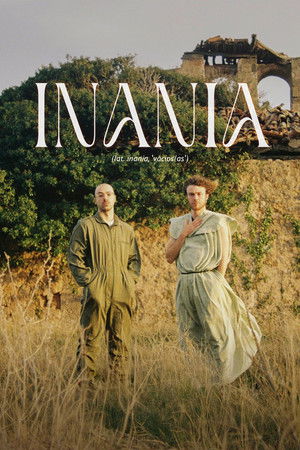
Inania