Stan Hill Jr. is a Haudenosaunee artist living in Miawpukek First Nation Reserve, Conne River, Newfoundland. In “The Bear Inside a Whale,” he and his family discuss racism, identity, religion, creation and art, along with the cultural extinction of the Beothuk of Newfoundland. Throughout the film, we follow Stan carving a bear out of a whale vertebra. And we visit The Rooms (museum) in St. John’s, Newfoundland, where Stan talks about viewing and reclaiming Indigenous artefacts.
This is the story of John Andrews, world-famous Australian architect. In the mid-1960s, when only 29, Andrews was commissioned to design Scarborough College at Toronto University. One of the world’s first ‘megastructures’, it was an important experiment in urban and educational planning. Andrews also designed the Canadian National Tower in Toronto, which was the tallest freestanding structure in the world at the time it was built.
Immigrant residents of a “shift-bed” apartment in the heart of New York City’s Chinatown share their stories of personal and political upheaval. As the bed transforms into a stage, the film reveals the collective history of the Chinese in the United States through conversations, autobiographical monologues, and theatrical movement pieces. Shot in the kitchens, bedrooms, wedding halls, cafés, and mahjong parlors of Chinatown, this provocative hybrid documentary addresses issues of privacy, intimacy, and urban life.
La Sagrada Familia – although still under construction in Barcelona – is a cathedral without any flaws. Almost 100 years after his death, experts are convinced that Gaudi was a mathematical genius and that each embellishing ornament of the Sagrada Familia actually serves an architectural purpose.
Best known for designing National Historic Landmarks such as St. Louis’ iconic Gateway Arch and the General Motors Technical Center, Saarinen also designed New York’s TWA Flight Center at John F. Kennedy International Airport, Yale University’s Ingalls Rink and Morse and Ezra Stiles Colleges, Virginia’s Dulles Airport, and modernist pedestal furniture like the Tulip chair.
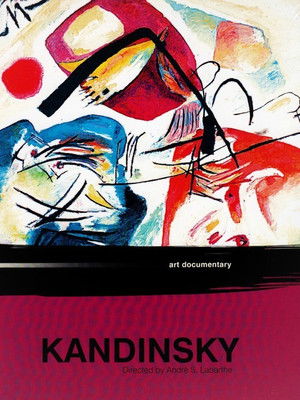
Drawing on the collections of major Russian institutions, contributions from contemporary artists, curators and performers and personal testimony from the descendants of those involved, the film brings the artists of the Russian Avant-Garde to life. It tells the stories of artists like Chagall, Kandinsky and Malevich - pioneers who flourished in response to the challenge of building a new art for a new world, only to be broken by implacable authority after 15 short years and silenced by Stalin's Socialist Realism.
The genesis of To Open Eyes: A Film on Josef Albers developed from Arnold Bittleman's appreciation for Albers while Bittleman was a student at Yale University in the 1960s. Wanting to preserve Albers’s teaching method—learning by doing—Bittleman set out with filmmaker and editor Carl Howard to make a visual record of Albers teaching students how to see and use color as a visual grammar. The film includes archival footage of Josef Albers at home in conversation with Bittleman, as well as footage from Black Mountain College and Yale University.
Since its opening in 1948, The Farnsworth Art Museum has been a source of community pride and a beacon that draws visitors to Rockland each year. Told through first person interviews with Rockland natives and residents, historical photographs and footage, the film follows the museum’s growth from the reading of Lucy Farnsworth’s will, through the construction of the museum facility, to the internationally renowned institution that it is today.
In the same vein as Meri's other documentations, this one takes advantage of the glasnost policy to discuss the social and ecologic impact of the Russian oil industry on the natives and the lands they inhabit.
Art in glorious motion. Bright, colourful and often intensely dynamic, the 1970 'Kinetics' show at London's Hayward Gallery was a major international showcase of the new active sculptural art. Works by Jean Tinguely, Nam June Paik, Peter Logan, Takis, Jesus Raphael Soto and many others dazzled a wide-eyed public. This priceless film record of the show captures a kaleidoscope of neon lights, rotating metal, squirting water and stroboscopic projections. Director Lutz Becker, of the Slade School of Art Film Unit - who would go on to direct Double-Headed Eagle (1973), a documentary account of Hitler's rise to power - uses a variety of textural, electronic sounds (courtesy of Peter Sahla) to evoke the unusual experience. The show was enormously popular, with visitors filling out the gallery day after day.
Michael Palin travels to France in search of the Mediterranean view on his wall, captured by his favourite artist, Scottish painter Anne Redpath. He travels from a London bank, via a chateau in Cap Ferrat and a monastery in Edinburgh.
The story of the secret of self-creativity, the loneliness of the soul, the meridians of con-sciousness and the scope of man. Ilmārs Blumbergs (1943-2016) is a concept in life than can be classically proven if we analyze his work in set design, poster art, painting and multimedia work. The personality of Blumbergs, however is a shifting and intangible material which ensures superior value, wonderfulness and intimacy to all that he created. Those who analyze his art and world perceptions, recognize the work as seeming to come from antiquity, but it can never be catalogued or recorded in bookkeeping. How fortunate that it also cannot be consumed.
Funkiskungen
What’s it like to dedicate your life to work that won’t be completed in your lifetime? Fifteen years ago, filmmaker David Licata focused on four projects and the people behind them in an effort to answer this universal question.
An inspiring 75min DIY documentary film on new art and the young artists behind it. It was all filmed on the heat of live action of the first NOVA Contemporary Culture Festival, July and August 2010 in São Paulo, Brazil.
Georges Remi, known as Hergé, a complex and complicated artist, created Tintin, one of the most famous characters in the world. With exceptional access to the archives of Studios Hergé and Moulinsart, this documentary looks at Remi's life and the way he changed the art of comic.
Much like Fred Rogers and Bob Ross in the United States, Claude Lafortune was a staple of French-Canadian television. The beloved children's television host inspired generations of children through his celebration of creativity, inclusivity and diversity. For over five decades, he dedicated his life to transforming mere paper into whimsical sculptures, creatures and film sets. "The Paper Man" reveals the depths of Claude Lafortune's work, as well as his continuing legacy.
Pop Goes the Easel was Ken Russell’s first full-length documentary for the BBC’s arts series Monitor. It focused on 4 British Pop Artists - Peter Blake, Peter Philips, Pauline Boty and Derek Boshier.
In this unique, compelling film, those who knew him speak freely, some for the first time, to reveal the many mysteries of Francis Bacon.
Through interviews and guerilla footage of graffiti writers in action on five continents, the documentary tells the story of graffiti from its origins in prehistoric cave paintings thru its notorious explosion in New York City during the 70’s and 80’s, then follows the flames as they paint the globe.