An educational short made by the New Zealand National Film Unit for the National Mountain Safety Council to promote awareness of bush safety.
The film's protagonists are the orphaned children taken into custody by the state and institutionalized at Children's House no. 6 from Bucharest. For Mészáros, the concern for the situation of children left orphaned during the Second World War is autobiographical: the director directly experienced the absence of parents in her own childhood.
An exposed Cumbrian village by the sea surrounded by windmills, fields and factories provides a striking setting for this fairy tale of young love and the loss of childhood innocence. Over one year, the film follows the 9 year-old Laura Anne and her 11 year-old cousin, Steven as they move towards the end of their childhoods. The narrative is told in rhyme by the young female protagonist. As time passes and the seasons change, feelings and memories from all our childhoods are evoked and we wonder what time will make of Laura Anne and Steven.
Adventures with real and toy trains feature Pokemon characters riding the log loader, legendary steamers, original songs, and toy train bloopers.
Les enfants de la lanterne magique
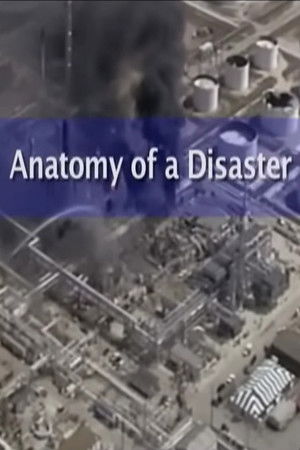
This U.S. Chemical Safety Board (CSB) video uses expert testimony and computer-animated reenactments to describe and discuss its detailed investigation into the March 23 2005 explosion of the ISOM (isomerization) unit at the BP (British Petroleum) refinery at Texas City, Texas. The explosion killed 15 workers, injured 180 others, and cost BP billions of dollars.
Tragedy struck when the Space Shuttle Challenger disintegrated just 73 seconds into flight. Hours earlier, engineers argued to cancel the launch, amid fears of such a tragedy – so why did it go ahead?
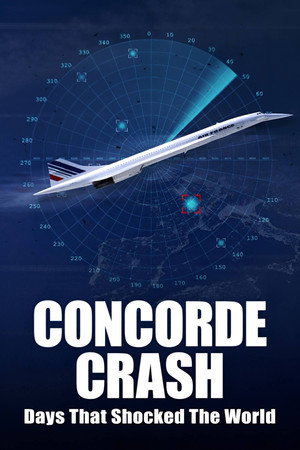
Concorde was an icon of the skies, but on 25 July 2000, Air France Flight 4590 left Paris for New York and caught fire during take-off before crashing to the ground just over a minute later, killing everyone on board. The tragedy brought an end to the dream of supersonic passenger flight. But what caused the disaster? Investigators, survivors’ loved ones and those who examined the wreckage recall the tragedy and describe how the evidence led to a shockingly simple conclusion about what went wrong.
Sid James learns of the joys of owning a budgerigar.
Tunahaki is the extraordinary story of nine gifted orphans who are acrobats. We follow their journey as an American volunteer takes them from Africa to study with Cirque du Soleil in Las Vegas. They end up touring the States and raising hundreds of thousands of dollars, more than enough to build a permanent home. But how have the kids' experiences in America affected them? And how will it change things back home in Tanzania? Tunahaki's heartfelt journey gives us something new to ponder as we reach across the world to help those less fortunate—is it always the right thing to do?
This 1974 film is dedicated by the Chlorine Institute to the public interest. It is specifically intended to assist firefighters and other emergency services. The techniques demonstrated are appropriate for emergency use; different circumstances might require modified or additional procedure. The information is drawn from sources believed to be reliable. The Institute, its members any organizations cooperating in the development of this film, jointly or severally, cannot be responsible for how the information is used and must make this legal disclaimer. This is a 1960s era, color movie about Chlorine and emergency workers… specifically, firefighters. The film is intended to show firefighters what chlorine is, what a chlorine emergency might involve, how a company can plan ahead and how an emergency can be handled safely.
Dramatizes the plight of a young adventure seeker whose canoe is capsized by a wall of water during a flood. Shows community flood preparations, pointing out that a flood's predictability usually allows ample warning time to save lives. Designed to stimulate discussion on civil preparedness for floods
Intercuts scenes from Jack London's To build a fire with modern urban and rural winter scenes to point out the dangers of winter storms and low temperatures. Designed to stimulate discussion on civil preparedness for winter storms.
Portrays the challenges of creating a film about nuclear disaster amid public apathy. It captures behind-the-scenes moments as the crew discusses the gravity of nuclear threats, the importance of preparation, and the emotional impact of a nuclear attack. The narrative emphasizes the need for individuals to take responsibility for their safety and community in the event of an attack, blending factual information with a call to action.
A surrealistic look at the future if man does not learn to control pollution.
Children get ready to start the first grade. They start learning the first letters.
The film highlights the dangers of extreme heat and the importance of staying hydrated and cool. It portrays a conversation between two friends, one of whom insists on playing basketball despite the oppressive heat. The narrative emphasizes that heat-related illnesses can be avoided by recognizing the body's signals and taking necessary precautions, such as drinking water and staying indoors. The film concludes with a report of record-breaking temperatures, underscoring the seriousness of heat exposure.
The Defense Civil Preparedness Agency began an informational campaign in 1972 called Your Chance to Live. As part of the campaign, a series of films was released along with a companion book. Each installment covers a different disaster scenario, including tornadoes, blizzards, earthquakes, forest fires, blackouts and a nuclear disaster. The California Department of Education helped produce the films and hosted a workshop of educational professionals to discuss the best ways to present the desired emergency preparedness information to school age audiences. The process was filmed and assembled, along with clips from each production, and distributed as an Instructor's Guide in 1975.
An experimental short documentary essay about the dreams of Roma women living in the ghetto in Kosice. Roma are one of the largest ethnic groups living in Slovakia. Despite this, integration into all spheres of society is difficult. And it should be noted that this applies not only to Slovakia. Luník IX houses the largest community of Romani people in Slovakia. Although originally built for 2,500 inhabitants, it is estimated that the population is now three times larger. Living standards are low, with services such as gas, water, and electricity cut off, as the majority of inhabitants are not paying rent or utilities fees.
POLICE OFFICER JIM BYRNE, Canada's most honoured Safety Education Specialist brings you his famous TEN RULES, with which he has personally tested more than 25,000 students. Learn key strategies now taught in many schools and used by police working with the full NEVER BE A VICTIM Institutional Study Program. Develop your own personal streetproofing skills so you can train and test your family. Robert Gordon, who created this remarkable program in partnership with Metropolitan Police introduces this family video library against a backdrop of today's troubled society. TEACHING LIFE SKILLS FOR A SAFER COMMUNITY OFFICER JIM'S TEN RULES FOR STREETPROOFING • STRANGER MYTHS • ABDUCTION • BEING FOLLOWED • DANGEROUS PLACES • AVOIDING CARS AND VANS • GOOD TOUCHING-BAD TOUCHING