Traveling the length and breadth of the country, S. Sukhdev constructs, a panoramic, non-narrated study of Indian life in the late 1960s. Shot across villages, deserts, countryside, and cities, the film observes daily labor, leisure, and movement without commentary, allowing humor, contradiction, and social texture to emerge organically. The result is a sensory encounter with India poised between inherited tradition and accelerating modernity.
A film about memory, identity and the overwhelming power of love. One-year-old Devi was found starving at a railway station in Delhi. The police took her to Palna, an orphanage, where she lived for a year. When Devi learned to talk she often wanted to talk about Amma, her first mother. In the film, the 6-year-old Devi journeys to her own past, as her family adopts another daughter from Palna, a baby sister for Devi.
Vaastu Marabu documents the theory and practice of the Vaastu tradition of Indian art, architecture, craft and design. One of the foremost shilpis (designer-builder-sculpter) of India, Shri. V. Ganapati Sthapati of Mammallapuram, meditates on his art and his occupation. The film shows the process of making stone idols at Mammallapuram, near Madras, of casting bronzes in Kumbakonam, and of building stone temples at Kamudhi, near Madurai and at Ratnagiri, near Vellore. It illustrates the continuity of the tradition and reveals a technology that is ancient, yet still relevant today. The film explores the process of translating inner experience into art, and invites us to experience the naked beauty of the form while understanding the metaphysical message. The art of the Vishwakarma has given form and expression to all denominations of metaphysical thought in India. The film also probes the underlying scientific and mathematical principles.
Each year, groups of Tibetan children secretly flee their homeland over the Himalayas to reach schools in India founded by the government in exile. Entrusted to smugglers, they are risking their lives by illegally crossing the great Himalayan range, a towering rampart between Tibet and India. The director will take us in the Mussorie school, in North India, where two thousand four hundred children have been rescued. They have left behind their family childhood and are now considered as orphans. We will discover the itineraries of Sonam, aged nine, and Dholma, the little new girl of the school. Here in India, they are taught about Tibetan culture and will find out about the history of their country and their ancestors. Sonam and Dholma's story is that of thousands of Tibetan children. Are they orphans of a lost country or bearers of hope who will save an endangered culture?
When Tomoko finds some messages for a 'Mr Smith' on a lost mobile phone, she finds herself on an 'Alice in Wonderland' journey through Tokyo's boulevards and back alleys. From the tyranny of symmetry in soaring office blocks - to buildings that look like space-ships, this creative documentary shows us the city's soul.
The film is a cinematic interpretation of the travel book “Armenia” by Russian poet Andrei Bely.
The reception ebbs and flows as the unfamiliar landscape whirls by the window of a plane or train or car. Communication is delayed, fragmented, interrupted. Memories of a distant country.
David Lloyd George tours Germany, escorted by Nazi government officials, while his chauffeurs lark about with an SS Officer. Lloyd George was pro-German from the mid-1920s, and met Adolf Hitler in 1936. However, by 1938 he had become a leading opponent of appeasement with Germany. This film is believed to have been shot by George Ryder, Lloyd George's chauffeur.
A new scientific expedition follows the King Cobra into the wild for the first time.
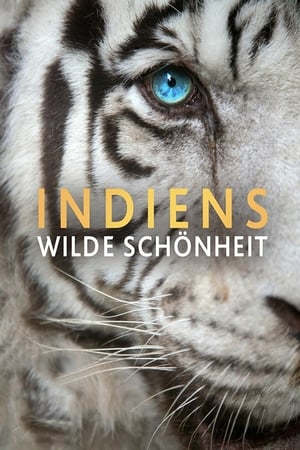
India - unique in its diversity and breathtakingly beautiful. The subcontinent is characterized by scenic, cultural and ethnic diversity. After China, India is the second most populous country in the world. Despite growing space needs, there are efforts to preserve the wilderness through nature reserves and protected areas. So India still provides habitat for rare species such as the Bengal tiger or the Indian elephant. The 5-part series "India's wild beauty" leads to the most spectacular and beautiful regions and their inhabitants. The complete series in five parts: 1 The Thar Desert 2 In the jungle, the Ghats 3 Life on the holy river 4 The Himalayas 5 In the land of Naga
Mother India is home to many castes, tribes and religions and one common factor that brings this diverse country all together is Jewelry. Come explore the deep history and culture of the jewelry of India dating back more than 5000 years. As we explore the history we also take you into Bangalore, India and talk to local Jewelry Stores and Jewelry Artisans as they share their stories and their family history of their involvement in jewelry going far back into their family ancestry.
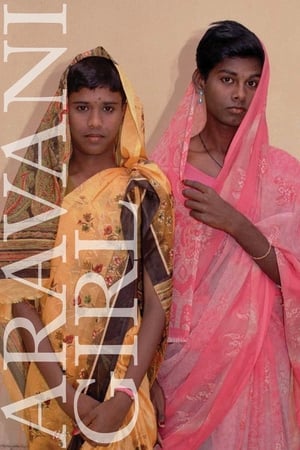
Sixteen year olds Palani and Karthik want to become "ladyboys." They're bullied in school and beaten by their families. Their parents would like to see them grow up as normal boys, but they're falling deeper and deeper into the world of the "Aravanis." Loved as dance performers but hated as homosexuals, their stories emblazon the inner conflicts of India's gender culture today.
This portait of life on the tea plantations is decidedly rosy – clearly, there are no exploited workers here. However, the film provides an intriguing overview of tea production – from the planting of tea seeds to the final shipping of the precious leaves across the globe.
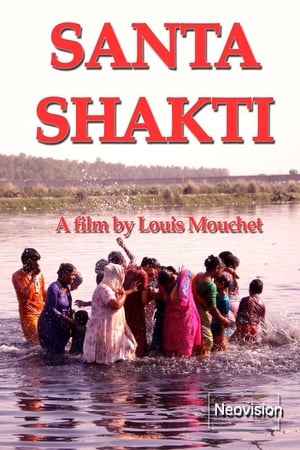
By drawing a parallel between the Indian Durga Puja festival and other forms of celebrating the divine feminine, Santa Shakti reveals the Sacred Power beyond languages and religions.
The Jarawas live in the Andaman Islands on the Indian Ocean. The origin of the tribe is in Africa some 70,000 years back. They have lived in almost perfect isolation from the rest of the world until recent times.
Rumer Godden the 88 year old author is taken back to India, where she lived from 1908-1945 to revisit her unconventional life there and to share with her daughter the experiences which inform all her writing.
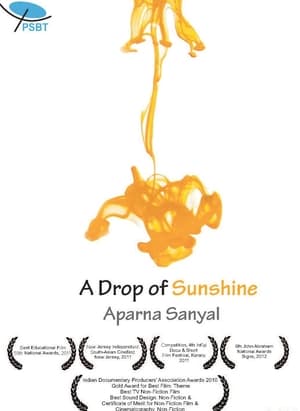
Schizophrenia. It may be one word, but it immediately conjures up multiple connotations. Mad. Incurable. Violent. Suicidal. Chemical imbalances. Crazy. A lifelong condition. Inevitable dependency on Medicines. Dark. Terrible. 'A Drop of Sunshine' challenges these notions. It questions the mainstream view of the condition and seeks alternate ways of recovering from it. Through the powerful story of its young and gutsy protagonist, Reshma Valiappan, it seeks to give viewers a new vocabulary to address the stigmatized mental illness. The film proposes that the only treatment method that can work in Schizophrenia is one where the so-called 'patient' is encouraged and empowered to become an equal partner in the process of healing.
Journey across India, a breath taking land shaped by a myriad of cultures, customs and traditions. Come face to face with the Bengal Tiger and explore the work of this majestic creature with stunning clarity. Soar over blue-hazed Himalayan peaks and sweep down towards the thundering Indian Ocean as we celebrate the power and beauty of India's greatest ambassador - the mighty Bengal Tiger.
A journey that follows the Ganges from its source deep within the Himalayas through to the fertile Bengal delta, exploring the natural and spiritual worlds of this sacred river.
Coach passengers give their reasons for preferring that type of transport. A group of ramblers visit the Welsh mountains; an angler and his family spend a peaceful day by a country river; a family goes to the seaside; some students visit Oxford during a music festival.