This film presents a picture of Egypt and the Nile Valley of today as seen against its historical background. It Includes scenes of an ancient temple to the sun god at Abu Simbel, the dam at Aswan, the delta of the Nile, the Suez Canal, and the cities of Asyut, Cairo, and Alexandria.
Toutankhamon : du trésor à la malédiction
In the 14 months prior to the revolution, filmmaker Lillie Paquette follows key opposition figures and young activists as they struggle against the odds and at great personal risk to remove an uncompromising US-backed regime.
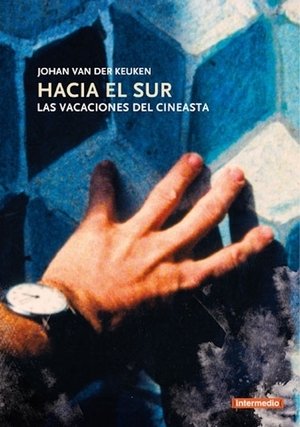
Johan van der Keuken went against the grain in 1980: from Amsterdam (on April 30 with the coronation riots and squatting actions) via Paris, southern France and Italy to Egypt. He made his personal travelogue in three parts for VPRO television. Later, he fused the three parts into one long movie.
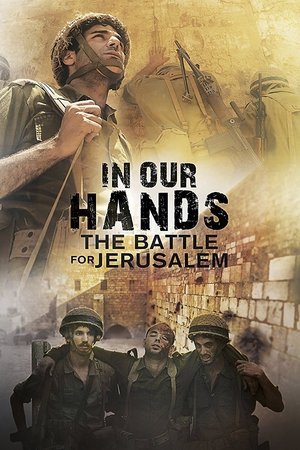
Produced by CBN Documentaries and Biblical Productions, "In Our Hands" tells the story of the Battle of Jerusalem in the Six-Day War through the eyes of the IDF's 55th Paratrooper Brigade
The Scorpion King: The King before Pharaohs. Learn more about the king who likely united ancient Egypt, organized the world’s earliest phonetic writing system, and inspired the creation of the pyramids. Mace heads, a stone mounted on a wooden shaft, were an early weapon of war. They were used like a club to strike enemies on the head. The scorpion mace head was too large to have been used as a weapon, and was clearly reserved for ceremonial purposes. Archaeologists believe they have found the tomb of the Scorpion King at the ancient burial site of Abydos. He was buried with 700 wine jars, several of which had come from as far away as ancient Palestine. The Scorpion King may have presided over the birth of phonetic writing earlier than any other civilization in the world—200 years before the first pharaohs.
Board a traditional felucca sailboat and travel down the Nile from Aswan to Cairo, visiting spectacular ancient Egyptian tombs and temples on the way.
In the beginning was sex. To the ancient cultures, sexuality, love and sex were inextricably connected with the creation of the earth, the heavens and the underworld. To the citizens of the ancient civilizations that gave birth to ours, sensuality and sexuality were an integral part of society. This series exploration of Egyptian and Roman sexual practice allows viewers the opportunity to see how attitudes and beliefs about sexuality functioned in the early civilizations, and how those attitudes reveal the unspoken rules that defined public and private behavior. Episodes cover human sex and sexuality from a historical perspective, and examines in detail different texts and images which provide us with evidence about sexual practices, beliefs and ideologies in the ancient world – from erotica on pots to legal texts, phallic votive objects, fertility ceremonies, prostitution, female and hermaphroditic creator deities, from religious rituals to sex manuals.
Il était une fois... « La Conspiration du Caire »
Has the famed Egyptian beauty, Queen Nefertiti, been found in a secret chamber deep in the Valley of the Kings? A Discovery Channel Quest expedition led by Dr. Joann Fletcher and a team of internationally renowned scientists from the University of York Mummy Research Team hopes to find out. If they find her, it will be one of the greatest archaeological discoveries since Nefertiti's stepson, King Tutankhamen, was discovered in 1922. The "Great Royal Wife" of the renegade Akhenaten, Nefertiti was a mother of six who helped lead a religious revolution that changed Egypt and the world forever. Yet after her death, her enemies destroyed all evidence of her life. Now, drawing on 13 years of research, Fletcher and her team bring Nefertiti's turbulent reign to life like never before with cutting-edge computer animations to recreate ancient Egypt's great temples, x-rays to reveal the telltale signs of foul play on her mummy, and forensic graphics to recreate the mummy's face.
In Egypt's Sahara Desert, massive skeletons with strange skulls and gigantic teeth jut out from the sandy ground. This fossil graveyard, millions of years old, is known as the "Valley of the Whales." Now, paleontologists have unearthed a whole new species of ancient whale dating to 43 million years ago, and this predator wasn't just able to swim – it also had four legs and could walk. Follow scientists as they search for new clues to the winding evolutionary path of mammals that moved from the land into the sea to become the largest animals on Earth.
Egypt's only modernist architect Hassan Fathy (1900-1989) was committed to ecology and sustainability in his architecture. This film takes us with slow steps, in still images, to two villages he created. Fathy's historically grounded, forward-looking designs prompt us to reflect on the past as well as contemplate new solutions for the future.
In a contemplative coming of age portrait, PINBALL follows Yosef, a spirited athlete, in Louisville, Kentucky as he dives into the memories of his journey from Iraq to America and what it means to chase his dreams in the shadow of a war that displaced his family from their Iraqi homeland.
Egypt's Great Pyramid may be humanity's greatest achievement: a skyscraper of stone built without computers or complex machinery. This super-sized tomb has fascinated historians and archaeologists for centuries, but exactly how the ancient Egyptians finished the monument and fitted its two and a half million blocks in a quarter of a century has long remained an enigma. Today the secrets of the pyramid are finally being revealed thanks to a series of new findings. At the foot of the monument, archaeologists are uncovering the last surviving relic of the pharaoh Khufu, whose tomb it is: a huge ceremonial boat buried in flat-pack form for more than 4500 years. It's a clue that points to the important role that ships and water could have played in the pyramids' construction. This documentary follows investigations that reveal how strong the link between pyramids and boats is. It's a story of more than how Egypt built a pyramid: it's about how the pyramid helped build the modern world.
Fourth film in the Mafrouza series. Two events mark the early winter in Mafrouza: the birth of a boy and a young woman's engagement. Within their homes, the intimate and the holy, cries, whispers and rituals: individuals' destinies are taking shape. Amidst the familial agitation, each finds their own way to live. Through their actions, but also through what they say, summoning the imaginary to reflect on reality, make it livable, and speaking of life, death and gender roles.
A debate rages over the credibility of the Bible. Most archaeologists today have concluded that there's no evidence that the Exodus of Israelite slaves from Egypt ever happened. Filmmaker Timothy Mahoney faces a crisis of faith: "Is this foundation event of the Bible really just a myth?" He embarks on a 12-year journey around the world to search for answers. The Exodus unlocks the mystery of this ancient saga, combining a scientific investigation with a retelling of the Exodus story to reveal an amazing pattern of evidence matching the biblical account that may challenge our understanding of history.
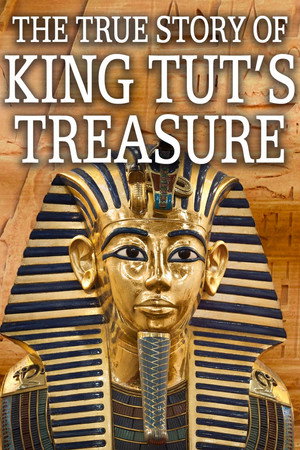
As part of a high-tech forensic probe into the demise of Egyptian Pharaoh Tutankhamun, scientists use X-rays and CT scans as they attempt to reach a conclusion about just how this famed king died. In addition, they explore the mysterious curse on explorers linked to Tut's tomb excavation.
Follows Bradley - only the third American coach to manage a foreign team - his wife, Lindsay, his staff and his players. In gaining access to the training camps and providing in-depth coverage of the Pharaohs' games in Africa, the filmmakers document the team's personal and professional struggles to keep their eyes on the prize of getting to the World Cup while living in and representing a country in turmoil.
Nefertiti's Daughters is a story of women, art and revolution. Told by prominent Egyptian artists, this documentary witnesses the critical role revolutionary street art played during the Egyptian uprisings. Focused on the role of women artists in the struggle for social and political change, it spotlights how the iconic graffiti of Queen Nefertiti placed her on the front lines in the ongoing fight for women's rights and freedom in Egypt today.
"Nasr Hamed Abou Zayd is not Godot, and the expectation promised by the title is misleading: this great gentleman is present in almost every shot. Who is he? An Egyptian Muslim theologian of international reputation, he has published exegeses of the Koran which led to his being condemned for apostasy. Exile, forced divorce from his wife Ibtihal Younes since his marriage was subject to annulment, separation from his son, such are the consequences of his writings. But Abou Zayd has not given up, residing in Leiden in the Netherlands, he continues, always on the road, to give conferences, to explain with great serenity his positions in public debates, on television, etc. C It is this particularly impressive dedication that Mohammad Ali Atassi's camera recorded over a period of six years.