An enlightening investigative report on Rosatom, Russia's powerful atomic energy agency and Vladimir Putin's formidable geopolitical tool for increasing his influence around the world.
Using masterfully restored footage from recently declassified images, The Bomb tells a powerful story of the most destructive invention in human history. From the earliest testing stages to its use as the ultimate chess piece in global politics, the program outlines how America developed the bomb, how it changed the world and how it continues to loom large in our lives. The show also includes interviews with prominent historians and government insiders, along with men and women who helped build the weapon piece by piece.
Animated short film featuring Reddy Kilowatt, reusing some footage from 1946's Reddy Made Magic.
The documentary recounts the world's first nuclear attack and examines the alarming repercussions. Covering a three-week period from the Trinity test to the atomic bombing of Hiroshima, the program chronicles America's political gamble and the planning for the momentous event. Archival film, dramatizations, and special effects feature what occurred aboard the Enola Gay (the aircraft that dropped the bomb) and inside the exploding bomb.
The birth of the atomic bomb changed the world forever. In the years before the Manhattan project, a weapon of such power was not even remotely imaginable to most people on earth. And yet, with war comes new inventions. New ways of destroying the enemy. New machines to wipe out human life. The advent of nuclear weapons not only brought an end to the largest conflict in history, but also ushered in an atomic age and a defining era of "big science". However, with the world now gripped by nuclear weapons, we exist constantly on the edge of mankind's total destruction.
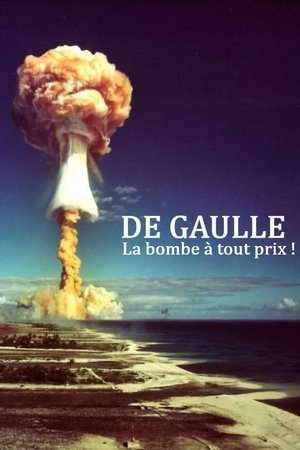
De Gaulle, la bombe à tout prix !
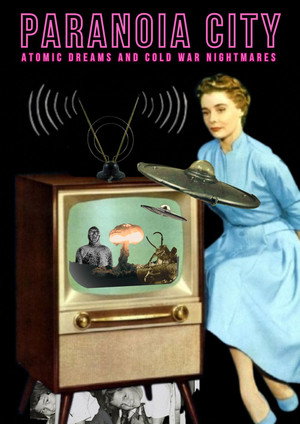
The 1950s were a time marked by an idealistic feeling. The atomic age, with its promise to save humanity, revolutionized the world, technologically, socially and politically. All these factors gave birth to one of the most prolific film genres in the history of cinema: science fiction, which delighted the audience. Only a few years later, these same spectators saw on their television screens how the Russians launched the Sputnik into space.
Educational film for civil defense personnel on requirements for a fallout shelter. Explains types of shelters and degrees of protection.
Discusses the physics, effects and defense against nuclear fallout. Describes the phenomena of natural radiation and the dangers of fallout. Explains the value of time, distance and mass in weakening the effect of residual radiation. Examines the effects of radiation on the body, food and water. Underscores adequate shelter and prescribed decontamination measures.
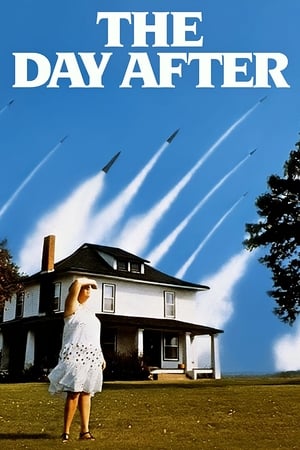
In the mid-1980s, the U.S. is poised on the brink of nuclear war. This shadow looms over the residents of a small town in Kansas as they continue their daily lives. Dr. Russell Oakes maintains his busy schedule at the hospital, Denise Dahlberg prepares for her upcoming wedding, and Stephen Klein is deep in his graduate studies. When the unthinkable happens and the bombs come down, the town's residents are thrust into the horrors of nuclear winter.
A fearless, globe-trotting, terrorist-battling secret agent has his life turned upside down when he discovers his wife might be having an affair with a used car salesman while terrorists smuggle nuclear war heads into the United States.
Bruce Brown's The Endless Summer is one of the first and most influential surf movies of all time. The film documents American surfers Mike Hynson and Robert August as they travel the world during California’s winter (which, back in 1965 was off-season for surfing) in search of the perfect wave and ultimately, an endless summer.
An exploration —manipulated and staged— of life in Las Hurdes, in the province of Cáceres, in Extremadura, Spain, as it was in 1932. Insalubrity, misery and lack of opportunities provoke the emigration of young people and the solitude of those who remain in the desolation of one of the poorest and least developed Spanish regions at that time.
Megacities is a documentary about the slums of five different metropolitan cities.
Warsaw's Central Railway Station. 'Someone has fallen asleep, someone's waiting for somebody else. Maybe they'll come, maybe they won't. The film is about people looking for something.
A detailed chronicle of the famous 1969 tour of the United States by the British rock band The Rolling Stones, which culminated with the disastrous and tragic concert held on December 6 at the Altamont Speedway Free Festival, an event of historical significance, as it marked the end of an era: the generation of peace and love suddenly became the generation of disillusionment.
Primary is a documentary film about the primary elections between John F. Kennedy and Hubert Humphrey in 1960. Primary is the first documentary to use light equipment in order to follow their subjects in a more intimate filmmaking style. This unconventional way of filming created a new look for documentary films where the camera’s lens was right in the middle of what ever drama was occurring. Preserved by the Academy Film Archive in partnership with The Film Foundation in 1998.
In this wildly entertaining vision of one of the twentieth century’s greatest artists, Bob Dylan is surrounded by teen fans, gets into heated philosophical jousts with journalists, and kicks back with fellow musicians Joan Baez, Donovan, and Alan Price.
Inspired by a true event, the film tells the story of a Saudi Tornado aircraft that suffered a sudden technical failure while returning from an operational mission on January 7, 2018. In the heart of the combat zone, as risks escalate, a search and rescue operation is launched to save the crew—a mission that embodies courage and dedication.
How vibrations in the air allow us to hear sound.