Finland’s first nature documentary. The filmmakers’ expedition leads them all the way to the Åland Islands and the Karelian Isthmus.
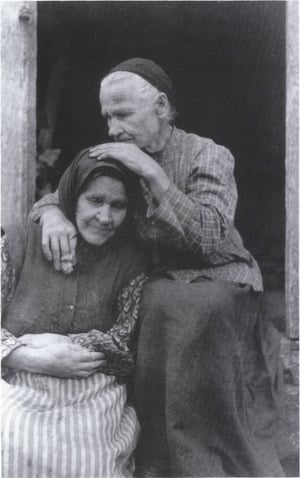
The preservation of the Karelian culture. About how the evacuated Finnish Karels have acclimatized themselves to the indigenous people and how the Karelian culture has been preserved during the ages of change. Reportage and interviews with ordinary people and experts made during the summer of 1968. Faces of the Finnish Karelian people. Images of faces that reproduce the culture and the history of the territory.
A documentary film about the Karelo-Finnish SSR.
Ten-year-old girl Olei lives with her grandparents and her only friend – Kaunikki the cow in a withering Karelian village on the shores of the White Sea. Suddenly, the girl's grandfather passes away. While her grandmother, gripped by the bitterness of loss, conducts funeral rituals, Olei seeks solace in Kaunikki’s company. But on the funeral eve Kaunikki disappears, and the only person, who could help find her, is dead.
Veneh is a poetic depiction of transition and the end of childhood. It tells of a young Karelian bride, who is about to leave her home. She is prepared for her wedding, which in Karelia was a long process. The movie follows traditional rituals, colliding the genres of ethnographic and drama film with music and dance video styles.
Returning to the house where his family was brutally murdered during the war, "the man who refuses to die" dismantles it, loads it on a truck, and is determined to rebuild it somewhere safe in their honor. When the commander who killed his family comes back hellbent on finishing the job, a relentless, eye-popping cross-country chase ensues.
Late 40’s after the war. Strange languaged and religioned immigrants fleeing from Karelia region are hated by Finns in the countryside. 19-year old Anni is living her life wanting to forget the war and hostility surrounding her. Falling in love with a man who hasn’t left fighting, threatens Anni’s whole family’s future and hope for mutual forgiveness..
Anni, a daughter of a wealthy family and used to secure life, falls in love with Veikko, a war invalid of the Continuation War. Anni leaves her past behind her and starts leading the life of a pioneer, in the wild forests of northern Karelia, in a settlement farm. After a rosy start, the fate crushes Anni’s dreams and her love for Veikko is put to a test.
Miila has found out that her grandmother Marja was born in Karelia. The subject has a close community on social media in Finland, which Miila wants to be a part of, so she decides to shoot a social media videos about Karelianness and her grandmother. The plan fails, and Miila doesn't get the visibility she craves. Instead, she learns what Karelianness is really about in their family.
In the far North, a fisherwoman lives in silence with her man. Around them lies a night landscape of snow and wrecked ships. Suddenly, her son returns out of nowhere.
A film trilogy consisting of Veneh (2016), Lindu (2021), and Ilmu (2023). The first ever films made in the Karelian language.
Ilmu is the third and final part in this Karelian art film trilogy. This non profit series of films are the first ever films to be made in the Karelian language. These films depict the transition of different life stages in the light of ancient Karelian ritualism and the central role of women in Karelian transition rituals. Ilmu reveals the mythology and traditions associated with birth.
LINDU is the second in a Karelian film trilogy. The film series are the first ever to be made in the Karelian language. ’Veneh’, the opening film premiered in 2016. They are a non-profit, educational series of ethnographic art films. The films depict the theme of transition in different stages of life, shrouded in ancient Karelian ritualism. ’Lindu’ describes mythology and traditions associated with death.
A powerful profile of women prisoners in New York dealing with HIV/AIDS.
GATHER AT THE RIVER points Mugge's cameras (and his sharply recorded sound) at the ongoing evolution of bluegrass, the 'high lonesome' music that is celebrated each year at the World of Bluegrass Festival in Owensboro, Ky. The 1993 event constitutes the entirety of Mugge's film, a generous feast of performance by the finest bluegrass musicians, punctuated by authoritative commentary about the past, present and future of bluegrass music… Pure magic.
Documentary following the band Wednesday and their lives in Asheville, North Carolina.
The idea for Gaza in Context emerged during the summer of 2014 when Israel launched its most devastating offensive on the besieged Palestinian population of the Gaza Strip to date. Despite the immense destruction wrought upon a captive population Israel successfully claimed victimhood in western media as it launched 6,000 airstrikes and 50,000 artillery shells in an air and ground offensive that lasted for 51-days. The course of the media cycle made evident the need for an assertive framework to explain Israel’s systematic wars. Specifically, to counter its defensive claims and situate its aggression within a broader settler-colonial project in Palestine.
Le jardin des planches
What does it mean to follow one’s calling into an abbey and a brewery? Inspired by the growth of the American craft beer movement, a group of Catholic monks in Spencer, Massachusetts produces America’s first “Trappist-certified” beer, a historically European tradition that offers an opportunity for the community to preserve their unique way of life. “Ora et labora” is Latin for “work and prayer,” and is the motto of the Christian monastic life.
Speech, public square, election. Somewhere in France during the presidential campaign.