"This film explores how freedom of speech — including dissent — is afforded to all Americans, and shows freedom of expression in art, music, dance, architecture, and science. The film also emphasizes the importance of the individual’s contribution to the whole of society and demonstrates how a productive and creative society is formed by the open and respectful exchange of ideas. The film was written, produced, and directed by William Greaves" (National Archives).
Scientists and philosophers work to understand animal vision in this multi textured rumination exploring our relationship to the nonhuman world.
Working completely outside the mainstream, the wildly prolific, visionary Stan Brakhage made more than 350 films over a half century. Challenging all taboos in his exploration of “birth, sex, death, and the search for God,” he has turned his camera on explicit lovemaking, childbirth, even autopsy. Many of his most famous works pursue the nature of vision itself and transcend the act of filming. Some, including the legendary Mothlight, were made without using a camera at all, as he pioneered the art of making images directly on film, by drawing, painting, and scratching.
"This project consists a visual fluidity of construction, harmony and thoughts taking colors and length from this body of autonomy. Different images between figuration and abstraction are created by meaning and phenomenon letting the decoupage revealing a piece of a strange underworld. I built it like a window opened to the fresh air of improvisation by familiar landscapes, those exact moments articulating a connection between light and movement."
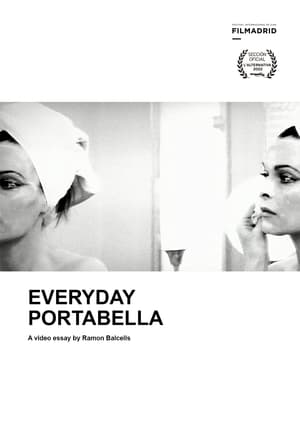
Everyday Portabella
The Black Album places scrutiny on the notion of "Black Excellence" in a revisionist take.
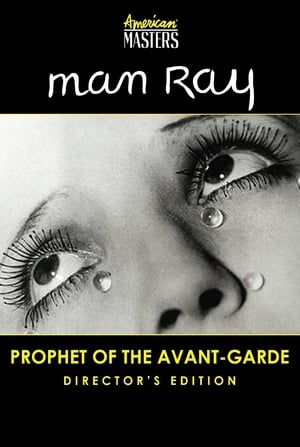
Man Ray, the master of experimental and fashion photography was also a painter, a filmmaker, a poet, an essayist, a philosopher, and a leader of American modernism. Known for documenting the cultural elite living in France, Man Ray spent much of his time fighting the formal constraints of the visual arts. Ray’s life and art were always provocative, engaging, and challenging.
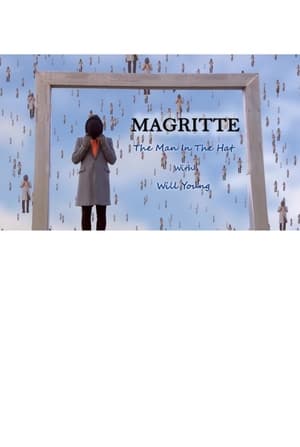
In this film, Will Young travels to Magritte's native Belgium to find out more about the man whose trademark was a bowler hat and whose apparently conventional exterior concealed the mind of a subversive rebel. Will uncovers a childhood marked by tragedy, a marriage that lasted from Magritte's adolescence until his death in 1967, and a stunning artistic legacy which endures to this day.
An experience of a camera swinging in different gestures facing the optical distortion of the Sun. The last appearance of the smudge.
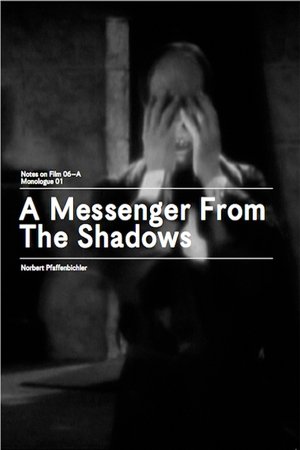
Thanks to his myriad film roles, Lon Chaney is known as “the man of a thousand faces,” and you could say that the early horror era never beheld a figure more intriguing. Yet because of his numerous transformations, his face never became as iconic as that of, say, Boris Karloff. Accompanied by a soundtrack from Bernhard Lang, this “re-imagination of shots” taken from Chaney´s forty-six surviving films offers a beguiling excursion into the history of film. The director reveals surprising associations, while highlighting the enduring magic of works which are now more or less forgotten.
Rummaging for Pasts is an experimental juxtaposition of two cinematic documents: the video diary of an international archaeological excavation and a collection of assorted eight millimeter found footage of Indian weddings.
"Ryuta is 5 years old. Even though he is my son, I sometimes wonder what this small person is to me. Even though I see his joys and sadnesses and know the feel of his warmth on my skin when I hold him, there are moments when my feelings for him become vague and blank." - Takashi Ito
A film in which the one 60-story skyscraper that soars in the spaces between roofs spins with incredible speed. I centered the circumference with its 400 or 500 meter radius on the skyscraper and divided it into 48 sections, then took photographs from those spots and shot the photographs frame by frame.
Women, landscapes and manifestations of color meet experimentally with the possibilities of the artisanal copying technique on 16mm.
Starting from frame by frame in-camera editing, the film translates a nursery garden from Chillán into a filmic landscape, with a rhythm and structure coming from a personal relationship with color, light and occurrences that took place near the end of the summer at the Olaxis garden. This is the first part of a work which takes reference from Violeta Parra's poetry, created from flowers, plants and certain places of the Ñuble area.
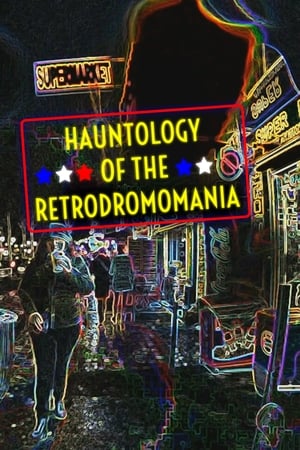
Hauntology of the Retrodromomania is an essayistic motion picture, a locomotory legwork, a deambulatory non-rural land survey, a casual journeying in a punctual dissertation around the phenomenon of the nostalgic feeling, discoursing on a late capitalistic landscape of social emotions, which are of yore, yet coloured of the postmodern tint of pixelated neo-noir, a socio-philosophical flâneur’s trip in critical theory escorted by the spirits of French post-structuralists. For a Sociology of Nostalgia revisited.
Video essay ‘Rock and Cliff' investigates the creation of Horn Town, a new model village and centre of large scale tourist development, and the experiences of rural residents moved there through government-led displacement. Horn Town is located in Wulong, a rural district near the Three Gorges Dam administered by the Chongqing municipality (a city of 30 million people). Narrated in the style of a science documentary but using local Chongqing dialect, the video brings a geological and topographical perspective to types of 'rocks' found in the area,from mythological stones from a mountain cliff, to ruins of the original settlement, to a stone sculpture from a dubious 'Land Art Biennial', in order to address issues of land acquisition, top-down development and spatial politic.
"Like a Dream That Vanishes" continues Sternberg’s work in film both thematically and formally: the ephemerality of life echoed in the temporal nature of film, as the stuff of life echoed on the energy, life-force in rhythmic light pulses (Your life is like a candle burning). Imageless emulsion is inter-cut with brief shots of natural elements and mise-en-scene of the stages of human life: a little boy runs and falls; teens hang out together at night smoking; sun shines through tree branches; men pace, waiting; flashes of lightning; an elderly man speaks philosophically about miracles.
Experimental short film exploring New York City's multicultural history through the eyes of three chosen individuals.
Shenzhen River (the border btw Hong Kong and Shenzhen), and the Second Line of Shenzhen Special Economic Zone (the border between Socialism China and Capitalism China) were compared to the Berlin Wall. The Second Line were constructed June 1982, demolished June 2015. The First Line (Shenzhen River) still flows, running deeper and deeper after 1997. Artist Miaoyuan LONG and Zen LU (the ON/OFF media Group) documented major checkpoints along these two boundaries. It’s a piece to illustrate the Big Escape (Touch Base Policy) from mainland China to Hong Kong during 1950-70’s and the geopolitical history of Shenzhen. The 48min audio-visual live performance version was Official selection of Draft Systems 2017 WRO Media Art Biennale, Poland.