Robert Burns was well aware of the revolution taking place across the Atlantic as he grew up. The poet was inspired. And America was to be inspired by him. From Abraham Lincoln to Frederick Douglass, and Walt Whitman to Bob Dylan, some of the most significant figures in American politics and culture have cited Burns as an influence.
It has been over one hundred years since M. K. Čiurlionis left his lasting imprint on Lithuanian culture. He was a composer, painter, genius, and madman who created an entirely new space, new context, and new universe.
The documentary is titled after Arkadaş Z. Özger’s poem “Hello My Dear” which had caused much controversy in the period it was first published. Considered to be in defiance of heteronormativity, the said poem includes references to the poet’s personality, his family, his relationship to the society, and his “unexpected” death, which came three years after its publication. Today, 50 years after it was written, the documentary follows these same lines in the poem utilising cinematic elements. The documentary also rediscovers the poetics; reaches out to the family, the comrades, the friendships, departing from the official historical accounts, cognizant of his experience of otherness, in pursuit of the “lost” portrait of Arkadaş Z. Özger.
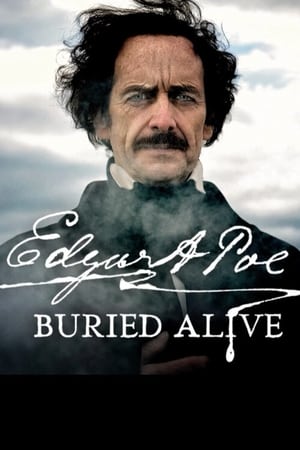
How the inventor of the detective story became his own greatest mystery.
This film is dedicated to Mas-Félipe Delavouët, the poet discovered by Lawrence Durrell, who wrote 14,000 verses in Provençal over a period of thirty years, and who died on November 18, 1990. "The sky, history and Mediterranean and Provençal myths are the inexhaustable wellspring of this man rooted down there, near Salon-de-Provence" (J.-D. Pollet). "Mas-Félipe Delavouët wrote five books in Provençal, 14,000 verses. A sort of "Odyssey". Of myths. What is stunning in him is that he always talks of disappearances. Cities, works, men, writings, television, etc., everything has to disappear. In order to be reborn. No pain. A sort of hand-to-hand of man and nature. During the filming, I would simply throw out some words... For example, one time I said "creation" and he said: "creation doesn't exist..., creation is before me..., I can only read creation"; this sentence describes Delavouët perfectly (J.-D. Pollet, 1989 and 1993).
T. S. Eliot has been considered by many to be the leading American poet of this century. His contemporaries in the 1920s recognized in “The Waste Land” an expression of the exhaustion and fragmentation that afflicted so many in that post-war era. They also recognized the originality of Eliot’s poetic technique and admired his insistence on the need for spiritual values in an age of popular kitsch.
A documentary about Néstor Perlongher. His life, his poems, and his activism in Argentina's Frente de Liberación Homosexual (homosexual liberation front).
The creative chemistry of four brilliant artists —drummer John Densmore, guitarist Robby Kreiger, keyboardist Ray Manzarek and singer Jim Morrison— made The Doors one of America's most iconic and influential rock bands. Using footage shot between their formation in 1965 and Morrison's death in 1971, it follows the band from the corridors of UCLA's film school, where Manzarek and Morrison met, to the stages of sold-out arenas.
An account of the life and work of the Spanish poet Luis García Montero; a journey through his experiences, his mentors, his influences and his contact with other artists, both from the literary world and from other disciplines.
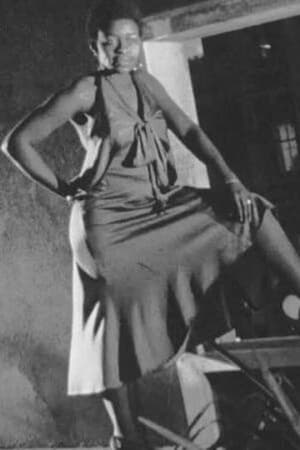
The story, hidden by historians and biographers, of Jeanne, a black woman, whose real name is unknown, who was the muse and companion of the mythical French poet Charles Baudelaire (1821-1867).
A chronicle of legendary Native American poet/activist John Trudell's travels, spoken word performances, and politics.
The first episode in a series of “adaptations” of poet Bernadette Mayer’s book Utopia that artist Beatrice Gibson envisions to undertake over the next decade, producing a series of small, quotidian films that together, and over time, will constitute an epic. This first film is drawn from Chapter 4, entitled “The Arrangement: of Houses & Buildings, Birth, Death, Money, Schools, Dentists, Birth Control, Work, Air, Remedies, and So on” and was shot at home during the pandemic.
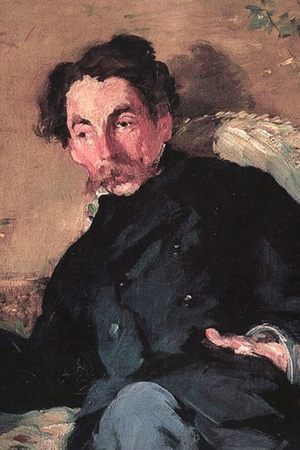
Stéphane Mallarmé is one of the many educational documentaries that Éric Rohmer did for the television during the 1960’s. At the beginning of the film, Rohmer states that he has placed in Mallarmé’s mouth words taken from an interview with the writer by Jules Heuret published in 1891.
Dante Alighieri was a poet, philosopher and politician in 1300 Florence. The visionary author of "Inferno", the first book of the "Divine Comedy", he was both a direct witness and a narrator of his times and his poem is a remarkable geopolitical chronicle of a tumultuous period of the Middle Ages from 1300 to 1320, a time when Kings, Popes, rulers and warlords played a deadly chess game for the control of Europe. In this high end docudrama, some of the world's finest scholars will help provide historical context to the unfolding of events, making them accessible to a wide audience, and giving us a privileged viewpoint over one of the most eventful and funding chapters of European history.
Poet, singer / songwriter and ladies man Leonard Cohen is interviewed in his home about his life and times. The interview is interspersed with archive photos and exuberant praise and live perfomances from an eclectic mix of musicians, including: Jarvis Cocker, Rufus & Martha Wainwright, Teddy Thompson, ANOHNI, The Handsome Family and U2's Bono and The Edge.
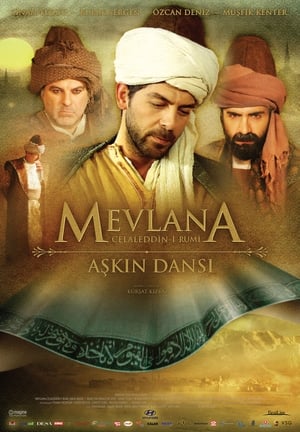
A dramatised documentary about the life of Rumi, a Persian mystical poet whose images of universal love and divine mystery continue to be celebrated more than 700 years after his death.
The last day of Patrizia Cavalli’s home. Before it’s all gone.
This American Experience tells Whitman's life story, from his working-class childhood in Long Island, to his years as a newspaper reporter in Brooklyn when he struggled to support his impoverished family, then to his reckless pursuit of the attention and affection he craved for his work, to his death in 1892.
Tahirih Qurrat al-Ayn was first Iranian women right activist, Bab-i fighter ,theologian,poet. Tahirih was a woman of letters who lived in the nineteenth-century. Her name is synonymous with the emancipation of women and social justice and her life has inspired generations of women ever since, particularly Iranian women’s right movements.Since 1979, the Islamic Republic of Iran forbids any literature or discourse that portrays Tahirih in a positive light. Her name has been removed from the latest editions of history books published in Iran.
Documentary about Charles Olson, exploring his life and the significance of Gloucester, Massachusetts.