Though both the historical and modern-day persecution of Armenians and other Christians is relatively uncovered in the mainstream media and not on the radar of many average Americans, it is a subject that has gotten far more attention in recent years.
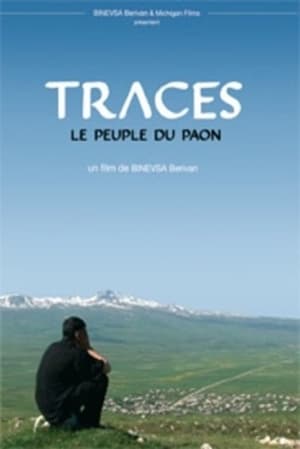
Filmmaker Binevsa Bêrîvan travels to Armenia to capture the daily life, customs, and history of the country's Yazidi Kurdish community.
Documentary film about ethnic cleansing in the Prigorodny district in October-November 1992.
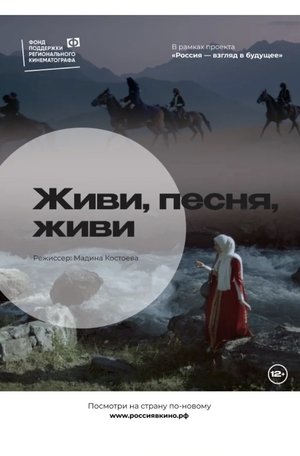
Film about the singing and dancing culture of the Ingush people
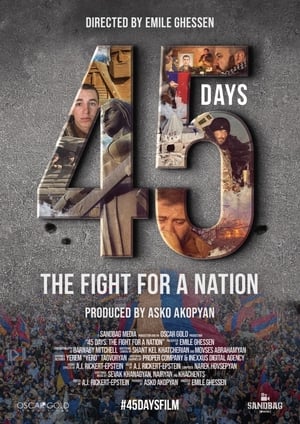
A feature documentary presented and directed by former Royal Marines Commando Emile Ghessen. The documentary tells the story of the 2020 war between Armenia and Azerbaijan over the disputed region of Nagorno Karabakh. In the fall of 2020, Armenia and Azerbaijan fought a brutal bloody war. Azerbaijan won, decisively. The feature documentary 45 Days: The Fight for a Nation tells the story of this conflict, from the Armenian perspective, focusing on the human cost of war and its impact on the large Armenian diaspora.
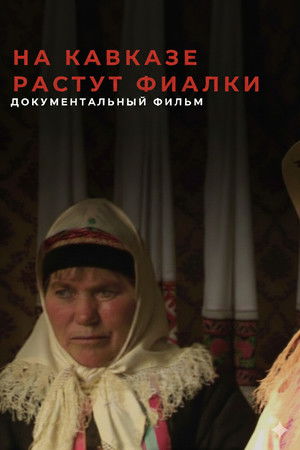
A film about the Doukhobor community that has lived in the village of Gorelovka in the Republic of Georgia since the 19th century. The few Russians who remained there live in their own closed world of rituals, prayers, and psalms.
The film is dedicated to the ethnogenesis of a small people, preserving their traditions and language, the Udi people
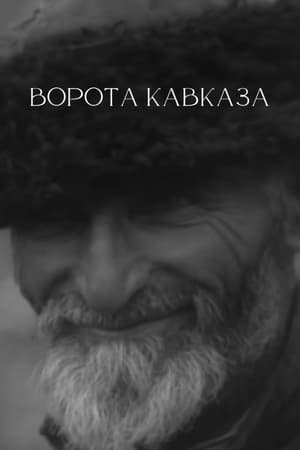
Short documentary about the Georgian Military Road. Captures Ingush and Ossetian settlements of the early 20th century
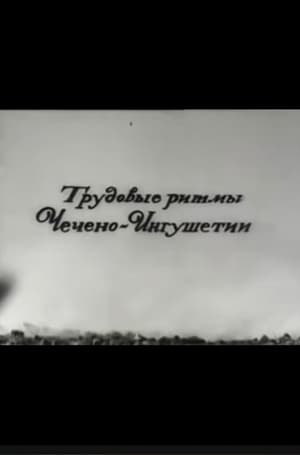
Documentary film about the labor activity of residents of Chechen-Ingush ASSR
The film tells the story of ancient Ingush lullabies - Ingush women and men tell the lullabies of their families and the stories associated with them: love, friendship, blood feud.
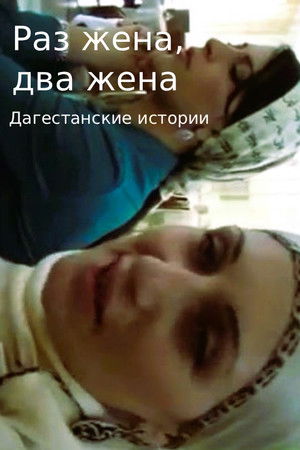
About 30 ethnic groups live in the Republic of Dagestan, each with its own language and customs. The prevalence of the Muslim way of life is a distinctive feature of this republic. The number of men taking second and third wives has increased. However, according to the Constitution of the Russian Federation, a man can only be married to one wife. So, being both a law-abiding citizen and a model Muslim is not yet possible.
A documentary film about the expedition of Czechoslovak mountaineers led by Vladimír Procházka to Mount Elbrus in 1958.
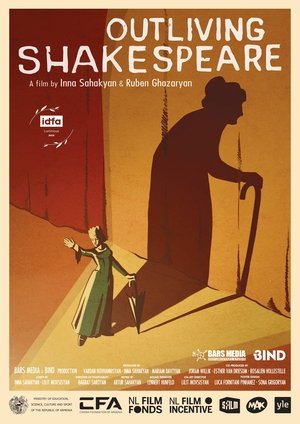
In a decaying Soviet-era retirement home, a vibrant group of elders cling to life by staging Shakespeare. Yet loneliness lingers beyond the theater’s doors, until drama begins to blur with reality.
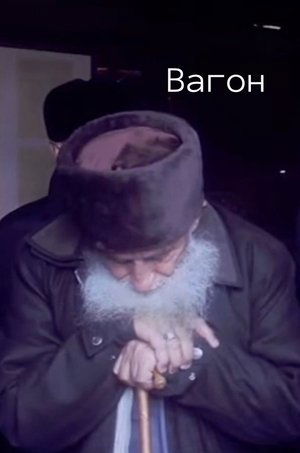
In the capital of Ingushetia, at the memorial, there is a carriage. This is a carriage from the 40s, a carriage of memory. One of those in which the Ingush were transported back in 1944 to Kazakhstan and Central Asia. February 23 is the day when the whole country celebrates Defender of the Fatherland Day; mourning takes place in Ingushetia. And on this day, the old people gathered in this carriage to remember and tell each other how it was.
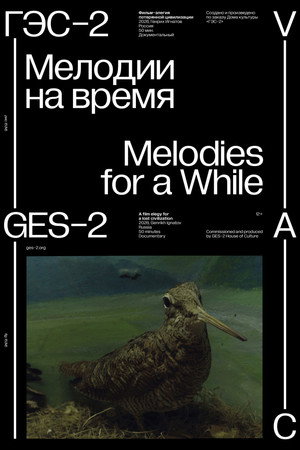
The main protagonists of this slow-paced film are abandoned or suspended spaces associated with the production, distribution, and viewing of cinema in various localities across North Ossetia. The discussion of the decline of the film industry also serves as a way of pointing to the ambiguous position in which the progressive modernist project found itself in the late twentieth and early twenty-first centuries. Ignatov proposes poetic ways of establishing new relations with this project in response to the need to reinvent the links between past and future. The abandoned spaces are brought to life by two visiting musicians playing the uadynz, traditional Ossetian flutes.
An auteur-director who wishes to make a documentary about Armenia imagines a fictitious character that has the ability to travel through bodies. The latter will alternatively embody: a young farmer that dreams to flee from the countryside to more urban spheres, a prostitute who is a survivor of rape, a narcissistic client, a fallen artist and finally, a resisting deserter.
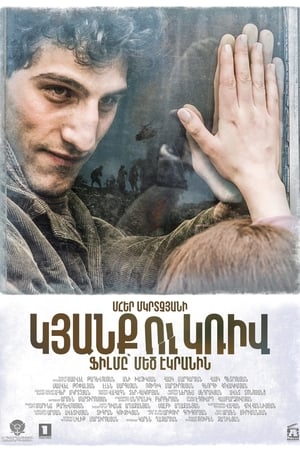
Taking place in 1991, Tigran, who teaches math at a village school to avoid the army, loses the girl he loves. Consumed by abject wretchedness, he decides to enlist as a volunteer in the Nagorno‑Karabakh war to give meaning to his hollow life.
Two Russian soldiers, one battle-seasoned and the other barely into his boots and uniform, are taken prisoner by an anxious Islamic father from a remote village hoping to trade them for his captured son.
Washed up British film director, Emil, who is invited by a nascent state to make a national Epic in an obscure Caucasus Republic ruled by an eccentric and corrupt dictator. When down and out Academy award winning British film director Emil Miller receives an invitation to the Embassy of the Autonomous Republic of Karastan, little does he know that he will be embarking on one of the wildest journeys of his already diverse and colourful career.
The story of Pascal Ichak, a larger-than-life French traveller, bon vivant, and chef, who falls in love with Georgia and a Georgian princess in the early 1920s. All is well until the arrival of the Red Army of the Caucasus, as the Soviet revolution that has swept Russian comes to Georgia. Told as a flashback from the present, as a French-Georgian man whose mother was Pascal's lover translates his memoirs for Pascal's niece.