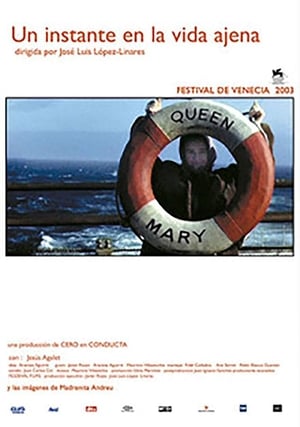
This film is focused on elderly women spending their last years of life in a nursing home in Krakow. The discreet heroine of the film is an elderly lady whose check-in is recorded by the camera. Thanks to this, we gain access to intimate situations, for example a sudden acceleration of the heartbeat in the middle of the night. The camera follows the women around the clock, starting from their morning prayer.
Bodega Bohemia
Routine Pleasures, Slow Cinema.
Stanley Kubrick’s short documentary about Father Fred Stadtmueller, a Catholic priest serving a vast 4,000-square-mile parish in rural New Mexico. To reach his scattered congregation, he pilots his own Piper Cub aircraft, the Spirit of St. Joseph. Over two days, Kubrick follows the “flying padre” as he conducts Mass, mediates between quarreling children, attends a funeral, and airlifts a sick child to medical care—capturing both the challenges and quiet heroism of his daily mission.
Andy Warhol directs The Factory regular Louisa "Jackie" Foster for a screen test.
A black-and-white visual meditation of wilderness and the elements. Wildlife filmmaker Richard Sidey returns to the triptych format for a cinematic experience like no other.
A parade of supporters of the constructed auxiliary language Esperanto, which is intended to be a universal second language for international communication, or "the international language". The word Esperanto translates into English as "one who hopes".
An experimental documentary exploring a sinister theory surrounding the death of Cleveland baseball player Ray Chapman in 1920 and the subsequent rise of the Yankee dynasty.
A look at the ruins of the ancient city of Angkor. The largest collection of sculptures the world has ever seen - an entire metropolis of palaces and temples recovered from the jungle.
Grave robbing, torture, possessed nuns, and a satanic Sabbath: Benjamin Christensen's legendary film uses a series of dramatic vignettes to explore the scientific hypothesis that the witches of the Middle Ages suffered the same hysteria as turn-of-the-century psychiatric patients. But the film itself is far from serious-- instead it's a witches' brew of the scary, gross, and darkly humorous.
With great bawdiness and backbone, a rugby team made up of farmers strive to redeem themselves from a long run of bitter losses. In the face of the hefty demands of farming and fatherhood, the Saturday game becomes the focus of the men’s passions and the ground on which their worth is proved. ‘The Ground We Won’ is a highly authentic, slice of life film about the challenges and joys of manhood, as seen through the rites and rituals of a rural New Zealand rugby club.
A journey into time, landscape and consciousness: The Southwestern United States in the black-and-white moving images and unsettling instrumental music. Entropy of the American dream.
Discover how six seemingly ordinary but supremely talented men became Monty Python, sketch comedy's inspired group of lunatics who turned such unlikely sources of inspiration as Spam, dead parrots and the Inquisition into enduring punch lines. This entertaining documentary includes interviews with members of the troupe, as well as home movies, photos and rare recordings from Monty Python's early years.
This film portrays activity in Grand Central Market in Los Angeles, California. Highlighted are vendors that represent the melting pot that is America, selling their wares to people of all ages and all walks of life. The film was directed by William Hale. Notably, the film also showcases some early work of famous cinematographer, Haskell Wexler.
The newsreel series Jornal Português (1938-1951) was produced for the Secretariat of National Propaganda (SPN/SNI) by the "Portuguese Newsreel Society" (SPAC), under the technical supervision of António Lopes Ribeiro. It was conceived and employed as part of the propaganda machinery of Salazar's regime. Screened in cinema theatres prior to the main feature film, each issue of Jornal had approximately ten minutes in length and covered a variety of official government acts, national political news, major sports events and other assorted social and cultural affairs. Jornal Português is not only an indispensable document for the history of Estado Novo's propaganda, but also an unparalleled audiovisual archive of 1940s Portugal.
In 1962 Joris Ivens was invited to Chile for teaching and filmmaking. Together with students he made …A Valparaíso, one of his most poetic films. Contrasting the prestigious history of the seaport with the present the film sketches a portrait of the city, built on 42 hills, with its wealth and poverty, its daily life on the streets, the stairs, the rack railways and in the bars. Although the port has lost its importance, the rich past is still present in the impoverished city. The film echoes this ambiguous situation in its dialectical poetic style, interweaving the daily life reality (of 1963) with the history of the city and changing from black and white to colour, finally leaving us with hopeful perspective for the children who are playing on the stairs and hills of this beautiful town.
Documentary made in two parts by Luciano Berriatúa. This first part focuses on childhood, personal life and the early works in films by German director F.W. Murnau.
Short-documentary about the squat at Amandastraße 73 in Hamburg.
The film tells the story of the golden era of Azerbaijani rap up to the Mende Varam era.
A visual allusion of the cleansing of the temple to numerous crimes. The film draws an arc from the Crusades to the Holocaust and the Vietnam War.