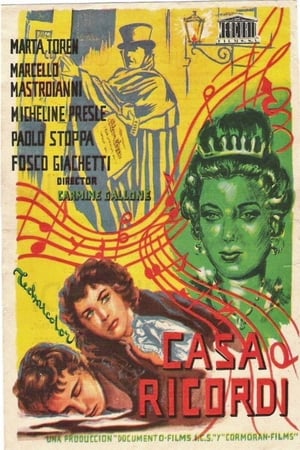
The film covers a hundred years in the lives of the Ricordi family, the Milan publishing house of the title, and the various composers and other historic personalities, whose careers intersected with the growth of the Ricordi house. It beautifully draws the parallel between the great music of the composers, the historic and social upheavals of their times, as well as the "smaller stories" of the successive generations of Ricordi.
The Nutcracker is Mikhail Baryshnikov's breathtaking and critically acclaimed Emmy-nominated production. This spectacular performance is danced by the magnificent team of Baryshnikov, one of the greatest classical dancers of the century, and Gelsey Kirkland, both showcased at the peak of their careers, with members of the American Ballet Theatre.
"What would the world be like without Beethoven?" That’s the provocative question posed by this music documentary from Deutsche Welle. To answer it, the film explores how Ludwig van Beethoven's innovations continue to have an impact far beyond the boundaries of classical music, 250 years after his birth.
Utterly astounding, iridescent sand animation from Aleksandra Korejwo based around Bizet's Carmen.
Jenny is young. Her life is over. She killed someone. And she would do it again. When an 80-year-old piano teacher discovers the girl’s secret, her brutality and her dreams, she decides to transform her pupil into the musical wunderkind she once was.
Lyrical biography of the classical composer, depicted as a romantic hero, an accursed artist.
Distinguished Bach specialist Sir András Schiff returned to the BBC Proms in 2018 to present Book II of The Well-Tempered Clavier. Bach's effortless brilliance and new-found sonorities push harmony and counterpoint further than ever with a combination of ancient and modern styles, church austerity and galant lightness. Schiff has said that no-one combines the sacred and the secular as Bach does, and this is comprehensively demonstrated in Bach's fascinating and challenging sequence. This performance in the Royal Albert Hall was described as a musical meditation for our troubled times by the Independent.
The Triple Concerto is one of Beethoven's less frequently performed works - probably also because it requires three soloists and makes considerable demands on them. ARTE presents the Concerto for Violin, Violoncello, Piano and Orchestra in C major at the Gewandhaus in Leipzig, performed by an excellent trio of soloists. It is accompanied by the Gewandhaus Orchestra under the direction of Herbert Blomstedt.
Unveiling abuse in classical music's elite institutions — violinist Lara St. John fights for justice, exposing complicity and systemic misogyny.
Imagine a window into the past. Imagine finally connecting singers' bodies to the voices you have always treasured on record, watching footage of performances from another era. All of singers featured here have something in common (with one exception, Sutherland): they sang and performed on stage before the advent of filmed opera. . And it shows, for the first time, a few tantalizing minutes of recently recovered footage from Callas' legendary Lisbon Traviata, featuring Addio dal Passato and Parigi oh cara with Alfredo Kraus. This DVD will leave you asking for more.
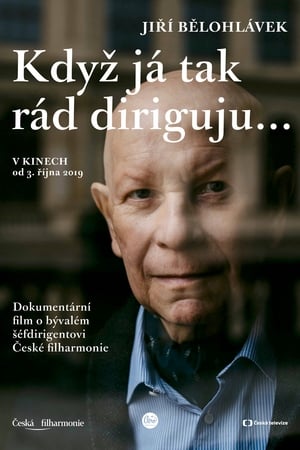
Study of the work of the conductor Václav Neumann and his creative process with the orchestra.
Elmer Fudd introduces two pieces of classical music: "Tales of the Vienna Woods" and "The Blue Danube", and acted out by Bugs Bunny, Porky Pig, Laramore the Hound Dog, a family of swans, and a juvenile Daffy Duck.
Filmed live in Vienna's legendary Musikverein concert hall, this release represents Lang Lang's second live recorded recital to date after the best-selling "Live at Carnegie Hall" in 2004, which marked his international breakthrough as a recording artist.
The Berliner Philharmoniker’s European Concert, held each year on 1 May, is invariably an international highlight. Performing in 2008 in Moscow's renowned Tchaikovsky Conservatory, the orchestra under Sir Simon Rattle presented outstanding performances of works by Beethoven, Stravinsky and Bruch, whose Violin Concerto featured one of today’s most fascinating artists, the Russian violinist Vadim Repin. Stravinsky: Symphony in Three Movements Bruch: Concerto for Violin No.1, op.26 Beethoven: Symphony No.7 in A major, op. 92
Even as a young boy, Beethoven marched to the beat of a different drummer. Trained in the traditional music methods by his father, Beethoven was an accomplished pianist by the age of 12. But he yearned to try new sounds and persevered until audiences heard his music. By his early twenties, this persistent young man performed for Joseph Haydn, who compared him to the great Mozart. Sadly, Beethoven began to lose his hearing, but he threw himself even more deeply into his music, composing "Fur Elise," "Sonata Pathetique" and the dramatic "Fifth Symphony" years later, audience members heard what he could not and leapt to their feet in ecstatic appreciation for such passionate music. His creativity gave the world then, as it does today, music that stirs the soul. The video begins in 1827 with 30,000 people paying tribute to the great Beethoven in Vienna, Austria. Then the video switches to his life as a child...
There is hardly a better way to approach Ludwig van Beethoven than through his piano concertos. Beethoven’s own instrument was the piano, and in his improvisations – which made him the darling of the Viennese salons – he merged virtuosity and unbridled expression. The piano concertos give a clear idea of these performances. At the same time, they are prime examples of Beethoven’s ability to create large orchestral works with seemingly endless arcs of tension. The complete recording of all five works with Mitsuko Uchida and Sir Simon Rattle was one of the most spectacular projects of the Berliner Philharmoniker during the Rattle era – and at the same time the highlight of the collaboration between the orchestra and the pianist, which began in 1984.
An aspiring classical pianist loses his hearing and, with the help of those closest to him, must find the strength to play again. . .
Legendary "devil violinist" Niccolo Paganini sets all of 19th century Europe into frenzy.
Documents the interpretations of Gustav Mahler's compositions by conductors Bernard Haitink, Riccardo Chailly, Riccardo Muti, Claudio Abbado, and Simon Rattle, who detail the special relationship they have with Mahler's work.
In the 19th century, Romantic composer/pianist Franz Liszt tries to end his hedonistic ways but keeps getting sucked back in by his seductive fellow composer Richard Wagner.