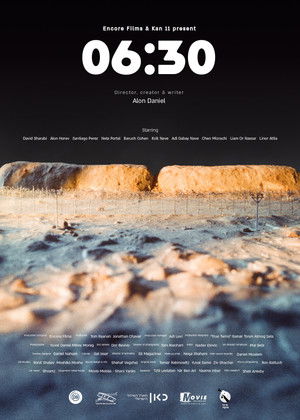
A documentary film that brings testimonies taken just one week after the attack, from 7 different areas that were attacked in the events of Saturday, 10/7/23. The film is told from the point of view of the survivors. The evidence is unusually presented in the movie with the help of miniature models and animations that reinforce the hard evidence. The survivors share the survival experience they experienced during the long hours of the murderous terrorist attack. Those who ran away from the party, the houses they hid in, those who fought against the terrorists, and those who saved lives in the field. All with the choices they had to make in real-time, and saved their lives.
After years of suffering from post-traumatic stress disorder, six US veterans of the wars in Iraq and Afghanistan travel to Peru on a quest for healing. With the help and guidance of three brothers who are traditional healers, they take ayahuasca and other plant medicines during a 10-day retreat in the Amazon rainforest.
Within the French and American armies, virtual reality prepares soldiers for their future battles just as it treats post-traumatic stress disorder after their baptism of fire. Antoine Chapon meets Cyril, former military video game designer and a veteran, who is dealing with the return to civilian life and loss of identity.
THE SCIENCE OF TAPPING is a collection of videos about the practice of Emotional Freedom Techniques (or "tapping"). Tapping techniques are interventions that apply principles of Chinese medicine for self-regulation — especially for the relief of chronic stress, anxiety, or pain. Interviewees discuss the evidence basis for the benefits of manually percussing some associated acupuncture points.
Since the renewed Intifada began in 2000, there have been over 75 Palestinian suicide bombings. This is the story of 0ne-the bombing of bus 32 in Jerusalem in June 2002. The film connects the stories of a group of ordinary Israelis-Jews and Arabs. Each of them holds a clue to someone who died that day.
The lastest neuroscience discoveries show surprising results: false memories, distortion, modification, déjà vus. Our memory is affected in many ways, and deceives us every day. The very fact of recalling souvenirs modifies them. The everyday consequences are manyfold. To what extent can we rely on our souvenirs? How much credit can we give them during trials? Even more shocking, scientists have proved to be able to manipulate our memory: creating artificial souvenirs, deleting, emphasizing or restoring them on demand.
Between psychosis, delusions of persecution and trauma, A finds himself at an interface between past and present after a stay in hospital. What is still reality and what is a fearful manifestation of traumatic encounters? By confronting herself with old diary entries, she tries to come to terms with the emotional maelstrom. The breaches of trust from her youth keep pushing their way to the surface in her current relationships and make it difficult to grasp happiness.
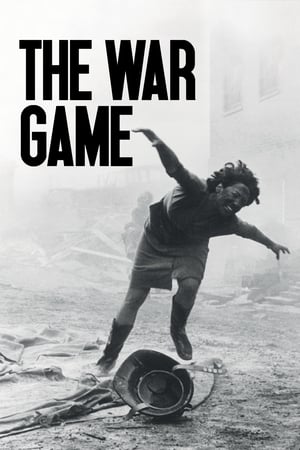
A docudrama depicting a hypothetical nuclear attack on Britain. After backing the film's development, the BBC refused to air it, publicly stating "the effect of the film has been judged by the BBC to be too horrifying for the medium of broadcasting." It debuted in theaters in 1966 and went on to great acclaim, but remained unseen on British television until 1985.
First Responders sign up to serve; they risk their lives and their mental health to respond to someone’s worst day. Who will rescue them? PTSD911 is a documentary film about real people: normal, average human beings who have chosen to work in professions that require above average heroism, fortitude, and resolve. These men and women have jobs that require a willingness to face things that most of us can’t even imagine, yet maintain a high level of dignity and professionalism. First responders in fact repeatedly see and experience things that most of us will never see, causing compound issues related to post-traumatic stress injuries and disorders.
Shocking documentary centering on victims of violent crime who seek to get revenge on their assailants.
25 years ago, when Coos, then 13, was smoking dope with his friends by the side of a canal, he passed out and came to with a Coke bottle up his ass. A joke by his friends. The incident marks his life as it haunts him for years. Why did his friends do that? Coos, now 38, wants to be able to turn this black page in his history, and he does so by confronting his friends of the time with his pain.
In a country ravaged by generational trauma, a psychiatrist trains grandmothers to treat depression within their communities.
In the wake of the 2012 Sandy Hook Elementary School massacre that took the lives of 20 first graders and their teachers, local clergymen Father Bob Weiss receives a letter from a fellow priest in Dunblane, Scotland, whose community suffered an eerily similar fate in 1996. From across the Atlantic, the two priests forge a poignant bond through the shared experience of trauma and healing.
HAS HEART is an intimate and inspiring documentary capturing the emotional journey of U.S. Navy veteran Michael Hyacinthe and artist Tyler Way, who unite to transform veterans' experiences through the power of art. After serving in conflict zones and experiencing personal loss and trauma, Michael grapples with his own sense of identity and purpose. He finds new meaning by collaborating with Tyler, a talented footwear designer, to create a unique space where veterans can express their untold stories through art and design.
The compelling stories of four young people as they struggle to survive a war that ended nearly 20 years ago. The physical conflict is over - but its psychological impact continues. Can they break the cycle of violence?
Dawn Mikkelson’s Risking Light is a meditation on forgiveness, layered with a theme that is rarely seen on the screen—forgiving the unforgivable. Five years prior to making the film, Mikkelson met Mary Johnson and O’Shea Israel, a meeting she describes as a life-changing event that would lead to the development of Risking Light. It was then she learned that Johnson had chosen to forgive Israel for the murder of her son, which motivates the tone of humanistic mission in the film.
With suicide rates among active military servicemen and veterans currently on the rise, this documentary brings urgent attention to the invisible wounds of war. Drawing on personal stories of American soldiers whose lives and psyches were torn asunder by the horrors of battle and PTSD, the documentary chronicles the lingering effects of combat stress and post-traumatic stress on military personnel and their families throughout American history, from the Civil War through today's conflicts in Iraq and Afghanistan.
Hope is an intimate portrait of a military family fractured by the invisible wounds of war. At its heart is Catherine, a decorated soldier and mother who returns from deployment profoundly changed—emotionally withdrawn, plagued by guilt, and struggling with addiction. Her daughter, Hope, once protected by her mother's strength, becomes a witness to her unraveling, forced to mature too quickly amid the chaos of relocation, strained family bonds, and a lack of institutional support. As Catherine battles to reintegrate, her marriage collapses, and the military’s absence of post-deployment care deepens her isolation. Her husband leaves, her daughter grows distant, and Catherine is left with the crushing realization that service came at a cost no one prepared her for.
Parallel stories: 18th century Harrison builds the marine chronometer for safe navigation at sea; 20th century Gould is obsessed with restoring it.
"The Jock: a Montford Point Marine" unveils the harrowing yet inspiring journey of an American Marine from the segregated boot camp of Montford Point, North Carolina. Raised on the tough streets of Philadelphia, Dave Culmer is drawn to the Marines, enchanted by the impeccable attire and imposing stature of a local Marine. After being dismissed from high school, he finds his path leading him not to the widely known Parris Island boot camp, but to the lesser-known Montford Point. His path to becoming a Marine is fraught with discrimination and grueling trials that push him to his physical and mental limits. Amid the struggle, he learns resilience, embodying the relentless spirit of Montford Point that drove these men to exceed expectations set by a society that predicted their failure.