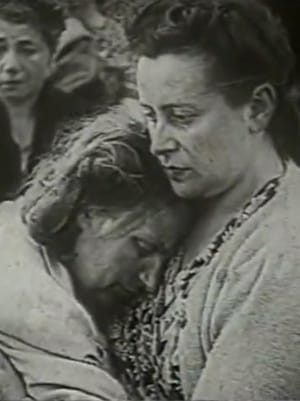
In 1944 Rudolf Breslauer documented the everyday life in the Westerbork transit camp on film, commissioned by the German camp commander Albert Gemmeker. The Westerbork Film was never completed, but much of the raw footage is preserved.
Eva Mozes Kor, who survived Josef Mengele's cruel twin experiments in the Auschwitz concentration camp, shocks other Holocaust survivors when she decides to forgive the perpetrators as a way of self-healing.
In 1961, history was on trial... in a trial that made history. Just 15 years after the end of WWII, the Holocaust had been largely forgotten. That changed with the capture of Adolf Eichmann, a former Nazi officer hiding in Argentina. Through rarely-seen archival footage, The Eichmann Trial documents one of the most shocking trials ever recorded, and the birth of Holocaust awareness and education.
Their names are Chorowicz, Cyroulnik, Glichtzman, Feldhandler... They were born in France, after the second world war. Their families came from Central and Eastern Europe in the 20s and 30s, fleeing antisemitism and poverty. After the Holocaust, they grew up among ghosts, between anger, a desire for vengeance and a will to change the world. In the 60s and 70s, they became activists. Through their personal stories and the tale of their internationalist and antifascist struggle, the movie shows the audacity of those years of dissent.
A manufactured memory.
Shoshana
The history of the Warsaw Ghetto (1940-43) as seen from both sides of the wall, its legacy and its memory: new light on a tragic era of division, destruction and mass murder thanks to the testimony of survivors and the discovery of a ten-minute film shot by Polish amateur filmmaker Alfons Ziółkowski in 1941.
Documentary film about Martin Park, a homeless man living in Dublin, and his friendship with photographer and filmmaker Donal Moloney.
A compilation of interviews, rehearsals and backstage footage of Michael Jackson as he prepared for his series of sold-out shows in London.
This Emmy Award-winning documentary traces the rise of Nazism in general and the career of Adolf Eichmann in particular by documenting the small incremental steps the Nazis took to introduce their ideology of anti-semitism in Germany and Nazi-occupied Europe during World War II.
In 1994, film producer Patrick Sobelman recorded the testimony of his grandmother Golda Maria Tondovska, a Polish Jewish survivor of the Shoah.
After a premonition of an unusual bird, a father loses his voice. His daughter undertakes a search to rediscover him, through an intimate narrative that explores the past, the new facets and the silences of a man who is no longer the same.
Take a stroll down Sesame Street and witness the birth of the most influential children's show in television history. From the iconic furry characters to the classic songs you know by heart, learn how a gang of visionary creators changed the world.
The story of the only three minutes of footage —a home movie shot by David Kurtz in 1938— showing images of the Jewish inhabitants of Nasielsk (Poland) before the beginning of the Shoah.
A year in the life of a dying shopping mall.
A documentary about the life of Jewish children forced to live in the Theresienstadt concentration camp.
A documentary chronicling the adolescent years of Elie Wiesel and the history of his sufferings. Eliezer was fifteen when Fascism brutally altered his life forever. Fifty years later, he returns to Sighetu Marmatiei, the town where he was born, to walk the painful road of remembrance - but is it possible to speak of the unspeakable? Or does Auschwitz lie beyond the capacity of any human language - the place where words and stories run out?
September 1st, 1939. Nazi Germany invades Poland. The campaign is fast, cruel and ruthless. In these circumstances, how is it that ordinary German soldiers suddenly became vicious killers, terrorizing the local population? Did everyone turn into something worse than wild animals? The true story of the first World War II offensive that marks in the history of infamy the beginning of a carnage and a historical tragedy.
For four years (1977-1981) Esaias Baitel documented a violent Parisian neo-Nazi gang. Having gained their trust, he was able to get close to them. Living among the gang members, he witnessed horrific events, and while hiding his real identity, he photographed a one-of-a-kind collection of gripping stills. Over thirty years have passed. Esaias Baitel has laid his camera down. He returns to the dark nights he spent in the City of Lights, the city where he lived a double life, going back and forth from the gang to the young family he had just started.
An account of the life and work of the Polish writer Stanisław Lem (1921-2006), a key figure in science fiction literature involved in mysteries and paradoxes that need to be enlightened.