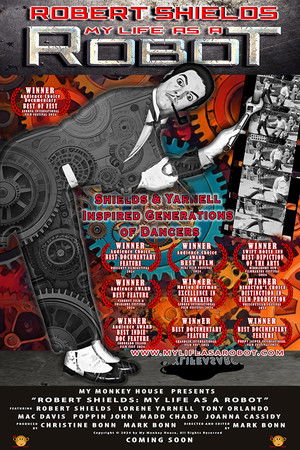
The remarkable spirit of tap dancers and their history provides a joyous backdrop for intimate portraits of hoofers Sandman Sims, Chuck Green, and Bunny Briggs.
Images of Argentinian companies and factories in the first light of day, seen from the inside of a car, while the director reads out documents in voiceover that reveals the collusion of the same concerns in the military dictatorship’s terror.
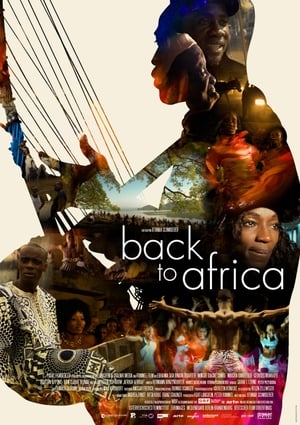
An Austrian director followed five successful African music and dance artists with his camera and followed their lives for a year. The artists, from villages in Ghana, Gambia and Congo, were the subjects of Africa! Africa! touring across Europe, but they have unbreakable roots to their homeland and their families. Schmiderer lovingly portrays his heroes, who tell their stories about themselves, their art and what it means to them to be African with captivating honesty. The interviews are interwoven with dance scenes and colourful vignettes set to authentic music.
Slovenské ľudové tance
The Finnish modern dancer Noora Hannula dances through this documentary film in her own explosive style. Noora’s life has always been very connected to the artist environment with her grandfather, Simo Hannula, who throughout his entire life dedicated him fully to his art. Noora and her grandfather crossed paths when Noora used a picture of his dead body in her show and now we meet Noora working on her newest show: The Era of No Talent Rising, while she is trying to figure out where her own limits are.
When everyone is supposed to be celebrating the arrival of a new year, the Chilean director Cristobal Valenzuela takes to the streets of Santiago to give voice to another facet, less colorful and festive, undoubtedly invisible, of this eve. Lonely pedestrians who roam the streets of the city inhabit the frame of a handheld camera that allows them to express themselves. Comments of hopelessness and tiredness, contrasting with the sky lit by fireworks, give us a glimpse to that other social image.
As the gaze sinks into the landscape, a relationship disintegrates, leaving love as a fleeting memory between archives and dreams. The writing of the days is imprinted on traces that repeat themselves in a constant déjà vu. Pain becomes noise and dissolves like particles in the air, in an attempt to reconstruct the inevitable. A leap into the void between the desire to remain and the impulse to erase a wound.
This intimate ethnographic study of Voudoun dances and rituals was shot by Maya Deren during her years in Haiti (1947-1951); she never edited the footage, so this “finished” version was made by Teiji Ito and Cherel Ito after Deren’s death.
Markku Lehmuskallio has devoted a large part of his documentary work to the indigenous people of the Arctic Circle. In this latest film, co-directed with his son Johannes Lehmuskallio, he composes a fascinating poetic ethnography inspired by the singing, dancing, forms of contemporary existence and, above all, the vital breath of these nomad communities mistreated by History.
Phnom Penh-based dancer Prumsodm Ok—a Cambodian-American and pioneer of the first Cambodian gay dance company Prumsodun Ok & NATYARASA—demonstrates the meticulous form of Khmer dance. This short draws a parallel between the nature of film as a time machine and the dancing human body as both fundamentally dynamic and temporal. Within the frame beckons a prayer for healing and empowerment in the face of violence and conflict.
After Awesome Tapes From Africa's Brian Shimkovitz found the energetic, ecstatic music of Ghanaian musician Ata Kak, the tunes became beloved around the world. It was all unbeknownst to the artist himself -- his music was even unknown to those living in his hometown in Ghana. Years of tireless searching ensued, and eventually the Los Angeles-based label owner found a lead. Ata Kak - Time Bomb follows the search that Shimkovitz undertook as well as the visit to Ghana that took place once he found him. It is a celebration of great tunes and how, when it hits the right audience at the right time, music can touch people in a way that you never imagined.
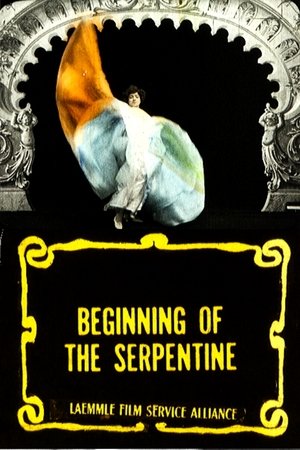
The first woman to appear in front of an Edison motion picture camera and possibly the first woman to appear in a motion picture within the United States. In the film, Carmencita is recorded going through a routine she had been performing at Koster & Bial's in New York since February 1890.
A quickfire portrait of the New York City ballroom scene in the ‘80s.
Landwirtschaft in Südamerika - Chile
La Coronela (1940). Punto de partida
Graines d'étoiles, les années de maturité
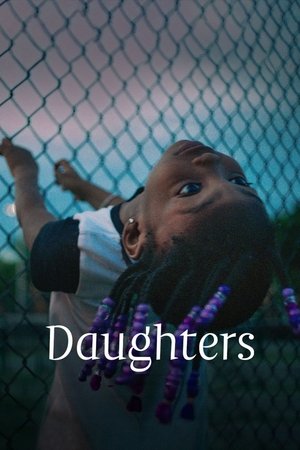
Ida, Olympe, Jeanne and Marie dance to the music of pianos, symphonies, contemporary pieces… in ballet school studios, in the streets, even in their bedrooms. They are between 6 and 11 years old. Very fond of each other, they film themselves, comparing and giving one another support. They also tend to annoy one another, are at times envious, even rejecting each other. What is it like for a little girl to grow up in a world of intense professional and competitive dancing? Closely following the emotions and dilemmas experienced by our young characters, this film explores and probes into a territory that we’ve all navigated, though many of us have forgotten: childhood.
Report on the town of San Pedro which exists in the middle of the desert and at over 2,430 meters above sea level. It also deals with the work of priest Gustavo Le Paige and the museum he helped develop.
"Something to Call Our Own" is a compelling documentary that delves into the origins, obstacles, and evolution of modern CHamoru dance. From the small island of Guam to the international stage of FestPAC, the documentary showcases the inspiring story of cultural revival, resilience, and the ongoing journey to reclaim and preserve a tradition that belongs to the CHamoru people. Once silenced by colonization, the CHamoru people rise—through song, chant, and dance. At the heart of this revival stands Master Frank Rabon, who dared to reimagine a lost tradition, giving it back to the generations who longed for it. From the shores of Guam to the world stage of FestPAC the CHamoru people reclaim their identity, their language, their pride. Through every movement, there’s a dance and with every dance they declare: We are still here and this is Something to Call Our Own.
Dance for All