Thomas Haemmerli is about to celebrate his fortieth birthday when he learns of his mother's death. A further shock follows when he and his brother Erik discover her apartment, which is filthy and full to bursting with junk. It takes the brothers an entire month to clean out the place. Among the chaos, they find films going back to the 1930s, photos and other memorabilia.
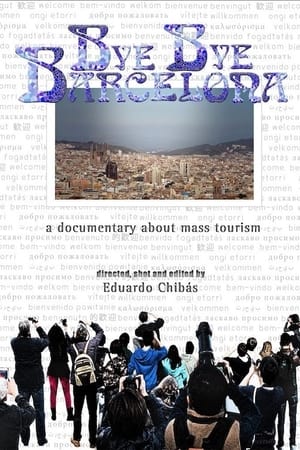
Bye Bye Barcelona is a documentary about a city and its relation to tourism , on the difficult coexistence between Barcelona the city and Barcelona the tourist destination
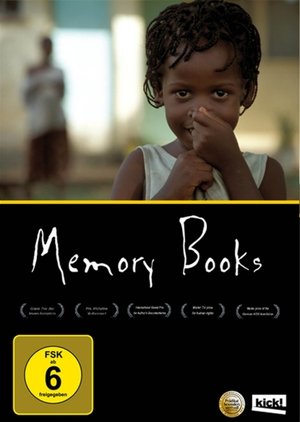
In Uganda, AIDS-infected mothers have begun writing what they call Memory Books for their children. Aware of the illness, it is a way for the family to come to terms with the inevitable death that it faces. Hopelessness and desperation are confronted through the collaborative effort of remembering and recording, a process that inspires unexpected strength and even solace in the face of death.
What would your family reminiscences about dad sound like if he had been an early supporter of Hitler’s, a leader of the notorious SA and the Third Reich’s minister in charge of Slovakia, including its Final Solution? Executed as a war criminal in 1947, Hanns Ludin left behind a grieving widow and six young children, the youngest of whom became a filmmaker. It's a fascinating, maddening, sometimes even humorous look at what the director calls "a typical German story." (Film Forum)
Buzz One Four chronicles the ill-fated flight of a Cold War B-52 Stratofortress loaded with two 3-4-megaton nuclear bombs that crashed 90 miles from Washington DC in 1961. Information suggests that detonation came closer than official reports indicated. The full details of the crash have remained classified and otherwise repressed by the Air Force, but the filmmaker, Portlander Matt McCormick, grew up with this story because the pilot was his grandfather. As McCormick recounts the history of the era, aspects of this crash, and other little-know nuclear-weapons accidents, he leaves us wondering if the U.S. was in greater danger of nuking itself than of being attacked by the Russians.
Until now, they have stood on the sidelines. They have not appeared before the cameras. They have not taken part in public discussion. It is mainly to them that the documentary film by the well-known journalist Ewa Ewart was devoted. It shows the face of the Smolensk catastrophe through the eyes of the victims' families. April 10, 2010 went down in the memory of Poles as a day of national drama. But for the characters in the film, it was the day of their greatest personal drama. Along with the presidential couple, their loved ones passed away in shocking circumstances. For most, the time passing since the Smolensk catastrophe does not bring relief. Ewa Ewart and her film crew accompany the families at various stages of their struggle with difficult emotions. The film is in the process of being made and will include sequences and stills that have not been used anywhere before.
A young filmmaker explores the roots of religion in family dynamics and what happens to those bonds when faith is lost.
The documentary's title translates as "to be and to have", the two auxiliary verbs in the French language. It is about a primary school in the commune of Saint-Étienne-sur-Usson, Puy-de-Dôme, France, the population of which is just over 200. The school has one small class of mixed ages (from four to twelve years), with a dedicated teacher, Georges Lopez, who shows patience and respect for the children as we follow their story through a single school year.
What happens when your child comes out to you? In this feature documentary, parents of lesbian, gay, bisexual and trans-gender individuals in Turkey intimately share their experiences with the viewer, as they redefine what it means to be parents in this conservative society.
On the outskirts of Den Helder lies De Nollen, an inland dune area where nature, sculpture, and painting merge into a truly immersive experience. It is the life's work of artist Rudi van de Wint. He died unexpectedly in 2006. His sons, Ruud and Gijs, carried on his dream, out of love for their father and for De Nollen. But plans for a Rudi van de Wint museum in the area led to cracks in their idyllic existence.
In Argentina, almost all adopted children are under 5 years of old. Luis and Valeria open the doors of their home and tell us their family story. A true story full of obstacles, fears and love about paths that connect and people who meet by chance.
Memory is a ghost. Lucio, a printing press worker, takes one last walk around the machines with whom he shared everything. He remembers when his mechanisms used to move and through that mechanical movement he reflects about his own life.
Arctic Tale is a 2007 documentary film from the National Geographic Society about the life cycle of a walrus and her calf, and a polar bear and her cubs, in a similar vein to the 2005 hit production March of the Penguins, also from National Geographic.
a film about memories & showering.
Tout le temps, tout le temps, tout le temps...?
Kekaiulu Hula Studio follows the Proclaimed Hula Halau of the same name, showcasing their twist on what the real reason for hula is and what life as a dancer in the halau is really like. Something previously unseen in the public eye.
A meeting between the daughter and the grandmother of the director, Iván Mora Manzano, at a time when the memories of one, the girl’s, were taking shape, and the other’s the grandmother’s, were vanishing. This starting point is used as a pretext to talk about other topics such as the importance of family memories and the search for memory.
During the rice sowing season, Jun, a young Catalan of Chinese origin, works as a seasonal worker in the Ebro Delta. This ancient labour will make him confront his own roots and the distance that separates him from his family.
Structured as a labyrinth-like game and inspired by Jorge Luis Borges, Aleph is a travelogue of experience, a dreamer's journey through the lives, experiences, stories and musings of protagonists spanning ten countries and five continents.
In this film from late in his career, Kramer returns to Hanoi after nearly 25 years to re-envision the city’s struggle through an uncertain and daunting past, present, and future. The Vietnamese characters in the film are diverse: Kramer’s former guide from an earlier visit in 1969; a tight-rope walker in the national circus; a man who took photos of B-52s and another who lost his fingers shooting them down.