Behind the scenes with the Lionesses during an incredible year for women’s football
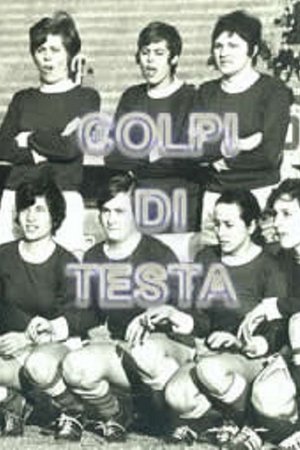
Rome, 1968. A football passionate PE teacher formed the first woman team. Thirty eight years later, these women players remember with proud and a tinge of nostalgia how they stood up against all prejudices at a time when a woman wearing shorts was absolutely outrageous.
Words are loaded with meaning. Certain ones conjure joyful memories and others remind us of less happy times. For Nenda Neururer, the word 'oachkatzlschwoaf' invokes a range of emotions. The German word is very hard to pronounce and is synonymous with the Austrian state of Tyrol where locals tease outsiders by asking them to pronounce it. Despite growing up in Tyrol, Nenda Neururer often felt like an outsider when confronted with this word. But when she moved to London she grew nostalgic for it and it became her little secret. Found in Translation is a series made as part of the In The Mix project, in partnership with BBC Studios TalentWorks, Black Creators Matter and the Barbican.
LIONESSES: HOW FOOTBALL CAME HOME gives unrivaled insight into England’s historic Women’s EURO 2022 victory, featuring brand new exclusive interviews from the stars of the team, this is the inside story of How Football Came Home.
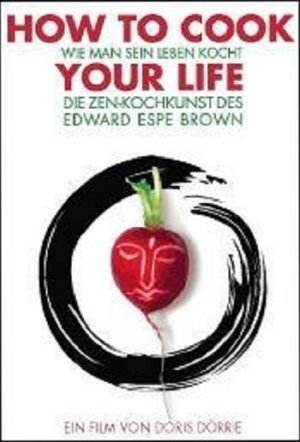
A Zen priest in San Francisco and cookbook author use Zen Buddhism and cooking to relate to everyday life.
A documentary produced by the French armed forces which chronicles the way of France’s “1ere armée” in the second world war from the days it first crossed the Rhine in March of 1945, through the liberation of a POW-camp in Swabia, until the forces reached the Danube and the Alps at the end of the war and the day French troops marched in the victory parade in Berlin.
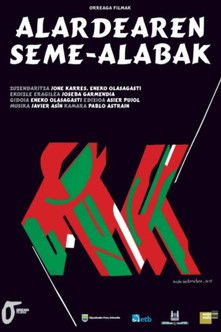
Departing from peripheral details of some paintings of the Bilbao Fine Arts Museum, a female narrator unravels several stories related to the economic, social and psychological conditions of past and current artists.
The daughters of Title IX discover that pervasive gender-based stereotypes and discrimination persist within the high stakes professional world of surgery - a workplace designed for and and still controlled by men. Since 2003, half of medical students in the US have been women. Women remain in the minority in most surgical fields but their proportion is increasing. Leadership and culture in surgery remain disproportionately and persistently male despite ample evidence that women are just as good (and possibly better) at delivering care. Systemic barriers to success for women surgeons must be confronted and addressed for the surgical workforce to stay healthy and for patients to stay safe. We’ve interviewed dozens of surgeons who are women about their experiences, hopes, dreams and careers. This is a group of extraordinarily dedicated physicians who work every day to improve the health and lives of others despite untold challenges.
Filmmaker Ulrich Seidl explores of the dark underside of the human psyche by entering Austrian basements fitted out as private domains for secrets and fetishes.
With a history of intrigue, romance, opera, festivals, old world grandeur, Austrians blend tradition and culture to live life at its best. What other countries say with words, Austrians say with the music of Mozart, Strauss and Schubert. This video tours a land of spectacular beauty, sounds of music, tastes of strudel and Sachertorte, touches of history and the pleasant smell of a winter's fire after a day in the Alps.
This film journeys deep into the heart of Austria’s favorite daily newspaper, the Kronen Zeitung, the most widely-read paper per capita in the world. The “Krone’s” 2.7 million readers represent 43% of the Austrian press market. A reflection of the Austrian soul, this newspaper serves as a prism through which we can understand the rise of the populist Right in this country and examine the dangerous flirtation between media and politics.
Ignaz Wuzel and Gerhard Jeschko are regulars at the espresso in the Südtiroler Platz underground station. Warden Leopold Prinz knows the problems of the children from Karlsplatz. In 1993, Elizabeth T. Spira filmed people on the Vienna subway network. Above all, it is the desperate, the lost and the forgotten who find refuge and a home in and around the subway.
For the hottest soccer action outside the World Cup, Hef assembled his own team of world-class stunners for a uniform-optional photo shoot at the Playboy mansion. Hailing from such pillars of the soccer world as Brazil, Germany and the Netherlands as well as Japan, Russia and yes, the USA, these toned and tackle-worthy all-star beauties bare it all, share their tips for a group warm-up and happily take a time out for playing dirty. The game of soccer has never seen such high scores.
Endphase tells the story of one the last WWII massacres which was not spoken about for 75 years. In the night of 2 May 1945, 228 Jewish women, children and old men were murdered in Hofamt Priel, a small village in Austria. The perpetrators were never found. The film is a journey into the past of the neighbouring communities Persenbeug and Hofamt Priel, where the brothers Hans and Tobias Hochstöger grew up. In search of an explanation they speak with the last local eyewitnesses and find Yakov Schwarz, the last survivor, and his family in Israel.
Lungau: Wilderness in the Heart of the Tauern
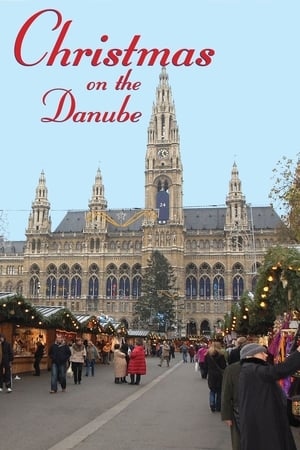
This documentary visits cities and towns and captures stunning landscapes along Europe's majestic Danube at Christmastime. Locations covered include Passau, Germany; Salzburg, Oberndorf, the Wachau Valley, and Vienna in Austria; Bratislava, Slovakia; and Budapest, Hungary. Along the way the viewer learns relevant history.
Taking the demise of a textile factory in Austria’s Waldviertel region as its starting point, with the antiquated manufacturing plant initially shown in full operation, this film poses the question of what work means for people’s self-image and character. After the factory goes bankrupt and closes, the filmmaker accompanies some of its employees as they continue to make their way, questioning them about their daily routines, the circumstances in which they live, about looking for work or the new jobs they find. One woman’s situation is precarious, but that doesn’t prevent her from bringing up her grandchildren. Another woman works here and there, flexible and resourceful. One man blossoms visibly in his newly unemployed state. Bit by bit, different aspects of their private lives and personal misfortunes emerge.
A working day in Austria, 2004. Nine modern working-class heroes are engaged in their daily struggle of survival, accompanied, motivated and influenced by the country’s most popular radio station.
Presenter Holly Hamilton tells the feelgood story of the Glentoran team who left Belfast on a European football adventure just before the First World War to win the Vienna Cup, the first ever European Cup.
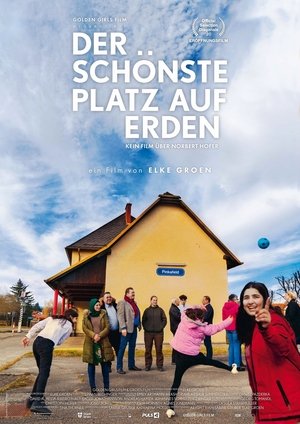
There is a small town in Austria called Pinkafeld, which gained adverse publicity as a “Nazi village” during the presidential election of 2017, when a majority of its citizens voted for their famous neighbour, the right wing candidate Norbert Hofer. What do people really think in regard to their homeland, refugees and populism? The community shows a society in transition, a microcosm reflecting Europe’s zeitgeist.