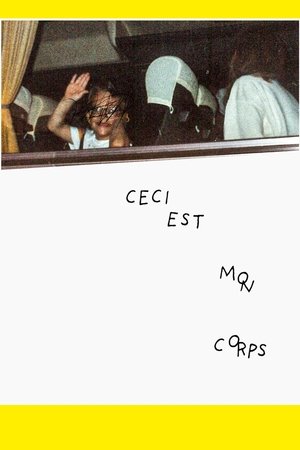
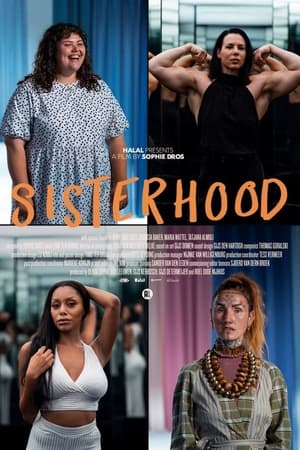
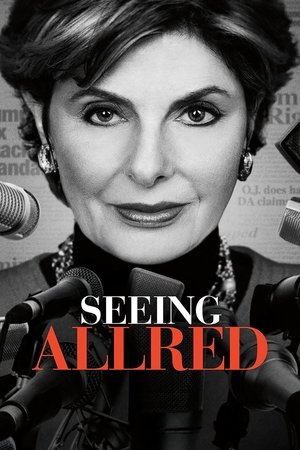
When she realizes that her grandmother, the woman who raised her, is losing her sight, the director decides to explore the bond that unites them through the episodes of non-vision that these three generations share, the memories of the past, the misunderstandings and the new memories they seek to have in common.
Recy Taylor, a 24-year-old black mother and sharecropper, was gang raped by six white boys in 1944 Alabama. Common in Jim Crow South, few women spoke up in fear for their lives. Not Recy Taylor, who bravely identified her rapists. The NAACP sent its chief rape investigator Rosa Parks, who rallied support and triggered an unprecedented outcry for justice. The film exposes a legacy of physical abuse of black women and reveals Rosa Parks’ intimate role in Recy Taylor’s story.
British filmmaker Beeban Kidron ventures onto the mean streets of the South Bronx and other New York locales to examine the lives of those involved in the city's thriving sex industry.
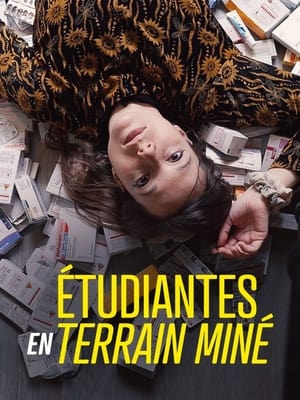
Caroline Darian, Gisèle Pelicot's daughter, looks back on the tragedy that shook her family: for ten years, her father drugged her mother to subject her to rapes committed by strangers recruited on the Internet. This case exposes the scandal of chemical submission, a practice where attackers, generally close to the victims, use prescription or over-the-counter medications to commit their crimes. This phenomenon, far from being marginal, affects victims with varied profiles...
Since the late 1990s, more people have died in war-torn Congo than in any conflict since World War II. In addition to the dead, hundreds of thousands of woman and girls have been raped. Rape, explains a British colonel, is a weapon of war, part of a destabilization covering the theft of valuable minerals. Rape victims are traumatized, injured, abandoned by husbands, pregnant, and ravaged by disease.
In France, as in the United States, an ideological divide is widening between girls and boys: "Young women born between 1995 and 2010 are hyper-progressive, while men of the same age are hyper-conservative," according to Alice Evans, a researcher at Stanford University. "Tens of millions of people who live in the same cities, work in the same places, attend the same classrooms, and even live in the same houses no longer share the same views. This is unprecedented. Generation Z is actually two generations, not one."
A documentary that proposes a conversation about the way children are praised. While girls are often praised solely for their appearance, boys can receive compliments by highlighting their skills. "Rethink the Praise" reflects on the power of words and culture that has brought an imbalance in the way we commend our boys and girls.
This documentary speaks to local activist groups in the music industry and culture scene to find out why people are driven to fight back and speak out on subjects they’re passionate about. With an aim of inspiring the next generation, each activist gives their advice on how you can put a cause you are passionate about in the local scene into action. Hope Lynes spoke to Phil Douglas from LGBTQIA+ organisation Curious Arts; grassroots promoter Hana Harrison from Art Mouse; Tracks' Sarah Wilson, who campaigns for better female representation in the music scene with her project Noisy Daughters; Chantal Herbert from feminist Black and queer-led organisation Sister Shack; and disability activist and musician Ruth Lyon. It’s hoped that this intimate and personal documentary will explore the starting points to beginning your own activism.
Filmmaker Ben Zand investigates the dark world of incels. After a year-long investigation, Zand gains unprecedented access to the men behind the keyboards. Research finds the community is rapidly growing, and one of the most extreme incel forums has 18,000 members with around 2,500 from the UK. The documentary also meets a British incel who has never had a proper conversation with a woman in real life. The investigation uncovers shocking extremism, which includes sharing extremely violent and bloody content.
When facing a path with no future or precedent success, will we ever choose to stay? Cheuk Cheung’s My Way explores the Cantonese Opera tradition of male Dan performers, men who play female roles, against the backdrop of a Hong Kong society increasingly putting less value on art. Although female performers have long been part of the mainstream of Cantonese Opera, the film follows the stories of two young men who are still fascinated by the art of the male Dan, striving to find their own way to carry on the practice. A moving and searching look at the struggle for identity, My Way is a colourful, musical and moving film which offers a unique and highly personal look at perseverance in the face of a changing society.
A verité legal drama about Judge Kholoud Al-Faqih, the first woman appointed to a Shari'a court in the Middle East, whose career provides rare insights into both Islamic law and gendered justice.
7-year-old Sasha has always known that she is a girl. Sasha’s family has recently accepted her gender identity, embracing their daughter for who she truly is while working to confront outdated norms and find affirmation in a small community of rural France.
To produce speech, a set of mechanisms must be brought together. What is the normal articulation for speech? How to produce the sounds that make it up in the correct way? A physiological analysis of the aspects of speech shows us how: the jaw must move in a certain way; the air must be expelled from the lungs in another. Based on the concepts stated in the film "Normal Speech Articulation" (1965), produced by the University of Iowa (USA), we intend to reflect on the way women have been represented, and consequently educated, over the years, both in film and in the media. Largely composed of archival footage, this film intends to make evident, through a montage inspired by Structuralist movements, the violence of this education.
MORENA tells the uplifting story of the Philippine National Surf Athlete Ikit Agudo, who overcame the pressure to blend into a society obsessed with skin whitening. Within the ocean, she found happiness, strength, and pride in her roots. Inspiring young girls around the world to embrace who they truly are. In the Philippines, skin-whitening remains a billion-peso industry, a legacy of colonial beauty ideals that for generations have led many to neglect their true identity and natural beauty.
Gender activist Diane Torr’s worldwide appearances and workshops are now legendary. For the past thirty years, the main focus of this performance artist’s work has been an exploration of the theoretical, artistic as well as the practical aspects of gender identity. Katarina Peters’ documentary observes a Diane Torr workshop in Berlin in which a group of open-minded women come together to discover the secrets of masculinity. What makes a man a man and a woman a woman? Precisely when and where is gender identity formatted? How much is nature and how much nurture? Each of Torr’s workshops represents an open-ended laboratory experiment in social behaviour in which the question is posed: is it possible to deliberately play out different roles and create a space in which to transgress both masculine and feminine characteristics?
In this fascinating documentary on transsexuality, Dr. John Money shares his ideas on gender identity. Dr. Money is well known for his research on what makes a person become heterosexual, homosexual, bisexual or transsexual. In this film he presents his ideas on the anatomical and biological factors that steer one towards masculinity or femininity, sorting them out from the historical, cultural and sociological influences. Sex and Money shows people in various stages of transsexual transformation. We see the adaptations they have made with their families and partners, and note that they seem able to lead rather conventional lives.
A short documentary exploring the gender inequality that male artistic swimmers are facing in the Olympics, including intimate interviews with Spanish mixed duet Pau Ribes and Emma Garcia, and legendary American male artistic swimmer Bill May.
Has the time of women finally come? Have their everyday lives truly changed over the past sixty years? Guided by Agnès Jaoui, women—famous and unknown—share their stories across generations. From childhood to retirement, the documentary traces shared experiences shaped by prejudice, but also by hope, strength, and humor. Blending personal archives, historic moments, and social media footage, the film places women at the center of their own story. Welcome to the Time of Women.
A filmmaker revisits her childhood, interweaving 16mm vignettes and her old child services documents, uncovering the truth she couldn't voice as a child.
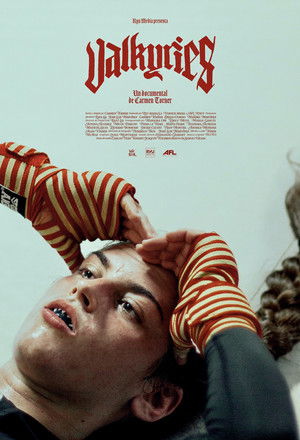
Regina is a young feminist wrestler who fights men to become an international star. However, the true battle in wrestling takes place outside the ring – in the story team meetings.