Swedish documentary film on consumerism and globalization, created by director Erik Gandini and editor Johan Söderberg. It looks at the arguments for capitalism and technology, such as greater efficiency, more time and less work, and argues that these are not being fulfilled, and they never will be. The film leans towards anarcho-primitivist ideology and argues for "a simple and fulfilling life".
While some of them flirt with the limits, others are dropouts or in school reintegration, they are seventeen students to follow the Defense Class at the Japy vocational school in Lyon. An option of two hours per week provided by the military to these high school students in great difficulty. School and army, a rapprochement that may seem unlikely. In a society in loss of bearings, this course can allow these young people in lack of belonging to redefine "doing Nation". What values can the army instil in them? What will be the real scope?
Jeunesse à vendre
Through a powerful visual metaphor, Camille Vigny gives a first-person account of the domestic violence she suffered. The images and text interact with remarkable precision to convey the devastating impact of the cataclysm. It's a political gesture, brimming with courage, an icy cry that takes your breath away.
Gilles Groulx's first film shot in 1955 with a camera borrowed from his brother and edited during his spare time when he worked as an editor at the Radio-Canada news service a few years before he joined the NFB. Silent film, presented as its author left it, where the soil and the dialectic of Groulx's work are already there: documentary realism, the social space to be explored, daily life, the relationship between individual and society, social disparities, the consumer society, seduction and happiness.
A serious docu-comedy about the commercialization of Christmas. What Would Jesus Buy? follows Reverend Billy and the Church of Stop Shopping Gospel Choir as they go on a cross-country mission to save Christmas from the Shopocalypse: the end of mankind from consumerism, over-consumption and the fires of eternal debt!
Gimme Green is a humorous look at the American obsession with the residential lawn and the effects it has on our environment, our wallets and our outlook on life. From the limitless subdivisions of Florida to sod farms in the arid southwest, Gimme Green peers behind the curtain of the $40-billion industry that fuels our nation's largest irrigated crop-the lawn.
Since the enactment of the Anti-Boryokudan Act and Yakuza exclusion ordinances, the number of Yakuza members reduced to less than 60,000. In the past 3 years, about 20,000 members have left from Yakuza organizations. However, just numbers can’t tell you the reality. What are they thinking, how are they living now? The camera zooms in on the Yakuza world. Are there basic human rights for them?
A short documentary about the construction of the parisian subway in the 50s.
The film explores the potential for automation in every sector of employment and questions the integrity of our methods of resource distribution going into the future.
Disobedience tells the David vs. Goliath tale of front line leaders battling for a livable world. Filmed in the Philippines, Turkey, Germany, Canada, Cambodia and the United States, it weaves together these riveting stories with insights from the most renowned voices on social justice and climate. Disobedience is personal, passionate and powerful - the stakes could not be higher, nor the mission more critical.
Ten years ago, the paths of Abou, Laura, Cadiatou and Jacques have crossed Emmanuelle’s. She was their French teacher at a high school in Marseille. Together they took part in a film, Children of the Princess of Cleves, in which, while analyzing the classic text, they expressed their hopes, dreams, and fears. In En Nous, the director re-connects with the protagonists : memories blend with stories of their lives and the daily obstacles they must overcome whilst trying not to lose hope. Now, the sentence of the Princess of Cleves rings poignantly true: “I know nothing can be more difficult than what I undertake”.
LIKE is an IndieFlix Original documentary that explores the impact of social media on our lives and the effects of technology on the brain. The goal of the film is to inspire us to self-regulate. Social media is a tool and social platforms are a place to connect, share, and care … but is that what's really happening?
A Eurovision singer, Iceland's strongest woman, a male model, a plumber who wants to direct movies. They all work in the shopping mall that this documentary focuses on ... most of them want to get out, even just to the bigger mall down the road.
An attempt to engage with the historical, mythical and the contemporary worlds of the city of Pushkar
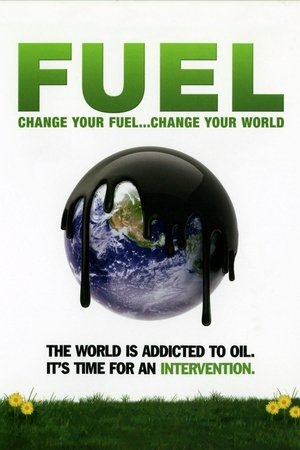
Record high oil prices, global warming, and an insatiable demand for energy: these issues define our generation. The film exposes shocking connections between the auto industry, the oil industry, and the government, while exploring alternative energies such as solar, wind, electricity, and non-food-based biofuels.
Pauline, Norah, Kristina and others wait for hours, sitting under a hut deep in the Bois de Vincennes. In front of the administrative detention center (CRA) in Paris, they have all come to see their loved ones locked up. Lives on hold, awaiting deportation or release. On this stage, these women tell their stories, talk to each other, share their experience, their revolt and their dreams with new visitors. They are the mirror of migrant detention, its reverse view.
Extravíos
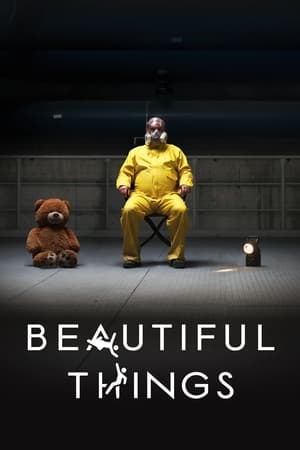
A symphonic journey into our obsessive consumption. The many objects we accumulate begin their production journey in silent secluded industrial site where borderline men work in isolation without any interference. These men trigger, unconsciously, the long chain of creation, transport, commercialization and destruction of the objects feeding our bulimic lifestyle.
Over the past 25 years, Lauren Greenfield's documentary photography and film projects have explored youth culture, gender, body image, and affluence. Underscoring the ever-increasing gap between the haves and the have-nots, portraits reveal a focus on cultivating image over substance, where subjects unable to attain actual wealth instead settle for its trappings, no matter their ability to pay for it.