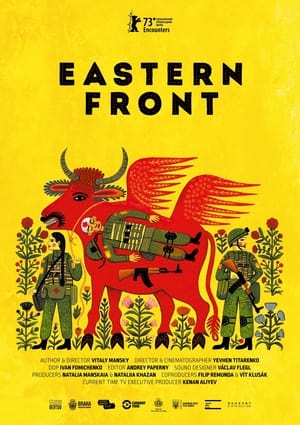
The film takes place on the eighth day of Russia's war campaign in Ukraine. Eight Ukrainians residing in the Czech Republic – a businesswoman, cleaning ladies, construction workers, and bus drivers – make their own diary-like observations of the events in their homeland. They continue to bury themselves in their work, unable to afford to withdraw themselves from their current lives. In their minds, however, they've transported themselves hundreds of kilometers away, helping their fellow countrymen and women by any means necessary. They provide accommodation for refugees, scout for bulletproof vests, and call their loved ones who’ve taken shelter from falling bombs. They have a hectic and emotionally overwhelming 24 hours ahead of them. But it’s not the first 24 hours and it won’t be the last.
This lesson in political revelation focuses on the shooting down of the Malaysian passenger jet MH17 over eastern Ukraine in 2014. A meticulous, investigative exposé that lays bare the mechanisms of Russian warfare.
The movie explores the origin of the Ukrainian language and persecution of those who defended its authenticity. Using examples of other countries, creators of the film prove that a nation cannot exist without a language.
When on February 24, 2022, Russian troops attacked Ukraine, the world stopped. The first shock, however, quickly turned into action. It was a natural impulse of the heart, Poles could not leave their neighbors, their friends from Ukraine completely alone. Almost everyone, residents of small and large cities, young and old, rich and poor, became involved in helping Ukrainians, opened their homes for those fleeing the war, and began to organize humanitarian aid. Did they pass the humanity test?
Between February and April 2025, filmmakers Bernard-Henri Lévy and Marc Roussel filmed the Pokrovsk and Soumy fronts in eastern Ukraine, following the fighters of the Anne de Kyiv Brigade, armed by France. They filmed the daily lives of the inhabitants, bombarded by Russian forces terrorizing civilians on the eve of possible negotiations. They interview President Zelenskyy, who is reluctant to travel to Washington, and then watch the rebroadcast of the meeting with Ukrainian soldiers in a bunker. For the real heroes are the anonymous fighters and civilians who hold their heads high in the face of adversity and suffering, and who are filmed on a daily basis. The final part of Lévy’s “Ukrainian Quartet”, Our War is a diary, peppered with flashbacks in which the author recalls the high points of this war that began in 2014.
A documentary film-project by Dmytro Komarov. He was the first journalist to witness and film the horrors of the just-liberated towns of Bucha, Irpin and Hostomel. He saw the first emotions of people immediately after the de-occupation of Kyiv region, Kharkiv region, and Kherson region. The documentary is the author's view of the war from angles that you won't see in the news. Unique, rare, exclusive comments from those whose hands and minds are shaping our future victory. The main heroes of documentary are both ordinary Ukrainians who heroically show their strength and power every day for a year and high-ranking officials such as Minister of Defense of Ukraine Oleksiy Reznikov, Chief of the General Staff of the Armed Forces of Ukraine Kyrylo Budanov, Major General Oleksandr Syrskyi, Commander of the Air Force of the Armed Forces of Ukraine Lieutenant General Mykola Oleshchuk. Initially, "Year" was a series of journalistic reports, later they were edited into a two-part film.
How do you cover a war in your own country? We spent two years with journalists from Ukraine's public broadcaster and saw how Russia's invasion transformed their profession and changed their beliefs. Broadcast on 5/4/2024
"Stronger than Arms", is the history that heats our hearts up with the memory of events and people, who from the time of Euromaidan to the war in the East were building a new Ukraine.
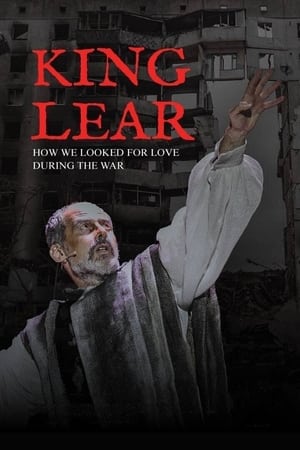
Due to the full-scale Russian invasion of Ukraine, tens of thousands of Ukrainians, fleeing the war, found refuge in Uzhhorod in western Ukraine. The local director decides to attract non-professional actors -displaced people - in bringing his dream into life - to stage the King Lear play. The theatrical performance helps them find themselves and their purpose in a new world where there is war, and the director finds an answer to the eternal question of what love is and why this world should not perish.
In the autumn of 2014, in the ATO zone, an intelligence group headed by experienced captain Anton Saienko (called by nickname "Banderas") tries to prevent sabotage and neutralize the Russian saboteur.
What to take, what to leave? How important are material possessions when you’re trying to save your life? Packages from Ukraine – filled with everything and nothing – wait patiently under a bridge to be found, while a voice stirs memories of frivolous and treasured personal effects, in an apparent heart-breaking farewell letter to Kyiv.
In 2014, the war begins. Immediately, a system of evacuation of the wounded and killed is being built, the outpost of which is the Dnieper - it is here that the first will be delivered, it is here that they are still received. Tatiana Guba has been coordinating the evacuation for 5 years. She is called "Mom Tanya". Thousands of people are grateful to her for her life. Serhiy Kryvorotchenko, director of the Dnipro Airport, has deployed a helicopter evacuation system since the beginning of the war. Eugene Titarenko, the film's director, in 2014-2015 was part of a volunteer medical battalion, communicates with the heroes of the film about the evacuation system. The viewer will see the whole way of saving lives, will be directly in the vortex of events and will understand how many people are involved in the process of saving one person.
A comprehensive chronicle of the consequences of Russia's invasion of Ukraine in 2022. How citizens live in wartime, how violence and death condition daily life: from schools in bomb shelters to rehabilitation centers for the maimed; wounds and silences, gestures and words.
The War Diary is a contemporary road movie that confronts history with the current reality of Russia, Ukraine, Armenia and Georgia. An extraordinary document leads Hakob Melkonyan to undertake the journey of a lifetime:
Hnutove, Donbass, eastern Ukraine, 2015. Young Oleg lives in a war zone where anti-aircraft gunshots and missile attacks often resonate dangerously near. Although many inhabitants have already left this dangerous area, he remains with his grandmother, who has cared for him since his mother's death, because they have nowhere to go. They are just waiting for the war to end.
Under intense fire from the Russian forces, Ukrainian civilians-turned-soldiers document their first experiences on the battlefield using smartphones and cameras to show the do-or-die reality of war.
Personal videos from the phones, camcorders, cameras and GoPros of Ukrainian soldiers are woven into a surreal journey to the frontline of the war with Russia. The film shows a bizarre world whose laws are quite different from what we are used to. The behaviour is different, the relationships unfold differently and the humour takes on different notes. The heroes wake up and fall asleep, rejoice and cry, always feeling that the recording may end at any moment.
Bombed-out streets, destroyed Russian tanks, evening meals in an Underground repurposed into a shelter. Image by image, the directors push beyond easily reproducible images of war to enter the reality the country has experienced since February 24, 2022.
On February 24, 2022, Yevhen, together with his friends, volunteered to join the first aid squad on the front line. They provided life-saving support and evacuation of the wounded. This film reveals the experiences of these young men for six months full of drama, despair, fear, hatred, bitterness, love, and, most importantly, faith in victory.
The story of trust and its absence against the background of events unfolding in Eastern Ukraine in early 2014. The main topic is revealed through the prism of the Luhansk border base, whose fighters the separatists and Russian special services tried unsuccessfully force to betray their country.