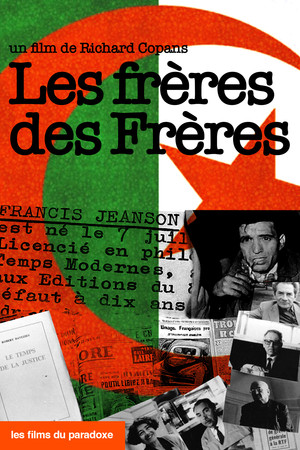
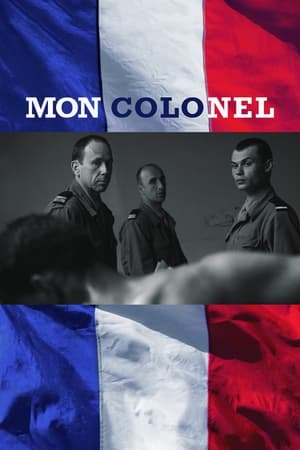
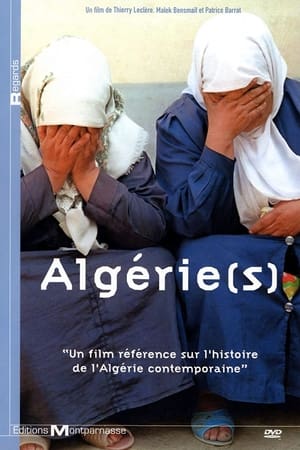
This excellent feature-length documentary - the story of the imperialist colonization of Africa - is a film about death. Its most shocking sequences derive from the captured French film archives in Algeria containing - unbelievably - masses of French-shot documentary footage of their tortures, massacres and executions of Algerians. The real death of children, passers-by, resistance fighters, one after the other, becomes unbearable. Rather than be blatant propaganda, the film convinces entirely by its visual evidence, constituting an object lesson for revolutionary cinema.
In 1963, Rosans, a village in the Hautes-Alpes region depopulated by the rural exodus, welcomed Harkis (military soldiers) forced to leave Algeria for supporting France during the Algerian War. Around thirty families settled in a camp below Rosans. Nearly half a century after their arrival, first- and second-generation Harkis and native Rosanais recount their experiences of this culture clash, often painful, sometimes happy. Language barriers, religious differences, living in barracks for 14 years, and unemployment were all obstacles to overcome in order to be accepted and then achieve mutual enrichment. Enriched with archive footage to explain the historical context of the time, the film seeks above all to express feelings and unspoken words.
"Algeria, The Two Soldiers" tells the true story of two young French soldiers during the Algerian War, who were driven in two completely opposite directions by the same keen sense of honor: Noël Favrelière deserted to free a young Algerian Muslim prisoner who was going to be executed, and René Técourt, to continue the fight for French Algeria alongside the OAS ultras. Two emblematic examples, which describe in a direct, carnal way, what happened there.
A biopic of former Indonesian Education Minister, Ki Hadjar Dewantara.
The life and political activism of Messali Hadj (1898-1974), an Algerian internationalist politician who played a pioneering role in the process leading to Algerian independence, which he demanded as early as 1927. He was initially secretary of the North African Star (ENA), then in 1937 he founded the Algerian People's Party (PPA), in 1946 he founded the Movement for the Triumph of Democratic Liberties (MTLD), and finally in 1954, the Algerian National Movement (MNA). In 1937, the leadership of the North African Star (ENA) created its flag, green with a white star and crescent. Messali Hadj's wife, Emilie Busquant-Messali, simply sewed this ENA flag by machine; it would later become the flag of the PPA. In 1943, Messali Hadj, in conjunction with the party leadership, created the ENA-PPA flag, green and white with a red star and crescent, which would later become the current flag of the People's Democratic Republic of Algeria.
In 1958, in the midst of the Algerian War and two months before the World Cup, the French Football Federation (FFF) discovered on April 15th that nine of its players of Algerian origin had secretly left France to join the headquarters of the National Liberation Front (FLN) in Tunis, where the Provisional Government of the Algerian Republic (GPRA) was based. They chose to leave everything behind—careers, fame, money—to support the FLN cause: the independence of the Algerian people. Their daring escape was worthy of a thriller and made headlines across the international press. For four years, the FLN team toured the world and became the standard-bearer for a people. FIFA refused to recognize the team and threatened federations that played against it with sanctions. Nevertheless, the team made a lasting impression with 57 wins, 14 draws, and 12 losses in 83 matches. Ferhat Abbas, president of the GPRA, told them, "You have gained ten years for the cause of independent Algeria."
In a house in the heart of the Casbah of Algiers, a family is torn apart by the weight of war. Three divided brothers, caught up in the contradictions of a country in struggle, gradually unite around a single cause: the liberation of Algeria. Ibna El Casbah is a tense, emotionally-charged behind-closed-doors story that captures the moment when intimacy becomes history.
The film chronicles the life of Ahmed Zabana, a man who fought for Algerian freedom in the Battle of Algiers. This film chronicles Zabana's fight to free his country to independence, and his death at the hands of French authorities.
In 1960, nine-year-old Bachir dreamed of becoming the son of a martyr because he had heard that the children of martyrs would obtain everything after independence. He sets up a whole plan to get rid of a certain François, enemy of his country, while his father, Saddek, abandoned him with his mother and brothers. Through this fiction, the film looks at the life and visions of little Algerians during the War of National Liberation. Karim Traïdia looks back on his own childhood during the Algerian war (1945-1962). On a humorous note, it tells the adventures of a young child and his innocent friends against the backdrop of a raging merciless war.
World War II, June 1940. France has fallen and suffers the relentless boot of Nazi Germany. But Algeria, the prized French colony in North Africa, remains part of the territory controlled by the Vichy regime of Marshal Pétain. A strict colonial order is maintained: the French of European origin rule, while local Jews are stripped of French citizenship and discrimination against the mainly Muslim population increases.
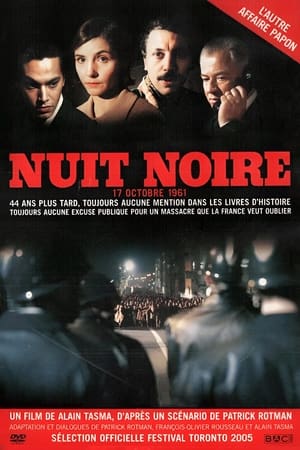
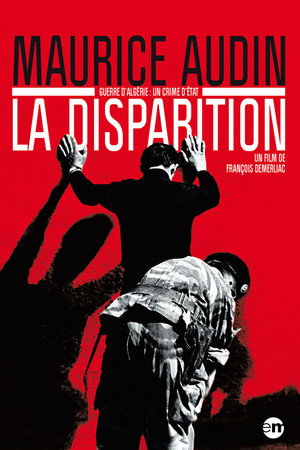
In response to the call of the Front de libération nationale (F.L.N., the National Liberation Front), thousands of Algerians from Paris and its surroundings march on October 17, 1961, to protest against the curfew imposed on them. This peaceful demonstration will be violently put down by the police. 50 years on, the filmmaker sheds light on this still taboo subject. Blending testimony and unseen archive footage, history and memory, past and present, the film relates the different stages in these events and reveals the strategy and methods applied at the highest level of the French state: manipulation of public opinion, the systematic challenge of every accusation, the censoring of information in order to prevent investigation.
OAS, Un passé très présent
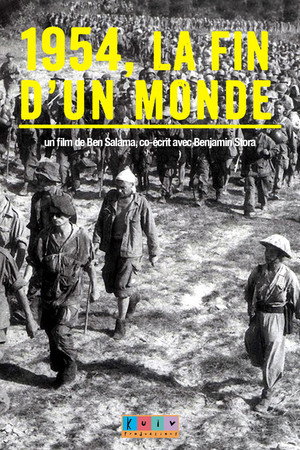
1954, La fin d'un monde
Zapata, mort ou vif
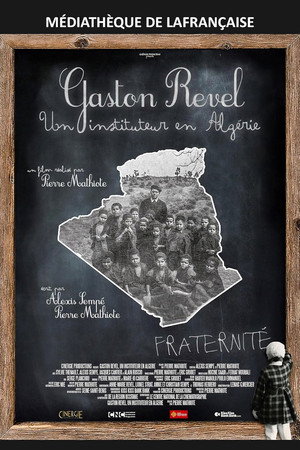
In 1936, Gaston Revel entered the École Normale in Algiers, where he was supposed to learn how to "educate the native." It was also during this time that he began to take an interest in politics: he was drawn to the Popular Front, then to Spanish anarchism, and finally to communism. From 1940 to 1955, he taught in Algeria, first in rural areas, then in Bejaia. He returned to Europe because of the war and landed in Provence in September 1914, following the Allied advance. It was in Bejaia, in 1945, that he became fully committed to the Algerian Communist Party: in 1953, he ran for municipal office in the second electoral district (reserved for Algerians) and sat alongside the Muslims. In 1955, at the beginning of the war, he was forced to leave Algeria against his will. But, like thousands of other "red feet," he returned there in 1962 and resumed his teaching career. From all those years, he left a complete and deeply committed record, many letters, notebooks, and newspaper articles.
In Tokugawa-era (1637) Shimabara, oppressed peasant Christians revolt against the shogunate with the aid of charismatic Christian rebel leader Shiro Amakusa.
Documentary series in two parts: 1. A people without a voice (80'), 2. A land in mourning (78'). Part 1: A people without a voice: October 88, the Algerian Republic is faltering, the film goes back to the sources of this tragedy and explains how the face to face between the Islamists and those in power began. The interruption of the legislative elections of December 91, followed shortly after the assassination of President Boudiaf in June 92, plunged Algeria into chaos. Part 2: A land in mourning: the cycle of violence that leads to massacres and the economic and geopolitical underside of the war. More than 100,000 deaths, an incredible degree of barbarity, massacres, apparently incomprehensible... Behind the official window of power and its artificial political scene, hides a shadow power.
Algiers. From the port to the souks, passing through the Jardin d'Essai, Dominique Cabrera transports us to the land where she was born, on the other side of the Mediterranean "where the sea is saltier". If most of the pieds-noirs left Algeria in the summer of 1962, some -a minority- remained. By going to meet them, the director makes her own inner journey.
In 1954, Daniel Vérin, a young schoolteacher of Algerian descent, made a radical decision: he turned his back on colonial France and joined the Algerian insurgents. He enlisted in the FLN, then the ALN, and became "Ali," a soldier in the struggle for independence. At the end of the war in 1962, he became an Algerian citizen. But the long-awaited independence did not bring Ali the taste of victory. On a scholarship, he went to study in the United States. Upon his return, the Algerian administration forbade him from entering his homeland. Rejected by the country he had defended, he obtained American citizenship in 1969. Condemned by France for his activism and ignored by Algeria for more than forty years, Ali was not officially recognized as a mujahid, a fighter of the Revolution, until 2004.
In the early 1970s, Lakhdar, an Algerian peasant, is forced to leave his desert land and his family for France, but immigration weighs on him and he dreams of returning. This day arrives, he walks in Paris, events decide otherwise.