Darwin express - Les nouveaux défis de l'évolution
During a canoe trip, neurologist Magnus Heier suffers from sudden amnesia: for eight hours, he records nothing. Everything he does is immediately forgotten. This episode becomes the starting point for an exploration of his own memory. How can his functioning explain the incident he suffered? And what happened to the doctor during those lost hours? To understand the amnesia that has affected him, Magnus Heier embarks on an investigation among his peers. His journey takes him to Finland, Germany and Italy, where he visits researchers working on the astonishing brain faculty of memory.
NASA's James Webb Space Telescope, from its conception to completion.
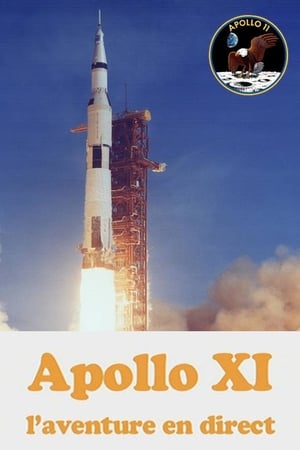
Man's landing on the moon was our greatest technological achievement. The Apollo 11 mission was truly the stuff of dreams. For the first time, our species walked on another celestial body. Even more remarkable was their ability to make it back. This is the story of the July 20, 1969, Apollo 11 moon landing. Drama with digitally remastered original footage.
Tierisch müde - Das Rätsel Schlaf
De l'eau dans le gasoil
Plastic Odyssey
"What's on your mind?" It's the friendly Facebook question which lets you share how you're feeling. It's also the question that unlocks the details of your life and helps turn your thoughts into profits.
In recent years, the brain has become the new playground for top-level athletes and their trainers. At a time of standardized physical training, the brain has become the new frontier of effort and performance. Taming and taming it is a priority today for anyone who wants to become and remain the number 1 athlete. The documentary film "Open Brain - In the Brains of Athletes" takes us to the very limits of the human brain, as seen through the eyes of some of the world's finest athletes. These include basketball player Rudy Gobert, Formula 1 driver Charles Leclerc, surfer Justine Dupont and footballer Pierre Emerick Aubameyang.
Bora Bora is the most popular destination in French Polynesia, certainly because of its lagoon, considered the most beautiful lagoon in the world. In this context, the islet could have sunk under concrete and pollution, and the reef could have been irreparably impacted. However, thanks to the will of a handful of inhabitants including the mayor of the island, Bora Bora is today a model of sustainable development, with water treatment technologies that are 15 years ahead of France, programs to rebuild corals and protect wildlife, educational actions and the rehabilitation of Polynesian traditions such as “rahui” and the establishment of a monitoring network using new technologies. All of this makes the island a veritable open-air laboratory that shows the way for all tropical coastal environments around the world.
Billions of years ago, Venus may have harbored life-giving habitats similar to those on the early Earth. Today, Earth's twin is a planet knocked upside down and turned inside out. Its burned-out surface is a global fossil of volcanic destruction, shrouded in a dense, toxic atmosphere. Scientists are now unveiling daring new strategies to search for clues from a time when the planet was alive.
From space, 400 kilometers above our heads, one man has won the hearts of the French: Thomas Pesquet. Traveling to the stars is an almost impossible dream, but for Thomas Pesquet it is a reality that he recounts in detail in an exclusive interview. You will discover the magic of living in space, the wonder of our planet, but also the reality of everyday life in zero gravity: how they sleep, how they wash, what happens to their bodies. Why do they have to exercise for two hours a day? How do they communicate with their families? With Thomas Pesquet and the help of specialists, scientists, doctors, instructors, directors, and computer-generated images, you will discover what goes on behind the scenes of a mission and understand how the International Space Station works.
A testament to NASA's Apollo program of the 1960s and '70s. Composed of actual NASA footage of the missions and astronaut interviews, the documentary offers the viewpoint of the individuals who braved the remarkable journey to the moon and back.
Discover the meteoric rise of Elon Musk, the man who is transforming the way we think about travel technology through electric cars, the Hyperloop, and revolutionary ideas on how we live through artificial intelligence and colonizing Mars.
Does infinity exist? Can we experience the Infinite? In an animated film (created by artists from 10 countries) the world's most cutting-edge scientists and mathematicians go in search of the infinite and its mind-bending implications for the universe. Eminent mathematicians, particle physicists and cosmologists dive into infinity and its mind-bending implications for the universe.
For two and a half years we followed the scientific team of the NASA Lucy Mission a mission that will unveil the origins of the Solar System and shared with them the many challenges they had to overcome such as a countdown to launch on time the building of the huge solar arrays or a pandemic.
BBC Horizon Documentary. Jupiter, the largest and fastest rotating planet among the eight major planets in the solar system, is the fifth planet from the inside out. This film tells the latest information from NASA's Juno Jupiter probe, unveiling the wonders of Jupiter.
David Attenborough and scientist Johan Rockström examine Earth's biodiversity collapse and how this crisis can still be averted.
Steel giant Thyssen Krupp in Germany and cargo ship operator Maersk in Denmark are investing huge sums of money with public support to convert their huge and dirty energy consumption to ‘green’. Hydrogen plays a central role in this. At the same time, countries in Africa such as Morocco and Namibia are gearing up to become giga-suppliers of the new energy source. But does it all make sense? Why not just produce green steel in Africa? And what's the story behind the blue hydrogen that is supposed to come from Norway via pipeline? The film follows pioneers on breathtaking projects and shows that the energy transition is more complicated than expected and holds many surprises in store.
This documentary by Theo Kamecke from 1970 gives an in-depth and profound look at the Apollo 11 mission to the moon. NASA footage is interspersed with reactions to the mission around the world as the film captures the intensity as well of the philosophical significance of the event. Won special award at Cannes.