In the first half of the 19th century, the French ornithologist Jean-Jacques Audubon travelled to America to depict birdlife along the Mississippi River. Audubon was also a gifted painter. His life’s work in the form of the classic book ‘Birds of America’ is an invaluable documentation of both extinct species and an entire world of imagination. During the same period, early industrialisation and the expulsion of indigenous peoples was in full swing. The gorgeous film traces Audubon’s path around the South today. The displaced people’s descendants welcome us and retell history, while the deserted vistas of heavy industry stretch across the horizon. The magnificent, broad images in Jacques Loeuille’s atmospheric, modern adventure reminds us at the same time how little - and yet how much - is left of the nature that Audubon travelled around in. His paintings of the colourful birdlife of the South still belong to the most beautiful things you can imagine.
Plastic Odyssey
Les copains d'abord
Vi som solgte landet
A look at the state of the global environment including visionary and practical solutions for restoring the planet's ecosystems. Featuring ongoing dialogues of experts from all over the world, including former Soviet Prime Minister Mikhail Gorbachev, renowned scientist Stephen Hawking, former head of the CIA R. James Woolse
Moonchild is one of Fulton’s very earliest ethnographic projects. Filming in East Africa while on another production, he shoots with single frame bursts from his Bolex camera with an Angenieux 5.9 lens. He could shoot inconspicuously from the hip, an approach he learned from his father, filmmaker Robert Fulton Jr. In Moonchild, he shares his first impressions of Africa.
Recent studies show that insects are in decline across the globe and there may be a direct connection between the current climate crisis and these declining populations. DESYNCHRONIZED focuses on Pope Canyon Queens, a beekeeping and queen breeding company in Northern California. Pope Canyon Queens is currently trying to rebuild after the 2020 LNU Lightning Complex fires destroyed their farm, shop, and half of their hives. Their crucial work to breed honey bee queens with stronger genes fortifies beekeepers' hives across the country while they face the effects of climate change and unregulated industries. Dr. Nicholas Teets, PhD Entomology, explains how shifts in phenology are predicted to cause bigger issues. Howard Goldstein, Senior Forest Ecologist at the Prospect Park Alliance explores how community gardens and green spaces in large metropolitan areas may help insect populations recover from loss of habitat and food scarcity.
The film reveals Scotland's post-war history as seen through the lens of current debate, inviting audiences on a journey to revisit the promises of the past and consider how they relate to our future on this planet. Was climate change inevitable? Can we break free from a boom-and-bust mentality?
Zagadka Heweliusza
A documentary on Al Gore's campaign to make the issue of global warming a recognized problem worldwide.
Pombo Doméstico: Herói ou Vilão?
Corpo d'Água
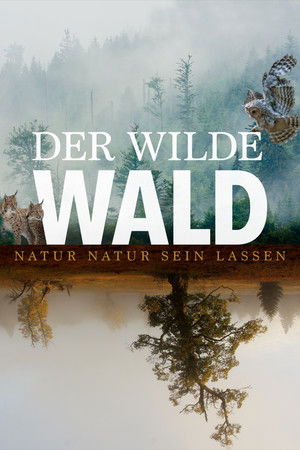
“Let nature be nature” is the philosophy of the Bavarian Forest National Park. Despite massive resistance, this vision has become a groundbreaking showcase project. Because humans do not interfere with nature, the former commercial forests grow into a primeval forest, a unique ecosystem and a refuge for biodiversity. People from all over the world come here. They are looking for answers to the question of why we need more wild nature and what we can learn from it to preserve forests for future generations in times of climate change.
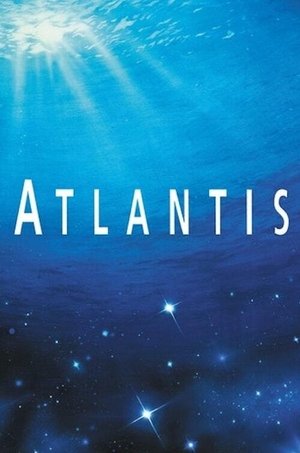
Atlantis is filmmaker Luc Besson's celebration of the beauty and wonder of the world beneath the sea, expanding upon themes touched on in his film The Big Blue. Combining stunning underwater cinematography and a hypnotic score by Eric Serra, Besson's singular vision defies dialogue or narrative structure to explore ocean life as you've never seen it before. Following the colossal success of The Big Blue, Luc Besson crisscrossed the world's seas and oceans to film the beauty and diversity of marine life: from the giant octopuses of Vancouver to the manta rays of the Pacific (New Caledonia), and the grey sharks of Tahiti. A film with no actors or sets other than the underwater world. A breathtaking view of marine species: sharks, dolphins, manatees, octopuses. An exploration of the seabed in the Bahamas, the Galapagos, Vancouver, and Tahiti.
Wildnis 2.0 - Die Tierwelt auf Umwegen
The community of Woodberry Down in Hackney rallies to save a beloved local plane tree from development.
This underwater ballet is an ecological story depicting our paradoxical relationship with plastic. Bakelite launched the #SickOfPlastic campaign from On Est Prêt, along with the Surfrider Foundation, Break Free from Plastic and the Resilient Foundation. Photography was directed by Jacques Ballard, a specialist in underwater cinematography.
The Film “Life with Vultures” is about the efforts of a handful of NGOs and Government Agencies to save the only remaining Vulture species on the island of Cyprus, and by extension several other species of Birds and other wild animals
In Tacony Creek Park, home to one of Philadelphia's lesser-known watersheds, Julie Slavet and Malcolm Bundy reflect on their involvement with and love for the park, made bittersweet by the continuous and increasing amount of pollution that flows into its river. Combined wastewater and stormwater sewage outfalls have affected Philadelphia's rivers for years, but as one innovative program mitigates this for the Schuylkill and Delaware, Tacony gets left behind. Scientist Laura Toran educates the audience on green infrastructure and its potential positive impacts, while Slavet and Bundy discuss how they're still waiting—not without hope—for those impacts to reach their community.
In Lopera (Jaén), the ecological transition has turned into a nightmare: centuries-old olive groves are being uprooted to make way for massive photovoltaic plants, in an unfair battle between powerful corporations and the local community. Through firsthand testimonies, striking visuals, and an analysis of the current energy model, Forced Renewables reveals how progress, when poorly planned and disconnected from rural life, can lead to an unprecedented ecological, social, and economic disaster.