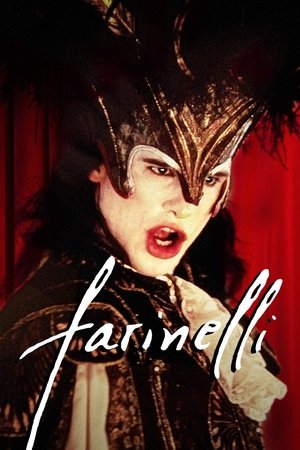
The life and career of Italian opera singer Farinelli, considered one of the greatest castrato singers of all time.
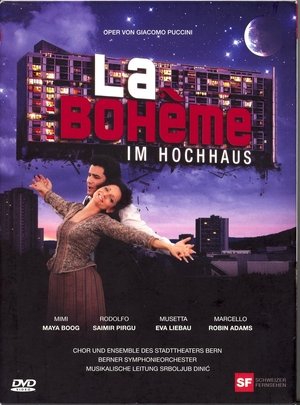
'La Bohème' im Hochhaus
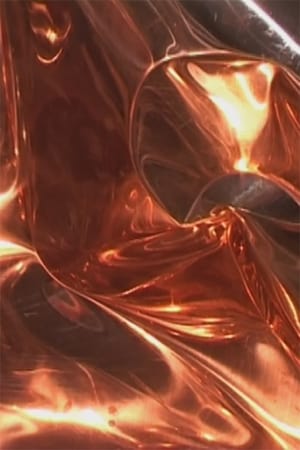
Shortly before his death, Romitelli together with his friend Paolo Pachini and the poetess Kenka Lèkovich, resurrected the dream of a total scenic art (a furnace of sensations, they called it, an_ initiation rite_) in the manner of the Futurists: rhythms and gleams of light striking metals (for the video part), poems in iron and chrome singing of fusion with matter (Kenka Lekovich), acoustic/electric music highly amplified, filtered, spatialised, in as artificial a manner as possible. An Index of Metals bears vigorous witness to this determination to go beyond: sizzling orchestration, electric and psychedelic; a voice which plays on effects, murmurs with reverb, cackles into a megaphone, screams like a pop star; and an electric guitar score of a kind that no ‘serious’ composer has ever written, sliding across an infinite range of tones with a lightness of touch and blurring of contours.
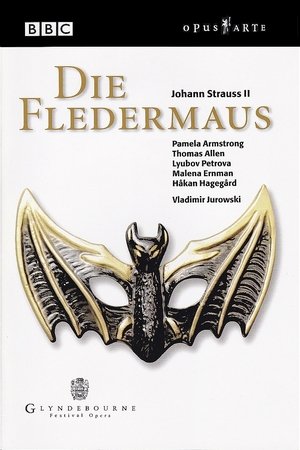
Glyndebourne's pulsating new production of the Waltz King's much-loved comic operetta. Its story centers on a magnificent masked ball, given by a Russian prince, that brings together all the main characters in various disguises. The three-act journey from boudoir to ballroom to jail provides ample opportunities for farce and humor, but also for genuine human emotion and a surprisingly realistic view of urban life.
The man looks back on a turbulent love life, which he does not dare to opt definitively for a permanent love. He loves Tosca, but leaves her for another new love, Alpha. He cherishes the infatuation at the start of a relationship, meaning he is not yet ready for real life. However, at the end, he is able to make his choice ...
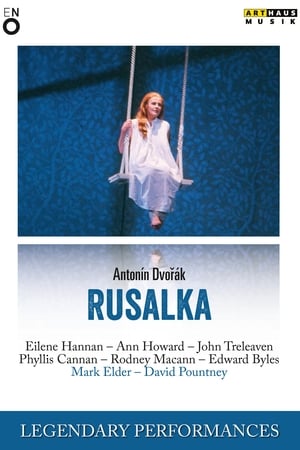
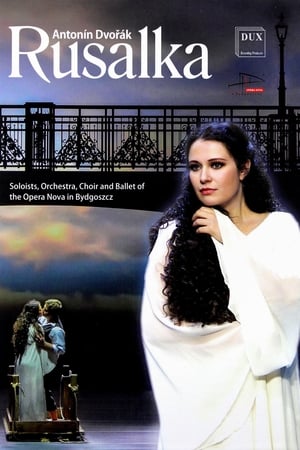
Dvořák's "Rusalka" in a production by David Pountney at the English National Opera in 1986. Mark Elder conducts the orchestra, accompanied by the English National Opera Chorus in English.
Benjamin Britten’s opera of the Henry James novel. An inexperienced governess is sent to a country house to care for two children, whom she is gradually convinced have been corrupted by the ghosts of a previous manservant and governess…
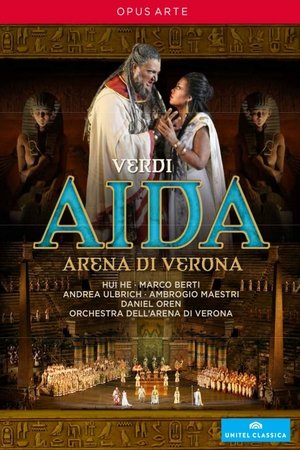
The grand scale and magnificent acoustics of the Roman arena in Verona are ideally suited to the pageantry of Verdi's Egyptian opera, presented here in a staging that is true to the original 1913 production, framed by obelisks and sphinxes and filled with chorus and dancers. Chinese soprano Hui He has won international acclaim for her portrayal of the eponymous slave girl whose forbidden love for the war hero Radamés (Marco Berti, the experienced Verdi tenor) brings death to them both.
Čertova stěna
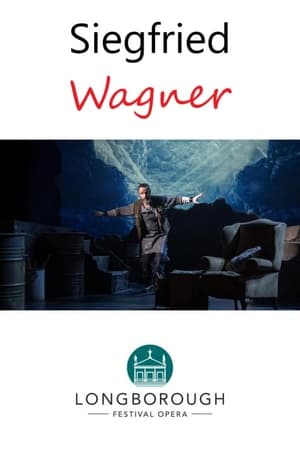
The hero Siegfried reforges his father’s shattered sword, embarking on a quest for the greatest prize of all – the love of the valkyrie Brünnhilde, who lies trapped in a ring of fire. Siegfried is the third opera in Richard Wagner’s four-opera cycle Der Ring des Nibelungen. Wagner broke off composition at the end of Act II of Siegfried to write Tristan und Isolde and Die Meistersinger von Nürnberg, returning to Siegfried seven years later. Longborough Festival Opera, known as the British Bayreuth, calls on renowned Wagnerian Anthony Negus to conduct and Amy Lane to stage this new production of Siegfried in the bucolic English Cotswolds.
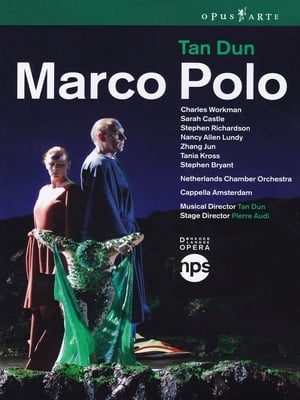
Tan Dun portrays the Venetian explorer's travels to the Far East as a journey of both inner and physical discovery, a voyage depicting spiritual experiences as well as a geographical expedition. Pierre Audi's mythical staging and Jean Kalman's fabulous set design complement the composer's own musical direction, forging the dazzlingly versatile soloists, the Netherlands Chamber Orchestra and Cappella Amsterdam to a stunning symbiosis of elements across time and space, a true testimony to cultures intertwined in globalization.
Opera at La Scala Milan
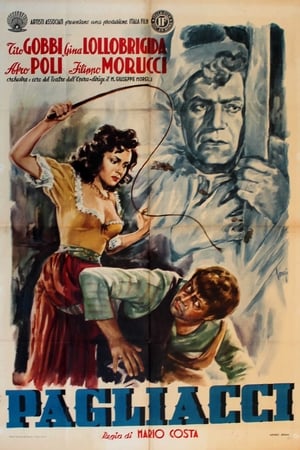
Based on Ruggero Leoncavallo's opera Pagliacci. The film recounts the tragedy of Canio, the lead clown (or pagliaccio in Italian) in a commedia dell'arte troupe, his wife Nedda, and her lover, Silvio. When Nedda spurns the advances of Tonio, another player in the troupe, he tells Canio about Nedda's betrayal. In a jealous rage Canio murders both Nedda and Silvio. The only actor in the cast who also sang his role was the celebrated Italian baritone, Tito Gobbi, but the film is largely very faithful to its source material, presenting the opera nearly complete.
Rigoletto is an opera in three acts by Giuseppe Verdi. The Italian libretto was written by Francesco Maria Piave based on the play Le roi s'amuse by Victor Hugo. Despite serious initial problems with the Austrian censors who had control over northern Italian theatres at the time, the opera had a triumphant premiere at La Fenice in Venice on 11 March 1851. This 1994 recording, directed by Riccardo Muti, stars Roberto Alagna, Renato Bruson and Andrea Rost.
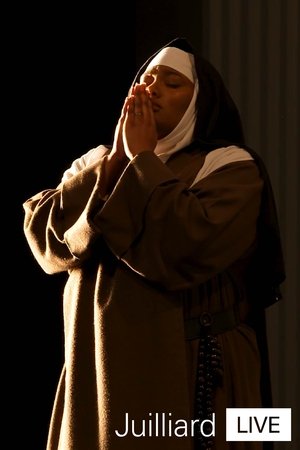
“In a world that often demands certainty, Dialogues des Carmélites invites us to sit with profound questions that have no easy answers: What makes a life worthy? How can we be truly prepared for our inevitable end? What does security mean when everything familiar is threatened? What sustains us when our institutions crumble? … Rather than imposing answers, the opera creates room for reflection on how faith manifests not as abstract doctrine, but as lived experience under extraordinary pressure.” — Louisa Muller, Director’s Note. Juilliard Opera directed by Louisa Muller. Matthew Aucoin conducts the Juilliard Orchestra. Performed and recorded on April 26, 2025 at the Peter Jay Sharp Theater. Dialogues des Carmélites, an opera by Francis Poulenc. Libretto adapted by the composer.
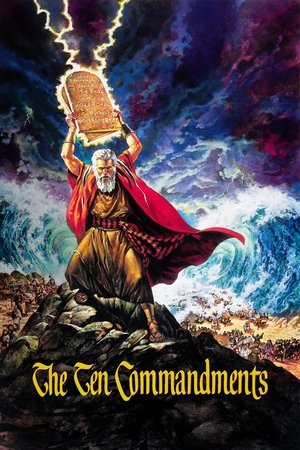
Escaping death, a Hebrew infant is raised in a royal household to become a prince. Upon discovery of his true heritage, Moses embarks on a personal quest to reclaim his destiny as the leader and liberator of the Hebrew people.
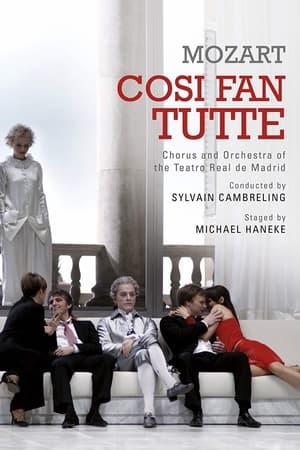
Who loves whom in Così fan tutte, Mozart’s and Da Ponte’s cruelly comic reflection on desire, fidelity and betrayal? Or have the confusions to which the main characters subject one another ensured that in spite of the heartfelt love duets and superficially fleetfooted comedy nothing will work any longer and that a sense of emotional erosion has replaced true feelings? Così fan tutte is a timeless work full of questions that affect us all. The Academy Award-winning director Michael Haneke once said that he was merely being precise and did not want to distort reality. In only his second opera production after Don Giovanni in 2006, he presents what ARTE described as a “disillusioned vision of love in an ice-cold, realistic interpretation”.
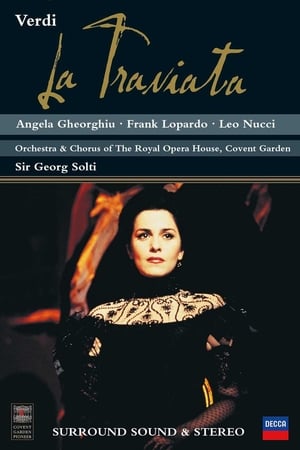
La traviata (Italian: [la traˈviaːta], "The Fallen Woman"[1][2]) is an opera in three acts by Giuseppe Verdi set to an Italian libretto by Francesco Maria Piave. It is based on La dame aux Camélias (1852), a play adapted from the novel by Alexandre Dumas, fils. The opera was originally entitled Violetta, after the main character. It was first performed on 6 March 1853 at the La Fenice opera house in Venice. Piave and Verdi wanted to follow Dumas in giving the opera a contemporary setting, but the authorities at La Fenice insisted that it be set in the past, "c. 1700". It was not until the 1880s that the composer and librettist's original wishes were carried out and "realistic" productions were staged.[3]
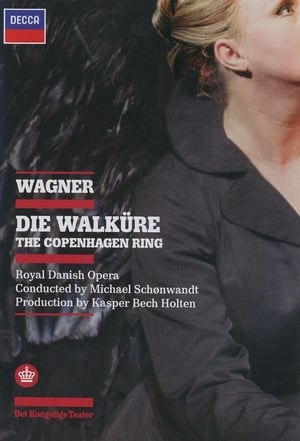
Die Walküre (The Valkyrie), WWV 86B, is an opera in three acts by Richard Wagner with a German libretto by the composer. It is the second of the four operas that form Wagner's cycle Der Ring des Nibelungen (The Ring of the Nibelung). The story of the opera is based on the Norse mythology told in the Volsunga Saga and the Poetic Edda.[1][2] In Norse mythology, a valkyrie is one in a group of female figures who decide which soldiers die in battle and which live. Die Walküre's best-known excerpt is the "Ride of the Valkyries". DVD release June 2009.
Rusalka