Disciplined Italian composer Antonio Salieri becomes consumed by jealousy and resentment towards the hedonistic and remarkably talented young Salzburger composer Wolfgang Amadeus Mozart.
With more than 50 years of experience as film director, Peter Greenaway (Nightwatching, Eisenstein in Guanajuato) combines the worlds of film and opera at the Verdi Festival in Parma, demonstrating what magic those two can do together with an all new approach to Giuseppe Verdi's Giovanna d'Arco, staged and edited by himself and his wife, Saskia Boddeke. The opera's libretto is based on Friedrich Schiller's 'The Maid of Orleans'. It tells the story of the French national hero Jeanne d'Arc, who defends her country against the English troops during the Hundred Years' War. Constantly torn between her humble roots, her love for King Charles VII and her heavenly task to fight for France, she gains eternal glory by giving her life in the final, victorious battle against England.
A young woman, married to a wealthy man, but miserably lonely; trapped within a world ruled with an iron fist. Katerina is driven by a lust for life and for love. Her husband, though, is impotent; her father-in-law a tyrant. No wonder, then, that she longs to free herself from this yoke. When Sergei starts work on the family estate, she sees in him a chance for salvation. However, their subsequent affair marks the beginning of a descent into crime.
The production bears the imprint of the conductor, Marko Letonja, and the director, Tobias Richter, whose understanding is ideal: both breathe a troupe spirit - specific to comedy - into this heterogeneous cast, which brings together young and old. Both give as much importance to recitatives as to arias and ensembles.
Having triumphed at the Met in some of the repertory’s fiercest soprano roles, Sondra Radvanovsky stars as the mythic sorceress who will stop at nothing in her quest for vengeance. Joining Radvanovsky in the Met-premiere production of Cherubini’s rarely performed masterpiece is tenor Matthew Polenzani as Medea’s Argonaut husband, Giasone; soprano Janai Brugger as her rival for his love, Glauce; bass Michele Pertusi as Glauce’s father, Creonte, the King of Corinth; and mezzo-soprano Ekaterina Gubanova as Medea’s confidante, Neris. Carlo Rizzi conducts.
Franco Zeffirelli's magnificient staging of Puccini's final opera - a fairy tale set in a mythical China - is one of the most popular in the Met repertory. In this Live in HD production, Maria Guleghina takes on the title role and Marcello Giordani is Calaf, the unknown prince. Marina Poplavskaya and Samuel Ramey co-star, and Andris Nelsons conducts in his Met debut.
The life and career of Italian opera singer Farinelli, considered one of the greatest castrato singers of all time.
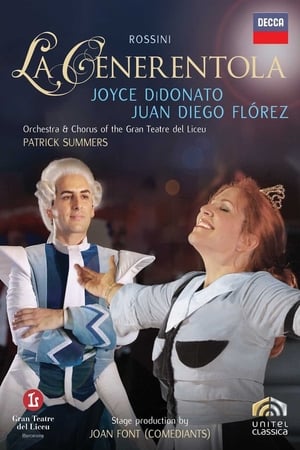
La Cenerentola, ossia La bontà in trionfo (Cinderella, or Goodness Triumphant) is an operatic dramma giocoso in two acts by Gioachino Rossini. The libretto was written by Jacopo Ferretti, based on the fairy tale Cendrillon by Charles Perrault. The opera was first performed in Rome's Teatro Valle on 25 January 1817.---- IMDB id refers to Great Performances: Season 24, Episode 12 La Cenerentola (3 Apr. 1996) from Houston Grand Opera so release date is misleading.
Wolfgang Amadeus Mozart's Magic Flute is undoubtedly one of the most multi-layered, profound, complicated, and therefore also most difficult to stage works in the entire opera repertoire. In terms of genre, it can only be understood if it is seen as a mixture of four things: a philosophically profound drama of ideas with countless encryptions, a naïve fairy tale, a bawdy comedy, and a crude Punch and Judy show. It is based on the intersection of the traditions of Baroque magic opera, Italian buffa, and Viennese Singspiel, where all manner of wonders are conceivable and permissible. Peter Ustinov's production appeals to all those who love a primarily fairy-tale-like interpretation; the atmosphere is traditional and conventional. An outstanding ensemble of singers has been assembled.
Beethoven’s only opera is a masterpiece, an uplifting story of risk and triumph. In this new production, conducted by Antonio Pappano, Jonas Kaufmann plays the political prisoner Florestan, and Lise Davidsen his wife Leonore (disguised as ‘Fidelio’) who daringly sets out to rescue him. Set in strong counterpoint are the ingredients of domestic intrigue, determined love and the cruelty of an oppressive regime. The music is transcendent throughout and includes the famous Act I Quartet, the Prisoners’ Chorus and Florestan’s impassioned Act II cry in the darkness and vision of hope. Tobias Kratzer’s new staging brings together the dark reality of the French Revolutionary ‘Terror’ and our own time to illuminate Fidelio’s inspiring message of shared humanity.
Non-musical account of Puccini's opera: Tosca and Cavaradossi are in love, but the tyrant Scarpia desires Tosca and oppresses Cavaradossi who is fighting for freedom.
Mozart’s early masterpiece returned to the Met for the first time in more than a decade with Music Director Emeritus James Levine, who led the work’s company premiere in 1982, again on the podium. Tenor Matthew Polenzani brings both steely resolve and compassionate warmth to the title king of Crete, who is faced with an impossible decision. With her rich mezzo-soprano, Alice Coote sings the trouser role of Idomeneo’s son Idamante, who loves the Trojan princess Ilia, sung with delicate lyricism by Nadine Sierra. Elza van den Heever gives a thrillingly unhinged portrayal of the jealous Elettra. Jean Pierre-Ponnelle’s timeless production blends the grandeur of ancient myth with the elegance of Enlightenment ideals.
Tchaikovsky’s setting of Pushkin’s timeless verse novel is presented on the Met stage in Deborah Warner’s moving production, starring Anna Netrebko as Tatiana and Mariusz Kwiecien and Peter Mattei sharing the title role. Alexey Dolgov sings the role of Lenski, and Robin Ticciati conducts.
In his new production, Robert Carsen places the action at the end of the Habsburg Empire, underscoring the opera’s subtext of class and conflict against a rich backdrop of gilt and red damask
Beethoven’s only opera is a masterpiece, an uplifting story of risk and triumph. In this new production, conducted by Antonio Pappano, David Butt Philip plays the political prisoner Florestan, and Lise Davidsen his wife Leonore (disguised as ‘Fidelio’) who daringly sets out to rescue him. Set in strong counterpoint are the ingredients of domestic intrigue, determined love and the cruelty of an oppressive regime.
This is a good video of "Figaro", but there are a couple of better ones available. The Bohm and the Pappano are better still due to the female members of the casts. The reason for buying this one is the "Figaro", Bryn Terfel. No one can top him today in that role. John Eliot Gardiner also stands out. Many of us have voiced their opinion that If the Metropolitan Opera would release it's 1998 version, that would be the one to get.
All the throbbing eroticism—and ultimate heartbreak—of Puccini’s youthful score is unleashed by James Levine and his top-flight cast. Plácido Domingo is Des Grieux, the handsome, headstrong young aristocrat who falls head over heels for the enticing, impetuous Manon Lescaut (Renata Scotto). Manon returns his love, but her obsession with luxury ruins them both. Gian Carlo Menotti’s opulent production, with sets and costumes by Desmond Heeley, superbly captures the colorful world of 18th century France.
The first words uttered by Carmen mark one of the greatest entrances in the history of opera and express all that need be said: “Love is a rebellious bird that no one can tame…” With a devilish sway of the hips and a hint of Andalusian flair, the beautiful cigar-maker sets her sights on a soldier: Don José. Fate will do the rest.
Who loves whom in Così fan tutte, Mozart’s and Da Ponte’s cruelly comic reflection on desire, fidelity and betrayal? Or have the confusions to which the main characters subject one another ensured that in spite of the heartfelt love duets and superficially fleetfooted comedy nothing will work any longer and that a sense of emotional erosion has replaced true feelings? Così fan tutte is a timeless work full of questions that affect us all. The Academy Award-winning director Michael Haneke once said that he was merely being precise and did not want to distort reality. In only his second opera production after Don Giovanni in 2006, he presents what ARTE described as a “disillusioned vision of love in an ice-cold, realistic interpretation”.
La traviata (Italian: [la traˈviaːta], "The Fallen Woman"[1][2]) is an opera in three acts by Giuseppe Verdi set to an Italian libretto by Francesco Maria Piave. It is based on La dame aux Camélias (1852), a play adapted from the novel by Alexandre Dumas, fils. The opera was originally entitled Violetta, after the main character. It was first performed on 6 March 1853 at the La Fenice opera house in Venice. Piave and Verdi wanted to follow Dumas in giving the opera a contemporary setting, but the authorities at La Fenice insisted that it be set in the past, "c. 1700". It was not until the 1880s that the composer and librettist's original wishes were carried out and "realistic" productions were staged.[3]