Racketeer Gillin is paroled from prison and immediately goes to work trying to make an illegal buck from America's war effort. With rationing in effect the black market tire business is booming. Gillen's mob sets up car lots around town where they peddle stolen tires and "new" tires milled in the gangster's factories from cheap faulty materials. People begin to die in crashes as the defective tires fail. Bill Barry leads his fellow defense plant workers on a crusade to uncover the source of the black market rubber and bring the guilty to justice. Although clearly intended to warn the public about black market tire smuggling, Rubber Racketeers holds it own as a saga of mobsters versus an irate public.
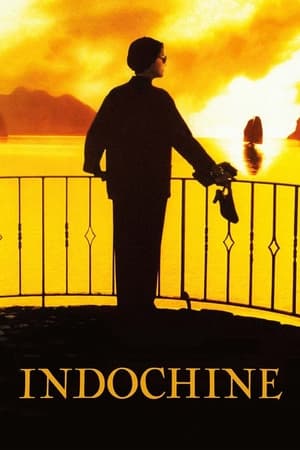
In colonial Vietnam, dashing French naval captain Jean-Baptiste, wealthy plantation owner Éliane Devries, and her adopted Vietnamese daughter Camillevare the three points of a cross-cultural romantic triangle. As the struggle against European imperialism sweeps Indochina, Jean-Baptiste and Camille have to choose sides and Éliane faces the emotionally difficult challenge of raising the child of her daughter and ex-lover.
Fitzcarraldo is a dreamer who plans to build an opera house in Iquitos, in the Peruvian Amazon, so, in order to finance his project, he embarks on an epic adventure to collect rubber, a very profitable product, in a remote and unexplored region of the rainforest.
Dennis, owner of a rubber plantation in Cochinchina, is involved with Vantine, who left Saigon to evade the police. When his new surveyor arrives along with his refined wife Dennis is quickly infatuated by her.
In the south of Yunnan, there are mountains, rivers, ancient trees, and tea gardens. The simple beliefs of the local Bulang people are the basis for maintaining their homeland and the manifestation of their strength. A film based on the spiritual connotation of the Bulang people's reverence and protection of nature in the Bulang mountain village of Xishuangbanna, Yunnan.
Els dies que no oblidarem
Sorn, an ethnic Shan sex worker, tries to build a future in Chiang Mai, Thailand, as a refugee far from home, but he is drawn into a complex relationship with one client, an investigator probing a political activist.
She was born in a cave, more than 60 years ago. Now she lives in a village, with many children and grandchildren to look after. Sometimes, she dreams of her dead mother calling her home – to the cave.
Elle Marja, 14, is a reindeer-breeding Sami girl. Exposed to the racism of the 1930s and phrenological examinations at her boarding school, she starts dreaming of another life. To achieve this other life she has to become someone else and break all ties with her family and culture.
Nohemí and Mary are two women resisting structural violence in Ciudad Juárez. United by pain and hope, both mothers find inspiration to move their families forward. The dragonfly, a symbol they share, embodies their resilience and capacity for change.
Young Masters is an original series commissioned by NOWNESS China focusing on traditional Chinese cultures, and how they continue to be defined by a new generation of the country's youth. High above the clouds in a village in Mao County in Sichuan Prefecture, a post-90’s generation of young cultural guardians work to uphold the values and traditions of ancient Qiang culture. These cultural guardians, known as a ‘Shibi’, remain especially vital for a culture whose knowledge and language exist merely through practice and in sound, and without script. The role of a Shibi involves that of a priest, alongside folk rap, singing, and dance performances, amongst others. As a result, Qiang people have endowed them with a sacred status, believing that they possess a psychic power.
After the explosive demise of their last subject, scientists must look for a replacement on whom to continue their bizarre experiments with brain-altering drugs.
A documentary about Croatian immigrants' soccer clubs, especially the Croatia Toronto soccer club, and their significance to the Croatian diaspora as well as Croatia itself.
First film by Pim de la Parra, about a young Surinamese man in Amsterdam who delivers a “monologue interior” about his dissatisfaction with society and his position as an outsider.
On a rubber plantation in Sumatra, a woman of mixed Dutch and Indonesian parentage must choose between her people and the doctor she loves.
In THE COLOR OF FEAR, eight American men participated in emotionally charged discussions of racism. In this sequel, we hear and see more from those discussions, in which the men talk about about how racism has affected their lives in the United States. We also learn more about the relationships between them, and about their reactions during some of the most intense moments of that discussion.
An environmental account of Henry Ford’s Amazon experience decades after its failure. The story addressed by the film begins in 1927, when the Ford Motor Company attempted to establish rubber plantations on the Tapajós River, a primary tributary of the Amazon. This film addresses the recent transition from failed rubber to successful soybean cultivation for export, and its implication for land usage.
A relentless chronicle of the tragedy of the Uighurs, an ethnic minority of some eleven million people who live in the Xinjiang region of northwest China, speak a Turkic language and practice the Muslim religion. The Uighurs suffer brutal cultural and political oppression by Xin Jinping's tyrannical government: torture, disappearances, forced labor, re-education of children and adults, mass sterilizations, extensive surveillance and destruction of historical heritage.
The thousand-year-old tradition of pottery in the Indian subcontinent is now under threat. With the market being flooded with plastic in the evolution of civilization, today this Pal community is becoming displaced.
People from different ethnic backgrounds with "difficult" names by Western standards share their experience with moving through the world with an identity that challenges others to simply just say their name. A short social docu-film by Mariam Meliksetyan, “Say My Name” is a meditation on identity, otherness, assimilation, community, and ancestral roots.