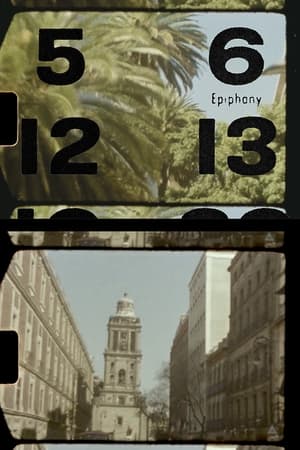
Reclaiming what was once stolen from him, a man journeys back to the place of his childhood nearly 80 years after his world came crashing down.
It was aboard the legendary and sturdy Peugeot 504 and Renault 12 that most North African families made the "route du bled," a ritual return to their homeland for summer vacations in Morocco or Algeria. The film chronicles a summer migration across the Mediterranean from the 1970s to the 1990s. The memory of these epic journeys punctuates the history of North Africans in France with bittersweet nostalgia, where travel stories blend industrial automotive heritage with personal memories.
Within the video, two screens coexist. On the primary screen, a repetitive action takes place - the photo in the hands is periodically blurred. The focus of the viewer's attention is shifted to the secondary screen, which is more dynamic. The face in front of the camera, resembling clay, tries to take on images from archival photographs and video recordings.
In the summer of 1963, François Mitterrand was going through a deep existential crisis. His political career was at a standstill and, after 19 years of marriage, the couple had grown apart. It was at this point that François Mitterrand met the woman who was to give new meaning to his life. Anne Pingeot, aged 19, was to become the companion of a lifetime, a woman who would be with him throughout his rise to power and who would remain by his side until his last breath. For the first time, Anne Pingeot has agreed to allow the fragments of this passionate love story — hundreds of letters and a diary — to be shown on television, before being donated to the National Library.
The story of Queen Elizabeth II in her own words, featuring never-before-seen home movies.
"After a period in intensive care, Britney sets out on a road trip where time becomes entangled. Along the journey, she seeks to understand her relationship with people, with affection, and with her own body."
Filmmaker Maarten de Schutter attempts to reconstruct the lost memories of his mother, AIDS activist and feminist anthropologist Martine de Schutter. Ten years after she was killed by Russia in the Donbas War, Maarten tries to assemble what’s left behind of her life and their shared past.
"Letters from Europe" brings to light the words of men and women who gave their lives resisting the Nazi and fascist conquest from 1939 to '45 across the European continent. The moving goodbyes penned by a few of those sentenced to death are sometimes true spiritual testaments that explore the meaning of civic responsibility, human existence, fraternity, and life and death. Their words, which the film mingles with footage of the present day, can perhaps restore meaning to a humanist ideal and to the ever-changing idea of a united Europe.
Readings from the diaries, accounts and letters of its passengers and crew tell the story of the Titanic, which sank 100 years ago today on its maiden voyage. The cast includes Richard E Grant, Roger Allam, Anna Madeley, James Wilby and Claudie Blakley, alongside relatives of those who were on board. Charles Dance narrates.
In the summer of 1961, a group of young Italian anthropologists made a clandestine journey through Spain, in order to record popular songs that supported anti-Franco resistance. As a result of their work, they were prosecuted and their recordings were censored. Sixty years later, and guided by Emilio Jona, aged 92, the last living member of that group of travellers, we recover the unpublished recordings and reconstruct the journey, today, across an emotional and political landscape, regaining historical memories through these songs, as relevant today as they were then.
When two siblings undertake an archaeological excavation of their late grandmother’s house, they embark on a magical-realist journey from her home in New Jersey to ancient Rome, from fashion to physics, in search of what life remains in the objects we leave behind.
A concert movie dedicated to the formation of the World Club of Odesa under the leadership of Mikhail Zhvanetsky. "Let many people be proud of the expanses and fields," says Mikhail Zhvanetsky himself about his favorite city, "someone falls to his favorite birch tree, thinking that it grows only here. We have the only homeland - Odesa, the only party of Odessites. Odesa is halfway around the world, from America to Australia. Odesa is a phenomenon, an Odessite is a character. Odesa was, is and will be one of the most famous cities on this temporal globe. And we, who stayed, and you, who left, will live and live with it.... Odesa is worth dedicating your youth and old age to it, and it will repay you like a native land".
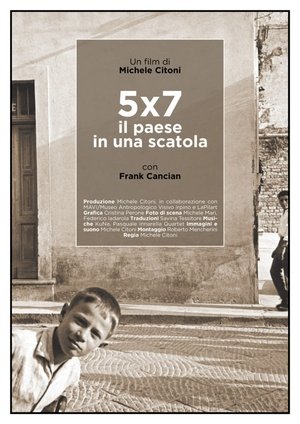
A beautiful collection of pictures ties Frank Cancian, an elderly photographer and retired professor of anthropology, American with origin from Veneto, to the people of Lacedonia, a small town in southern Italy. Thanks to the rediscovery of the photos taken in 1957 by the young Cancian in that rural village where he had arrived almost by chance, the story resumes there where it was interrupted 60 years earlier. And the thread of memories ties back to people and places, bringing with itself some essential reflections on how photography can become an ethnographic look at small communities.
An intimate, behind-the-scenes look at how an anonymous chef became a world-renowned cultural icon. This unflinching look at Anthony Bourdain reverberates with his presence, in his own voice and in the way he indelibly impacted the world around him.
Children get ready to start the first grade. They start learning the first letters.
Two men, the hint of a sofa corner and a pile of letters. Using minimalist means, the film tells the story of two brothers caught between exile in a foreign country and resistance in the underground. It takes us back to the time when the revolution seized power in Iran and tells of life between the fronts. Daniel Asadi Faezi sketches the story of his father and his brothers - based on correspondence that has lain in the cellar for 30 years.
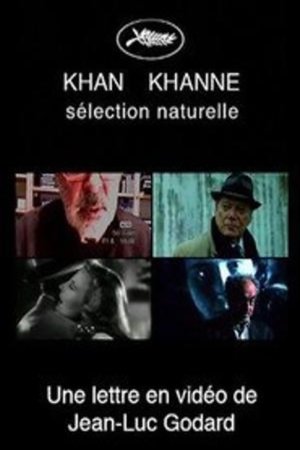
Rather than writing a simple letter to explain his absence from the press conference for his latest Cannes entry, "Goodbye to Language," at the Cannes Film Festival, instead, legendary filmmaker Jean-Luc Godard created a video "Letter in motion to (Cannes president) Gilles Jacob and (artistic director) Thierry Fremaux." The video intercuts from Godard speaking cryptically about his "path" to key scenes from Godard classics such as "Alphaville" and "King Lear" with Burgess Meredith and Molly Ringwald, and quotes poet Jacques Prevert and philosopher Hannah Arendt.
In a series of letters to her young son, a mother, soldier and filmmaker documents her thoughts from the Ukrainian frontline.
Real-life letters written by American soldiers, sailors, airmen, and Marines during the Vietnam War to their families and friends back home. Archive footage of the war and news coverage thereof augment the first-person "narrative" by men and women who were in the war, some of whom did not survive it.
This is the story of my grandfather, Tiago Florit, who for 50 years was a film operator at the Teatre Principal de Maó, in Menorca. It is a review of his life, from his birth to his death, in a cinematographic key. A true love story to cinema.