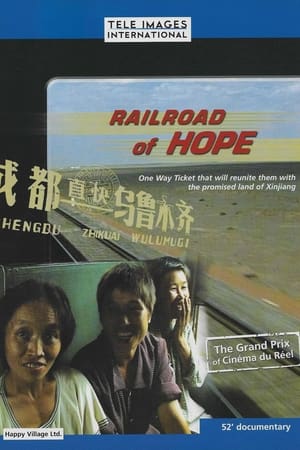
Railroad of Hope consists of interviews and footage collected over three days by Ning Ying of migrant agricultural workers traveling from Sichuan in China's interior, to the Xinjiang Autonomous Region, China's northwest frontier.[1] Through informal interviews aboard the cramped rail cars, Ning Ying explores the hopes and dreams of the workers, many of whom have never left their homes before.
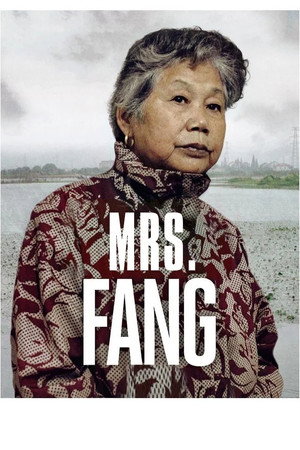
In a quiet village in southern China, Fang Xiuying is sixty-seven years old. Having suffered from Alzheimer's for several years, with advanced symptoms and ineffective treatment, she was sent back home. Now, bedridden, she is surrounded by her relatives and neighbors, as they witness and accompany her through her last days.
This story began in the seventies. Then the American ornithologist George Archibald turned to Soviet scientists led by Vladimir Flint with a proposal to cooperate in the protection of the white Siberian crane. This species was little studied and was considered endangered. Since then, we know much more about white cranes. Now on Earth there are two disparate populations of Siberian Cranes. One is East Siberian. These birds nest in the north of Yakutia and migrate to China. There are more than three thousand of them, and in the near future they are not threatened with extinction. A few thousand kilometers away, another population of Siberian Cranes lives. They nest in the lower reaches of the Ob, and fly to India or Iran for the winter. There are only twenty of them left. This film is about how people are trying to save this West Siberian branch of white cranes.
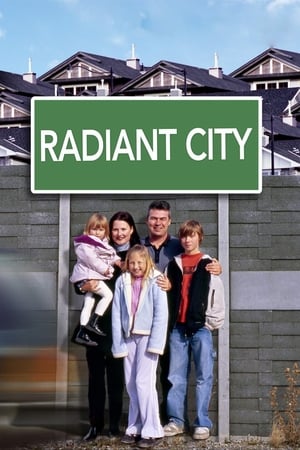
Since World War II North Americans have invested much of their newfound wealth in suburbia. It has promised a sense of space, affordability, family life and upward mobility. As the population of suburban sprawl has exploded in the past 50 years Suburbia, and all it promises, has become the American Dream. But as we enter the 21st century, serious questions are beginning to emerge...
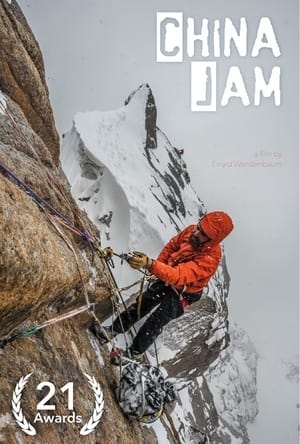
In their infinite quest for virgin big walls, adventurers Sean Villanueva O’Driscoll, Nicolas Favresse, Stephane Hanssens and Evrard Wendenbaum, head in September 2013 to a remote valley in the westernmost region of China. There, they found a fantastic 1200m vertical pillar, culminating at 5842m. They spent 14 days on the wall facing snow storms and harsh conditions to finally achieve this amazing ascent with some frost bites but never forgetting to have a lot of fun and to play unreal musical sessions.
10 May 2007 - China's staggering economic growth has overshadowed a more subtle shift in Chinese society. In domestic life, many women are now ignore the advice of their mothers and grandmothers, turning instead to counselling hotlines and, increasingly, divorce.
La brèche
What happens when a world that relies on traffic and the logistics that allow it comes to a standstill? What happens when sickness and even death are taken from us?
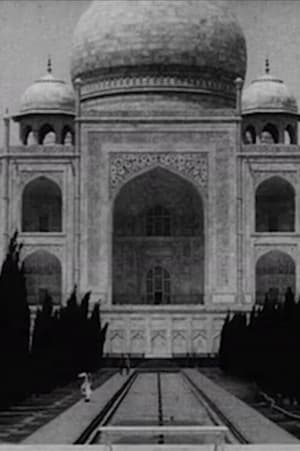
Arresting early film images of both northern India and central and south western China.
Nana Xu travels to the place built by her father as a prisoner during the Cultural Revolution: first a work camp, later a prison, fruit farm and treatment centre. Conversations with last remaining witnesses, where home is still shaped by a repressed past.
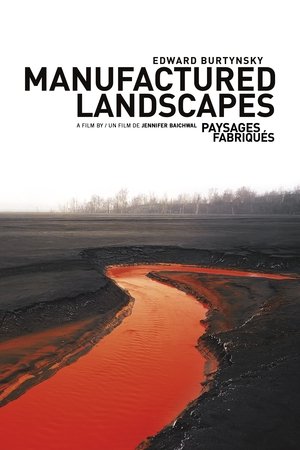
MANUFACTURED LANDSCAPES is the striking new documentary on the world and work of renowned artist Edward Burtynsky. Internationally acclaimed for his large-scale photographs of “manufactured landscapes”—quarries, recycling yards, factories, mines and dams—Burtynsky creates stunningly beautiful art from civilization’s materials and debris.
Since the end of World War II, one of kind of urban residential development has dominate how cities in North America have grown, the suburbs. In these artificial neighborhoods, there is a sense of careless sprawl in an car dominated culture that ineffectually tries to create the more organically grown older communities. Interspersed with the comments of various experts about the nature of suburbia
In China more people are on death row than the rest of the world combined. The children of the convicts are often left alone, stigmatized and living in the streets. Grandma Zhang, as the kids call her, is a former prison guard who has founded an orphanage in Nanzhao.
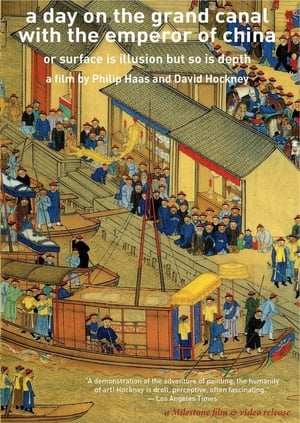
Director Philip Haas and artist David Hockney invite you to join them on a magical journey through China via a marvelous 72-foot long 17th-century Chinese scroll entitled The Kangxi Emperor's Southern Inspection Tour (1691-1698), scroll seven . As Hockney unrolls the beautiful and minutely detailed work of art, he traces the Emperor Kangxi’s second tour of his southern empire in 1689.
A short documentary exploring the UK’s 1970s approach to urban renewal through General Improvement Areas. Mixing location footage from Blackburn, Norwich, and Oxford with unexpectedly quirky presentation, the film contrasts small-scale housing improvements with the sweeping redevelopment schemes of the post-war era. Produced as a government public information film and shown at meetings between planners, architects, and residents, it stands as a modest, humane entry in Britain’s civic-minded documentary tradition.
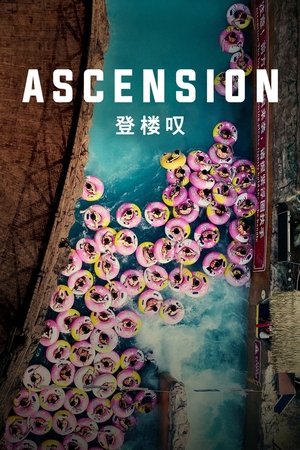
The film explores the pursuit of the “Chinese Dream.” Driven by mesmerizing—and sometimes humorous—imagery, this observational documentary presents a contemporary vision of China that prioritizes productivity and innovation above all.
Historias de las montañas de la bruma
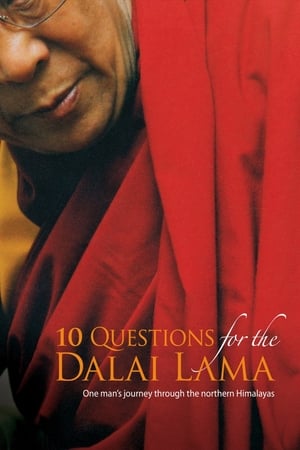
How do you reconcile a commitment to non-violence when faced with violence? Why do the poor often seem happier than the rich? Must a society lose its traditions in order to move into the future? These are some of the questions posed to His Holiness the Dalai Lama by filmmaker and explorer Rick Ray. Ray examines some of the fundamental questions of our time by weaving together observations from his own journeys throughout India and the Middle East, and the wisdom of an extraordinary spiritual leader. This is his story, as told and filmed by Rick Ray during a private visit to his monastery in Dharamsala, India over the course of several months. Also included is rare historical footage as well as footage supplied by individuals who at great personal risk, filmed with hidden cameras within Tibet.
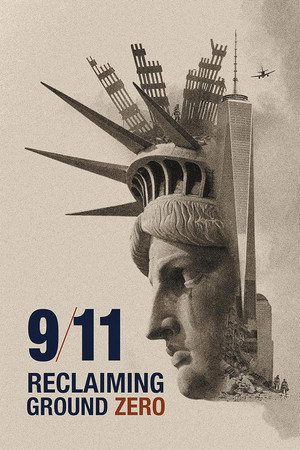
After the 9/11 attacks, after the smoke was gone, after the rubble cleared away, New Yorkers had a city to rebuild. In response to fast-tracked redevelopment plans, more than 5,000 people gathered in the largest town hall in American history. They came to vote on the city’s six proposals for rebuilding Ground Zero. But instead, the people rejected the top down approach and successfully charted a new path forward. Their work determined what is at Ground Zero today. And their story is an example of what democracy can look like.
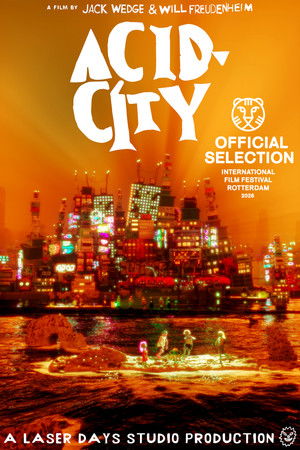
A dystopian future that’s ever nearer, Acid City floats in toxic waters and is left to its own devices. But under the boiling sun, the city weaves together its own social fabric. With audio recordings taken off the streets of NYC, this animation offers us something rare in the face of climate catastrophe: hope.