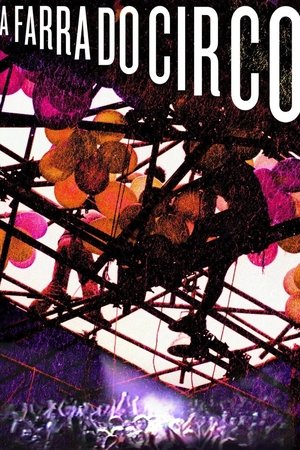
This documentary highlights the evolution of Brazil's Circo Voador venue from homespun artists' performance space to national cultural institution.
It's a sensitive, moving doc chronicling the life of Tétrault's brother Philip , a Montreal poet, musician and diagnosed paranoid schizophrenic. A promising athlete as a child, Philip began experiencing mood swings in his early 20s. His extended family, including his daughter, share their conflicted feelings love, guilt, shame, anger with the camera. They want to make sure he's safe, but how much can they take?
Performance and conversation with husband-and-wife poets Donald Hall and Jane Kenyon at a New Jersey festival, in their Wilmot (N.H.) hometown and their Eagle Pond farmhouse.
An exploration on Paz's poetry by Paz himself, his childhood, his ideas about love and the nature of art
Song is a story of the last Finnish rune singer and his pupil, and the comforting power of singing.
Fernando Lemos, a Portuguese surrealist artist, fled from dictatorship to Brazil in 1952 searching for something better. The movie follows the last moments of his journey and the struggle for the preservation of his legacy, trying to fulfill his last great desire: to be a good dead man.
Jean Sénac, born in Béni Saf in Algeria in 1926 and died in Algiers in 1973, is today considered one of the great French writers and poets and the only one of his reputation to have accompanied the Algerian revolution before November 1954. part of all the debates and got involved, very early and with immense enthusiasm, in a work of commitment which ended badly. His poetry, his sexual preferences and his political lyricism work against him: rejected as much by the Pieds Noirs as by the FLN activists then by the power in place in Algiers, Jean Sénac was assassinated in 1973 at his home in Algiers, in circumstances never clarified.
This film is dedicated to Mas-Félipe Delavouët, the poet discovered by Lawrence Durrell, who wrote 14,000 verses in Provençal over a period of thirty years, and who died on November 18, 1990. "The sky, history and Mediterranean and Provençal myths are the inexhaustable wellspring of this man rooted down there, near Salon-de-Provence" (J.-D. Pollet). "Mas-Félipe Delavouët wrote five books in Provençal, 14,000 verses. A sort of "Odyssey". Of myths. What is stunning in him is that he always talks of disappearances. Cities, works, men, writings, television, etc., everything has to disappear. In order to be reborn. No pain. A sort of hand-to-hand of man and nature. During the filming, I would simply throw out some words... For example, one time I said "creation" and he said: "creation doesn't exist..., creation is before me..., I can only read creation"; this sentence describes Delavouët perfectly (J.-D. Pollet, 1989 and 1993).
A poem about mania written by Omar Zefier. His second film.
After World War II a group of young writers, outsiders and friends who were disillusioned by the pursuit of the American dream met in New York City. Associated through mutual friendships, these cultural dissidents looked for new ways and means to express themselves. Soon their writings found an audience and the American media took notice, dubbing them the Beat Generation. Members of this group included writers Jack Kerouac, William Burroughs, Allen Ginsberg. a trinity that would ultimately influence the works of others during that era, including the "hippie" movement of the '60s. In this 55-minute video narrated by Allen Ginsberg, members of the Beat Generation (including the aforementioned Burroughs, Anne Waldman, Peter Orlovsky, Amiri Baraka, Diane Di Prima, and Timothy Leary) are reunited at Naropa University in Boulder, CO during the late 1970's to share their works and influence a new generation of young American bohemians.
Filmed on location in Montana and Washington State, this 1976 biography of poet and teacher Richard Hugo features readings of some of his most famous poems as well as interviews with his family and friends.
Jo; or The Act of Riding a Bike is Zefier's third film.
A biography of the poet W. B. Yeats and his contribution to the Irish independence movement as a Protestant nationalist.
Five gay Black men who are HIV-positive discuss how they are battling the double stigmas surrounding their infection and homosexuality.
The documentary is titled after Arkadaş Z. Özger’s poem “Hello My Dear” which had caused much controversy in the period it was first published. Considered to be in defiance of heteronormativity, the said poem includes references to the poet’s personality, his family, his relationship to the society, and his “unexpected” death, which came three years after its publication. Today, 50 years after it was written, the documentary follows these same lines in the poem utilising cinematic elements. The documentary also rediscovers the poetics; reaches out to the family, the comrades, the friendships, departing from the official historical accounts, cognizant of his experience of otherness, in pursuit of the “lost” portrait of Arkadaş Z. Özger.
Fernanda Pivano: A Farewell to Beat
In Istanbul, American writer James Baldwin muses about race, the American fascination with sexuality, insights into his interrupted writing decade in the country, the generosity of the Turks, and how being in another country, in another place, forces one to re-examine well-established attitudes about modern society.
Eldar Ryazanov reads his poetry. An introspective movie on his multifaceted work.
Smoky little clubs, late nights, late nights of conversation over a glass of beer and a guitar. The lyricist Géza Bereményi and the composer-performer Tamás Cseh are the creators of the most topical and accurate songs of the 70s and 80s, expressing the mood of the "30s and 40s" of that time - a mood that was their own destiny. This stunning recording from 1980 includes songs like Tangó, Álomfejtés, Szabó Kálmán tegnap este..., A 100. éjszaka, A legjobb viccek, Születtem Magyarországon, A dédapa dala, Egy bogár, Krakkói vonat, Az ócska cipő, Filmdal.
The Hurricane Maria represented a historic event for the island of Puerto Rico. The Puerto Rican spirit at the helm of this natural disaster was shattered beyond repair. And from the rumble the Puerto Rican spirit will be reborn again. Omar Iloy makes a desperate call to the wounded spirit of the island, a call for hope and help.