In honor of the 45th anniversary of the film A dama do lotação (1978) directed by Neville D'Almeida, based on the work of Nelson Rodrigues and starring Sonia Braga and a great cast. A dama do lotação (1978) continues to be one of the highest-grossing films in Brazilian cinema. In fragments, Sonia Braga tells what it was like to play the lady.
An intimate work made in collaboration with the filmmaker’s family, Cabbage re-frames language and explores personal agency within an ableist paradigm. It centralises her brothers' digital and rhythmic writings using eye tracking technology, and her mother’s reflections on a life lived having to prove her son’s humanity.
A depiction of New York’s subway as an absurd obstacle course – revealing a system that shuts many out of a city in motion.
The interview, held on January 4, 2001, was the last given by Professor Milton Santos, who died from cancer on June 24 of the same year. The geographer is gone, but his thoughts remains. Its political and cultural ideals inspire the debate on Brazilian society and the construction of a new world. His statement is a true testimony, a lesson that the world can be better. Based on geography, Milton Santos performs a reading of the contemporary world that reveals the different faces of the phenomenon of globalization. It is in the evidence of contradictions and paradoxes that constitute everyday life that Milton Santos sees the possibilities of building another reality. He innovates when, instead of standing against globalization, proposes and points out ways for another globalization.
O Vozerio
Based on testimonials from key characters, such as Dona Onete, Manoel Cordeiro, Pio Lobato, among others, in “Terruá Pará”, director Jorane Castro leads us into a deep dive into the diversity of Amazonian music, providing moments of enchantment and emotion.
"Impressões" rescues the history of the Brazilian press since 1808, when the "Correio Brasiliense" clandestinely reached Rio de Janeiro after being edited in London by Hipólito José da Costa, and spans until 1986. It's the first documentary to depict the history of the Brazilian journalistic press.
Dirlinho and his cousin’s childhood is marked by deprivation and violence. They try to escape by working as jockeys. While the punters bet on them, they gamble with their lives for a better future by riding doped horses.
During the selection process for a film, actors show the struggle and tiredness of those who decide to make a living from Art. While parading their truths, fictional characters merge with recurring narratives from the actor's daily life. But who is just an actor and who is a character?
The battle for accessibility in New York City Transit told by those fighting it. Less than a quarter of stations in the city's sprawling subway system are accessible to people with disabilities and those that need elevators. This film takes you on the frontlines of the disability rights movement featuring the perspectives of activists, local and state legislators, transit advocates and MTA officials.
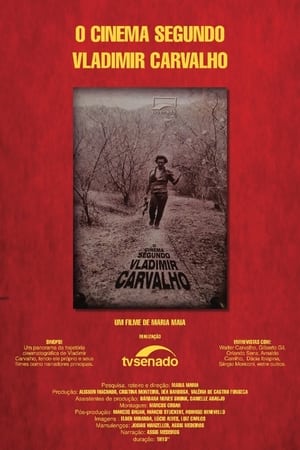
A deep investigation, in the way of a poetic essay, on one of the main Latin American movements in cinema, analyzed via the thoughts of its main authors, who invented, in the early 1960s, a new way of making movies in Brazil, with a political attitude, always near to people's problems, that combined art and revolution.
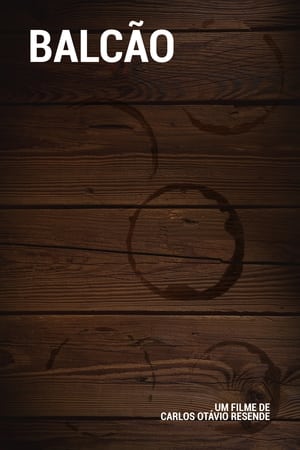
A group of friends hangs out at a bar, having fun and drinking beer.
Documentary about Brazilian actress Sandra Bréa.
Deus Vult
Drag Queens em Cena: A Expressão de Almas Artísticas
Natal
PLURAL is a journey through the intricate construction of identity. Guilherme Terreri and Rita Von Hunty unfold to explore the fluid boundaries of the integral self and human expression.
Gutierres
This controversial film from director Glauber Rocha records the funeral of his friend, major Brazilian painter Emiliano Di Cavalcanti.
Sign The Show: Deaf Culture, Access and Entertainment is a feature-length documentary providing insight into Deaf culture and the quest for access to entertainment. It brings together entertainers, the Deaf and Hard of Hearing (HOH) community, and American Sign Language interpreters to discuss accessibility at live performances in a humorous, heartfelt, and insightful way.