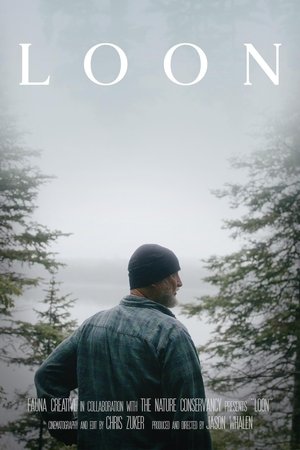
A short experimental film that explores one filmmaker’s journey to preserve fleeting moments before they fade. Created as a heartfelt introduction into Koen's film making journey, the film blends nostalgic visuals with inventive storytelling techniques, exploring childhood dreams, the fear of forgetting, and the impulse to document life as it unfolds. This marks Koen’s first true dive into editing and cinematography, born from years of unfinished projects, it stands as a heartfelt introduction to a lifelong pursuit of storytelling, dedicated to the child in all of us who once dreamed.
Je m'appelle Régine et je vous emmerde !
For five grueling years, Li Ning documents his struggle to achieve success as an avant-garde artist while contending with the pressures of modern life in China. He is caught between two families: his wife, son and mother, whom he can barely support; and his enthusiastic but disorganized guerilla dance troupe. Li's chaotic life becomes inseparable from the act of taping it, as if his experiences can only make sense on screen. Tape shatters documentary conventions, utilizing a variety of approaches, including guerilla documentary, experimental street video, even CGI. Tape captures a decade's worth of artistic aspirations and failures, while breaking new ground in individual expression in China.
This film is shot to point out the flood of commercial messages in television program, on billboards and megaboards, messages that take over our subconscious mind. We Love Belgrade is a log-line that justifies huge investments. This shining out of advertisement messages is just a curtain that hides carelessness towards the environment and human lives. The whole Belgrade became a commercial to sell itself, by constantly sending ads to its citizens. Could a commercial have any influence on a young mother of two whose only source of money comes from trash cans?
This story began with a blind, bull elephant called Pla-Ra. Paul Barton took his piano to ElephantsWorld, a Sanctuary on the banks of the River Kwai in Thailand and began playing to the elephants while they were eating. "They were all having Barna Grass and it was that time of the day, when the elephants get to eat a lot and they don't waste a moment because they know that moment won't last forever," Paul recalls. "Pla-Ra was behind the piano with a mouthful of barna grass and I started to play Beethoven. Pla-Ra was chewing, and as soon as I played the first chords, he stopped eating with stalks of Barna grass protruding from each side of his mouth, and that's the way he stayed until the end of the piece." "Each time I played music for Pla-Ra, whether flute or piano, there was an identical reaction. Pla-Ra would stand for a while, and then he would curl his trunk and hold his trunk in his mouth until the piece was over. No matter how long that piece was, he would stay like that." ...
Twenty years ago, a young American hiker named Chris McCandless, the accomplished son of successful middle class parents, was found dead in an abandoned bus in the Alaskan wilderness and became the subject of the best-selling book and movie “Into the Wild.” Now, PBS retraces Chris McCandless’ steps to try to piece together why he severed all ties with his past, burnt or gave away all his money, changed his name and headed into the Denali Wilderness. McCandless' own letters, released for the first time, as well as new and surprising interviews, probe the mystery that still lies at the heart of a story that has become part of the American literary canon and compels so many to this day.
Is it human conceit to attribute emotions to animal actions, or are emotions basic to life on earth? Wildlife filmmakers and scientists make a convincing argument for the latter in this gripping film.
Nature documentary about a young wildebeest in the wilderness of Africa. The gnu calf strays from the herd and comes upon a lioness that kidnaps it. Instinctively, it treats the lion like its mother. And miraculously enough, the lioness does not see the calf as its prey. Like a true Survivor, the calf manages to escape from the lion's den and find its way back to its real mother.
A documentary about environment destruction in the Amazon and the tribes living there. Produced for the 48th anniversary of MBC, Korea. A brilliant records of the itinerary for 250 days through the Amazon.
Tree planting is one of the most physically and mentally demanding jobs in Canada. Working long days in the baking sun of desolate clear cuts, you can expect rain storms and snow covered tents: that's tree planting in Northern Alberta. In this documentary, veteran planters share their experiences as they struggle through each day of what has become the longest and most difficult season ever!
The Siberian discovery of the best-preserved woolly mammoth on record has teams of experts working around the globe, and around the clock, on some of the most ambitious projects in science. In Russia, paleontologists are conducting a historic autopsy on the 40,000-year-old beast to find out how it lived, and how it died. Meanwhile labs in South Korea and at Harvard University are using the latest advances in DNA manipulation in hopes of cloning the furry giant and introducing it to the modern world.
Filmed in Rome in the 1980s, the work draws on Borromini’s Baroque architecture and Il Sassetta’s St. Martin and the Beggar. Beavers contrasts winter’s subdued light with the verdant growth of spring, constructing a precise montage in which image and sound form a poetic dialogue.
Interweaving stonework and filmmaking, Beavers evokes memory through hammer strokes and chisel sounds that shape both image and rhythm. In this dialogue of repetition and variation, the film carves out a space where emptiness itself gains form, allowing vision beyond sight.
Animals dance, sing, flirt, and compete with everything they’ve got to find and secure a mate. For many, the all-important bonds they share as a couple are what enable the next generation to survive. But can we call these bonds love? In this delightful, provocative look at the love life of animals, we see the feminine wiles of a young gorilla, the search for Mr. Right among a thousand flamingos, the open “marriages” of blue-footed boobies, the soap opera arrangements of gibbons, and all the subtle, outrageous, romantic antics that go into finding a partner. These are love stories all right, as various and intriguing as the lovers themselves.
In his book "1984", George Orwell saw the television of the future as a control instrument in the hands of Big Brother. Right at the start of the much-anticipated Orwellian year, Paik and Co. were keen to demonstrate satellite TV's ability to serve positive ends-- Namely, the intercontinental exchange of culture, combining both highbrow and entertainment elements. A live broadcast shared between WNET TV in New York and the Centre Pompidou in Paris, linked up with broadcasters in Germany and South Korea, reached a worldwide audience of over 10 or even 25 million (including the later repeat transmissions).
Go up-river and deep into the jungle far from Brazil's cities and stadiums, where families of giant otters, tufted capuchin monkeys and mischievous coati (South American raccoon cousins) rally their wits to survive in a breathtakingly beautiful yet dangerous land.
The film juxtaposes/compares two museums: The Museum of Art, Ein Harod, Israel, which Samuel Bickels (1909-1975) built there in 1948, and The Menil Collection in Houston, Texas, built by Renzo Piano (b. 1937) 1986 . The method of natural lighting in Bickels‘s construction was the direct model for Piano, who adopted for his construction at the request of its patroness Dominique de Menil.
The Weavers of Nishijin captures the process of traditional textile manufacture in Nishijin.
A film about modern Japanese architecture, its roots in the Japanese tradition and its impact on the Nordic building-tradition. Winding its way through visions of the future, traditions, nature, concrete, gardens and high-tech, KOCHUU tells us how contemporary Japanese architects strive to unite the ways of modern man with the old philosophies in astounding constructions. Interviews with, and works by, Japanese architects Tadad Ando, Kisho Kurokawa, Toyo Ito and Kazuo Shinohara and Scandinavian architects Sverre Fehn, Kristian Gullichsen and Juhani Pallasmaa.
Iceland's first non-narrative full-feature film's focus is set on presenting Iceland in a way it has never been presented before, using various elements of high-end cinematography. There are places everyone knows, but there are also thousands of well hidden places. To find these locations one has to be adventurous or a local, and to capture them right, one has to be creative and extremely patient.