Karel Vachek’s graduate film offers us a documentary essay which is both a light-hearted and aggressive little piece and also a parody of investigative film journalism. The Strážnice folk festival, backed by the cultural Party apparatus of the time, for years had little to commend itself to authentic folklore. In the film the event assumes the form of a bizarre stage spectacle with almost surrealistic elements that Vachek reinforces with unconventional approaches (commentary appearing as titles on screen, singing, declamations into the camera, feature etudes, the fusion of news coverage and fiction). The result is a stirring film collage depicting various characters, from crowd-pleasers, Easter egg decorators, kitsch artists and peddlers, to museologists and local residents, all of whom come up against the eccentric "identical” twin reporters Karel and Jan Saudek and a bored actress who appears as an extra. Using their special blend of irony and wit, they present us with the sad truth.
The physical media format of film is in a constant state of unease, but what happens when industry professional and legally blind business owner, Shelby McIntyre, takes it upon himself to open Tampa’s only true video shop?
An intimate look into Demers family's experience raising children while dealing with the societal stigmas around disabilities and the consequences of Alberta's forgotten experiment in eugenics.
Two instants separated by 99 days conflict with each other.
Do Chile za zatměním Slunce
A portrait of 14-year-old Wen Bin and a Sri Lankan monk. They walk different landscapes of their residences - a temple, a home, a body.
The film explores the taboo subject of homosexuality within the Roma community through the personal story of a Roma activist who happens to be gay. Though his job has earned him respect among his peers, by coming out his status is in jeopardy. However, the desire to share his complex story prompted him to write a screenplay based on his life. Partly a documentary about his autobiographical script, the film switches between documentary and narrative storytelling. Owing to its distinctive style, the film offers a glimpse into the protagonist's world as he faces triple discrimination: as a Roma, as a gay man, and as a gay man in the Roma community.
A fresh out of university film graduate decides he is fed up with the current state of cinema, with big releases only ever being franchise films or reboots. A documentary crew follows him as he sets out to create the greatest film of all time.
A vivid encounter with former three time Czech National Boxing Champion. Experience the rise and fall in the career of a female fighter.
Baptist Fernandes is an undertaker by trade, but he has dealt with death all his life.
Human action is often influenced by the desire for knowledge. This desire is in itself a positive impulse and could be said to be the basis of all progress. Let's move this statement to the ground of scientific research at CERN, and see if it applies here - and then test the common experience that human stupidity permeates every social stratum and, in the case of the elites, is a potential threat.
The director, a young man in his thirties going through a life crisis, approaches his estranged parents to help him paint his apartment. Conversations accompanied by a paint roller and paint thinner open up old wrongs while revealing the complexity of interpersonal relationships. The absence of communication, or the lack of will to communicate, as a symptom of contemporary family ties, stands in contrast to caring for a family of pigeons that has made its nest on the director's balcony. The film, in its civility and authenticity, follows the lessons of a book dedicated to amateur filmmakers and thus enters into a subversive dialogue with the paradigms of film pedagogy.
What is the Art of Living ? A few weeks ago, I asked myself this question, as silly in its formality as it is complicated in its complexity. In this video, I'll try to give you my definition and my vision of what the art of living is !
Short documentary consisting of archival footage and movies that depict the birth of the United States of America, from the Boston tea party to the Spanish American war
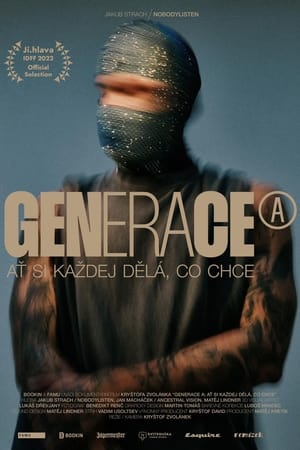
Jakub Strach aka NobodyListen is a successful Czech DJ and music producer. A portrait of his life and work can be seen as a manifesto of the millennial club-going generation. After hundreds of shows and preparations for the upcoming, renowned Addict party, the DJ must deal with the consequences of inflicting a wound scarring his image. Footage from the club backstage mingles with scenes of everyday life in which NobodyListen ponders the dark sides of the club scene, like drugs and misogyny. During the shooting, the Covid pandemic strikes, revealing the insecurities of work in culture.
The primary motif of the documentary is the journey. A metaphorical journey, a spiritual journey, a tangible journey, a forest path, a road, a sidewalk, a drug trip, or a journey abroad. The director pastes together a collage of micro-stories of people and places that comment on the journey. Her documentary oscillates between playful absurdism, existentialism and existential questions, environmentalism, and social commentary. The dynamism and rhythm of the narrative are then determined by the jumps between different forms of video, such as analogue film, digital film, and mobile phone filming.
An idiot for some, a genius for others. Zoran is an urban legend of a Serbian block of flats who allegedly travelled the whole world without a single ID on him. After that, he went nuts due to politics, war and MDMA. “I saw it with my own naked eye,” nodded a half-blind old man. Though a clear answer to the question who Zoran really was is not to be expected at the end of this semi-serious manhunt, it is more than sure that even if he did not exist, the locals must have had to think him up.
With the good of the people in mind, Valery Legasov, a Soviet scientist called to the scene of the Chernobyl nuclear disaster, stands up to censorship behind the Iron Curtain.
A reporter for a fictional television station, originally from Ukraine, travels around Slovakia and asks people at memorable places questions about the nature of fascism and the soul of the Slovak nation. The documentary essay seeks to capture the shape of a society on the fringes of the political spectrum through the words spoken and the images of crowd scenes.
This documentary follows two long-lost Ukrainian friends, Arsalan and Nastya, as they reconnect in Germany after russia's full-scale invasion against Ukraine. Arsalan, an actor now in Frankfurt after time in a refugee camp, and Nastya, journalist and producer who stayed in Kyiv, reflect on the divergent paths their lives have taken due to the war. Through their conversations and therapy sessions, the film explores themes of displacement, identity, and the emotional impact of war on youth.