Guy drinks strange liquid, sees some shit
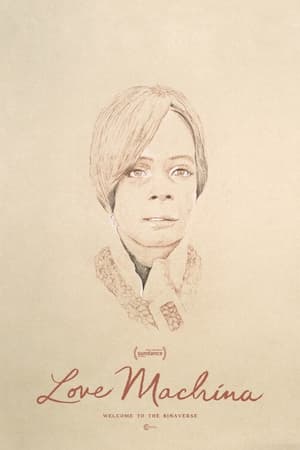
Futurists Martine and Bina Rothblatt commission an advanced humanoid AI named Bina48 to transfer Bina’s consciousness from a human to a robot in an attempt to continue their once-in-a-galaxy love affair for the rest of time.
In this experimental short film, a young man and woman enter into a relationship with one another and quickly learn the ups and downs of intertwining their life with the one they love.
In the summer of 1900, the first film camera was purchased by Mozaffar ad-Din Shah Qajar for Iran, and immediately the first Iranian moving images were captured by this camera. These images, in an obsessive manner, have embodied the mesmerized gaze of people. In the span of 79 years since the purchase of this camera, Iran has undergone two revolutions and two coups, and throughout all these moments, the camera has been present as the recorder of people's mesmerized gazes. These mesmerized gazes are in a way as if they are the ones looking at us, not the other way around. It seems like these gazes are trying to convey something, but what? No one knows. Now, we gaze at those who have gazed at us from a distant time.
We were slightly feverish when we started working with a particular color process. At the development, we had obtained wonderful tones of blue and yellow as well as colored solarizations. Thus, this process was used for 15 days then the fever subsided. At that time they listened to the music of Gilbert and Lewis, and that is why they put a piece on the soundtrack.
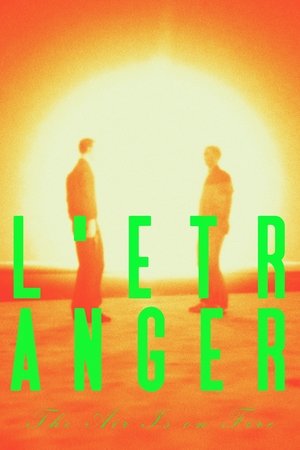
Machinima-adaptation of Albert Camus book "L'étranger", done in Grand Theft Auto: San Andreas.
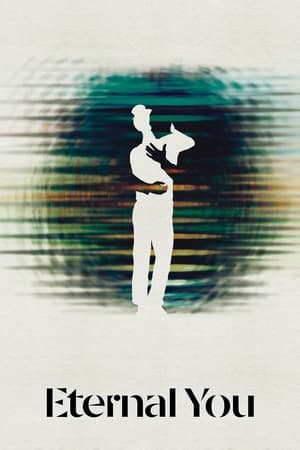
Startups are using AI to create avatars that allow relatives to talk with their loved ones after they have died. An exploration of a profound human desire and the consequences of turning the dream of immortality into a product.
A young pianist is shocked when she witnesses a strange chess tournament with a robot. Could there be a gruesome secret behind this exhibition?
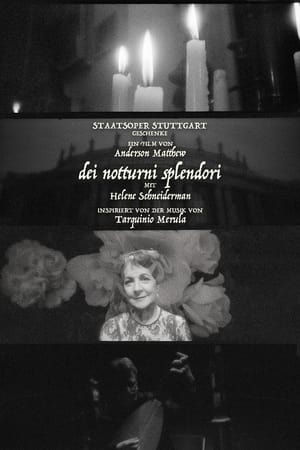
“And, 'twixt the shadows and frights of nocturnal splendors, My beloved will secretly be hiding. Say what you will, say what you may.” The sound of a distant whistle and theorbo calls a sleeping singer through the empty streets of Stuttgart in a midnight journey to the opera house. ‘dei notturni splendori’ is an experimental opera film made for the Staatsoper Stuttgart in the early months of the Coronavirus pandemic lockdown. Anderson Matthew captures the singer Helene Schneiderman through a midnight dream with a hand-cranked kino camera in an ecstatic 35mm photo roman, in search for her own performance of the Tarquinio Merula madrigal Folle é ben chi se crede from 1638.
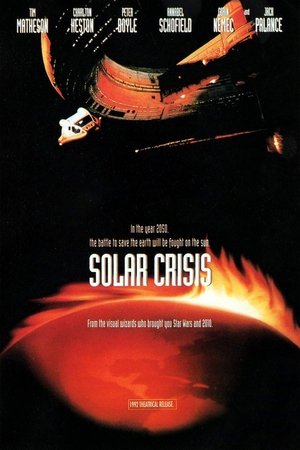
A huge solar flare is predicted to fry the Earth. Astronauts aboard the spaceship Helios must go to the Sun to drop a bomb equipped with an Artificial Intelligence and a Japanese pilot at the right time so the flare will point somewhere else.
The last remnant of memories, before it forever perished.
Experimental short film
Carlos - O Filme
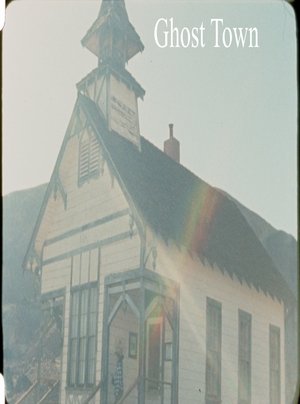
Seraphim Cloud and his life size doppelgänger enter the netherworld of Calico Ghost Town deep within the Mojave Desert.
Time passes. Life flows. Nature completes an entire cycle of life and death. Eve and Adam reinterpret and correct the myth of the tree of knowledge: the forbidden fruit makes us wise. As the earth revolves around the sun, the camera captures a baroque symphony of lights and colors. There is no digital manipulation: all the effects are produced analogically by the camera mechanism.
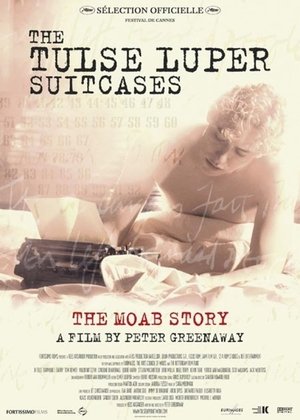
A comic study of 20th-century history, reconstructing the life of writer, creator and professional prisoner Tulse Luper. Born in 1911 Newport and last heard of in 1989, Luper’s life is pieced together from the evidence found in 92 suitcases scattered across the globe. In the first of three parts, we follow Luper through three distinct episodes: as a child during the First World War; as an explorer in Mormon Utah; and as a writer in Belgium during the rise of fascism.
12 years ago, the Daybreak Town Accident changed the world and brought forth a new prosperity towards artificial intelligence. But what if that were to all change? Sougo Tokiwa gave up his conquest for power after he chose to reset the world and live a mundane life. However as a Time Jacker began to alter history once again, Sougo is forced to take up the mantle as Kamen Rider Zi-O once again, as he meets Aruto Hiden, the native Rider of the world he has to save. This is the story of two Kamen Riders from two different worlds, whose fight together will ultimately determine the fate of all reality.
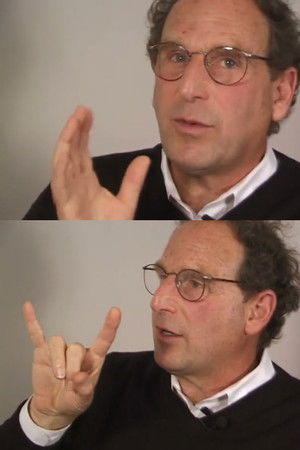
In his contribution to the On Art and Artists interview series, Nathaniel Dorsky (b.1943) begins by discussing his childhood love of the John Ford film Stagecoach and its influence upon his decision to make films while attending Antioch College. Describing the affinity he developed for work operating at the intersection of film materiality and personal language, Dorsky explains how he developed his philosophy of the “devotional film” and the “microcosmic viewer.” Dorsky likens his practice to Buddhist sculpture, referring to himself as a “Japanese poet continuing aspects of the ethos of the Marxist revolution.” In the interview, the artist describes his use of the screen as an “altarpiece for the image” and emphasizes his use of editing to create works which “harmoniously coalesce.” Interview conducted by Jeffrey Skoller in May 2000, edited in 2014.
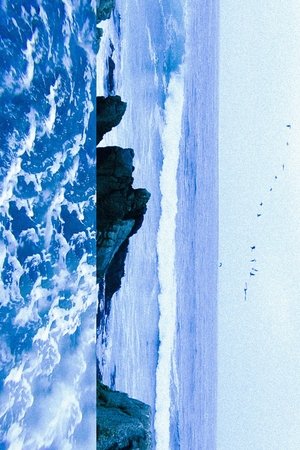
Waves crashing against the rocks, a journey to the beaches of El Tabo (Chile).
An AI chatbot is programmed to think that it's a teenage girl.